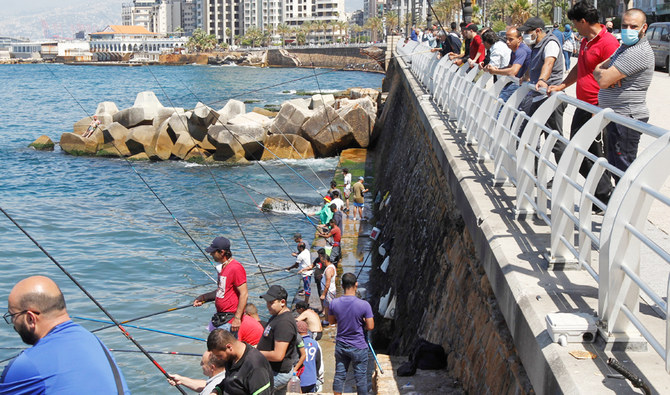
by NAJIA HOUSSARI -- arabnews.com -- BEIRUT: A Lebanese customs force was attacked by a large group on Monday as they seized two trucks carrying camouflaged tanks filled with about 22,000 liters of diesel, which were heading to a northern border area with Syria. The Lebanese General Directorate of Customs said that the patrol “used the help of the Lebanese Army, which stopped the fleeing two trucks at one its checkpoints in the area, and they were seized in preparation for taking appropriate measures against the smugglers and the group that protected them.” The news of the illegal smuggling operations between Lebanon and Syria has overshadowed news of the economic crises facing Lebanon, especially as the materials being smuggled are diesel and flour, which are precious goods subsidized by the Lebanese state.
A resident of the northern border area with Syria told Arab News: “No one can control the borders that extend hundreds of kilometers in the north and the Bekaa.” He added: “Diesel smuggling operations are not new, but with the collapse of the Syrian pound and the Lebanese pound, subsidized diesel smuggling has become more active. The price of a liter of diesel in Syria is equivalent to LBP 70,000, while the price of a liter of diesel in Lebanon is LBP 10,000. Smuggling this item brings profits to Lebanese and Syrian smugglers.” He pointed out that smuggling operations do not need to transport trucks loaded with diesel to the Syrian territories; a truck only needs to stop on one of the Lebanese highlands at a certain border point before extending its pipes to exchange the diesel between tanks inside Syrian territory. He added that there are also fixed pipes at other border points, especially in the upper Hermel border in the Bekaa.
by english.aawsat.com — Lebanese authorities warned of a new wave of coronavirus cases after the number jumped to its highest point in …
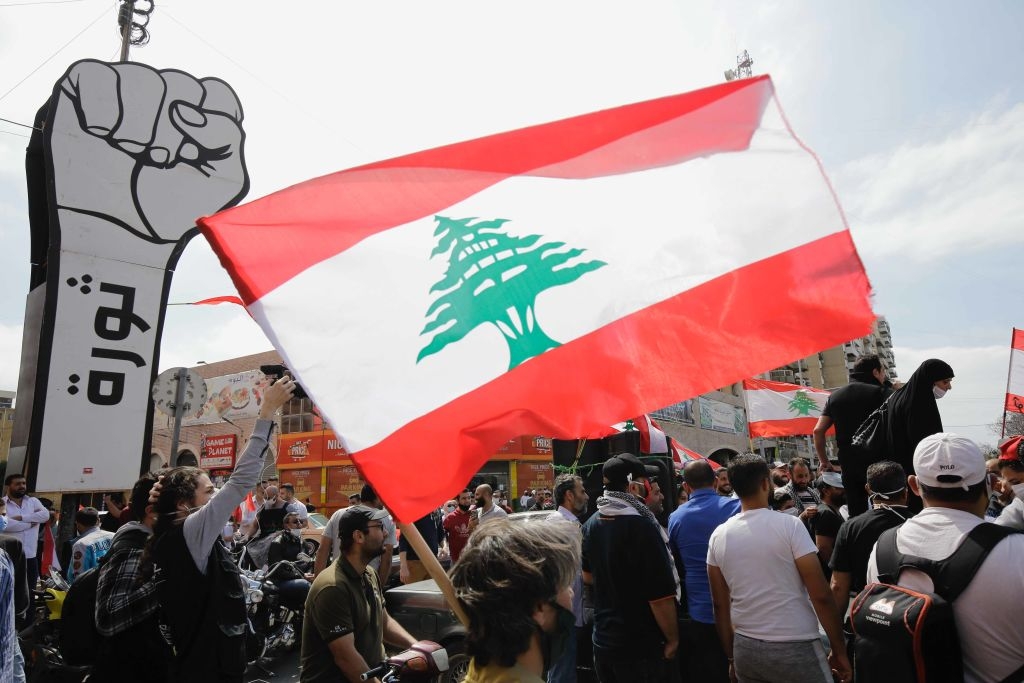
by gatestoneinstitute.org -- Amir Taheri -- As Lebanese protests continue, albeit with varying degrees of intensity, speculation over what has caused the current crisis is also rife. The list of woes that afflict Lebanon is long. There is a banking crisis caused by a Ponzi-like scheme introduced by the Central Bank three years ago to attract foreign money. Recent falls in the price of oil have led to a sharp drop on remittances by Lebanese working in oil-rich countries but building their egg-nests back home. A bloated civil service, created by politicians trying to buy votes or curry favor with their respective sects by inventing unnecessary jobs, is becoming too costly for an ailing economy. Corruption, the bane of many developing nations, has gone beyond the limits of an aberration to become almost a way of life. Add to all that a prolonged political crisis caused by the way the sectarian system distributes power and one would have a perfect storm. All in all, it is certain that a majority of Lebanese are unhappy about their current situation and worried about the future, the two key ingredients of a cocktail of grievances that incites a nation to revolt. However, what if the real cause of the current zugzwang is somewhere else, somewhere beyond shabby economic management and Third World-style corruption?
What Lebanon is facing may be a redefinition of its existence as a nation-state. All nation-states are constructed in accordance with a paradigm that reflects the content of their essence, the shape of their existence and the vision of their future. Lebanon is one of those states destined to reflect internal diversity and build a place in the international arena as a haven for peace, creativity, dialogue, exchange and compromise by rival outside powers. It may be a cliché to suggest that Lebanon is meant to be a Middle Eastern Switzerland, just as Uruguay is a haven of peace in South America, Singapore in Asia and Austria in Central Europe. Whenever Lebanon played that role, it thrived. Whenever it diverged from that role, or was pushed out of it by foreign powers, it suffered. In 1958, barely a decade after independence, Lebanon was classed by the International Monetary Fund (IMF) as the richest country in the Middle East and North Africa in terms of gross domestic product per head of population. In the IMF's first report on the region, Libya was classed as the poorest nation while Turkey came second after Lebanon and Iran was fifth after Egypt. More importantly, Lebanon played a leading cultural role in what was to be marketed as "the Arab World" from the 1960s onwards.
by AP – BEIRUT – Lebanon’s churches have welcomed worshippers for the first time in nearly two months. Most churches were closed …

Population Movements to Keserwan - The Khazens and The Maans
ما جاء عن الثورة في المقاطعة الكسروانية
ثورة أهالي كسروان على المشايخ الخوازنة وأسبابها
Origins of the "Prince of Maronite" Title
Growing diversity: the Khazin sheiks and the clergy in the first decades of the 18th century
Historical Members:
Barbar Beik El Khazen [English]
Patriach Toubia Kaiss El Khazen(Biography & Life Part1 Part2) (Arabic)
Patriach Youssef Dargham El Khazen (Cont'd)
Cheikh Bishara Jafal El Khazen
Patriarch Youssef Raji El Khazen
The Martyrs Cheikh Philippe & Cheikh Farid El Khazen
Cheikh Nawfal El Khazen (Consul De France)
Cheikh Hossun El Khazen (Consul De France)
Cheikh Abou-Nawfal El Khazen (Consul De France)
Cheikh Francis Abee Nader & his son Yousef
Cheikh Abou-Kanso El Khazen (Consul De France)
Cheikh Abou Nader El Khazen
Cheikh Chafic El Khazen
Cheikh Keserwan El Khazen
Cheikh Serhal El Khazen [English]
Cheikh Rafiq El Khazen [English]
Cheikh Hanna El Khazen
Cheikha Arzi El Khazen
Marie El Khazen