By Tom Perry and Ellen Francis BEIRUT (Reuters) - Lebanon's plan to tackle a financial and economic crisis will meet IMF recommendations and will be ready in weeks, the finance minister said on Thursday, adding that any recourse to an IMF program must be politically agreed and its terms should not cause suffering. Speaking days after the heavily indebted state declared it could not meet coming debt payments, Finance Minister Ghazi Wazni also told Reuters the official exchange rate of the Lebanese pound would be maintained for the "foreseeable future", saying this helped control inflation among other factors. The plan being drawn up by Prime Minister Hassan Diab's government will form the cornerstone of efforts to pull Lebanon out of the worst financial crisis since independence in 1943. It will cover banking, financial and other economic reforms.
Lebanon has so far requested technical assistance from the IMF but not financial aid that would typically come as part of a program of reforms. A team of IMF experts visited Lebanon last month. IMF spokesman Gerry Rice, speaking before Wazni's remarks, underscored the need for Lebanon to draft a comprehensive plan. "Given the severity of economic conditions in Lebanon, it's important that the government designs and implements properly a comprehensive package of reforms to effectively address the economic challenges and improve Lebanon's economic prospects," he said. Wazni said the IMF was ready to send experts back to Lebanon once the plan was ready. The government's plan would meet "the recommendations of the IMF" and include a plan that Beirut is drawing up with the World Bank. Wazni said Lebanon was in need of $25 billion to $30 billion of assistance over the next five years to get out of the crisis. "Lebanon welcomes all international financial assistance without exceptions. But when it comes to the IMF, this depends on several matters: that the understanding with the IMF - if Lebanon resorts to it - ... does not negatively affect the political situation in Lebanon," Wazni said.
![Prime Minister Hassan Diab's announcement came as Lebanon registered its second death from coronavirus [File: Dalati/Nohra/Reuters]](https://www.aljazeera.com/mritems/imagecache/mbdxxlarge/mritems/Images/2020/3/7/ef7e15c59e7c4896b3b8220aaf965c43_18.jpg)
by thenational.ae --Prime Minister Hassan Diab on Wednesday announced that Lebanon would be halting flights to and from several countries to try to curb the spread of coronavirus, moments before the World Health Organisation officially declared it a pandemic. “All air, sea and land travel will be stopped to and from the following countries: Italy, South Korea, Iran, and China,” Mr Diab said, without specifying when flights would be suspended. Lebanon will also suspend flights "from countries that have witnessed an important spread of the virus: France, Egypt, Syria, Iraq, Germany, Spain and Britain, by air, land or sea,” he said.
By Timour Azhari Al jazeera-- Beirut - Lebanon will ban all travel to and from 11 countries that have witnessed significant outbreaks of the coronavirus, including an immediate ban on Italy, Iran, China and South Korea. Authorities will give a four-day grace period to Lebanese citizens, and their families who are seeking to return to Lebanon from France, Germany, Spain, the United Kingdom, Iraq, Egypt and Syria before also banning all travel to and from those countries, Prime Minister Hassan Diab announced on Wednesday.
The ban includes travel by land, sea and air. Diab's announcement at a news conference came as Lebanon registered its second death from the coronavirus on Sunday, - a man in his 50s who reportedly had pre-existing conditions - while the total number of infections rose to 61. Conversely, Lebanon's first registered coronavirus patient, a woman who returned from Iran in late February, was announced to be entirely free of the virus. The global pandemic has seen more than 122,000 people infected, with deaths nearing 4,500. Many countries in the Middle East have taken similar steps of banning travel, including Saudi Arabia, which has banned flights to and from Lebanon. While Diab stopped short of announcing a state of emergency, he asked local authorities to prevent all large gatherings of people. Bars, nightclubs and exhibition centres were already ordered to close over the weekend until March 15, while schools and universities have been shuttered since the beginning of March. Diab also called on businesses and public institutions to work with the minimum required number of employees needed to maintain productivity.
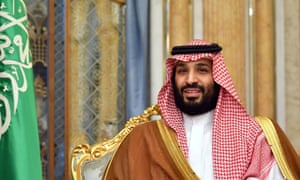
By Madawi al-Rasheed-- All is not well in the House of Saud. On 7 March, Mohammed bin Salman, the young crown prince and future king of Saudi Arabia, boldly dispatched his masked security personnel to bring two of Saudi’s most senior princes, Ahmed bin Abdul Aziz and Muhammad bin Nayef, to the palace after a hunting trip in the desert. It’s still unclear whether they have been detained for short-term interrogations or to be imprisoned. What’s certain is that Prince Mohammed’s decision was a preemptive strike to intimidate those who have dared question his leadership style from inside the royal household. Although Mohammed is the crown prince, he plays the role of king. He remains in control of all economic, political, social and foreign relations, and eclipses his father, King Salman, as unofficial ruler of Saudi Arabia. The arrests were ordered after the royal court was passed details of an alleged plot to undermine Prince Mohammed’s ascendance to the throne. Among the two princes he arrested, Ahmed is the most eligible to become king – he is the only remaining brother of the incumbent King Salman and would have been first in line had his brother not promoted his own heir, much to Ahmed’s chagrin.

by aawsat.com -- Lebanon's public prosecutor has agreed with commercial banks a set of rules aimed at protecting the rights of depositors, state news agency NNA reported on Tuesday, potentially easing restrictions on deposits amid a dollar shortage. Lebanese banks, fearing capital flight and grappling with an acute hard currency crunch, have imposed tight controls on withdrawals and transfers abroad, drawing outrage from depositors unable to access their savings. The agreement, which appears to be an attempt in part to standardize rules across the sector, states banks must transfer foreign currency abroad for payment of school fees, medical costs, taxes and "all that is necessary," as well as for imports of medical supplies, foodstuffs not produced in Lebanon, and goods deemed critical by the central bank, NNA reported. These include lenders allowing depositors to withdraw up to 25 million Lebanese pounds a month (around $16,500 under the official exchange rate). Other measures include allowing transfers abroad in hard currency for education fees, medical bills, tax purposes, “and everything else necessary,” NNA said. Banks would not be allowed to withhold any part of money freshly transferred into a Lebanese account.


Population Movements to Keserwan - The Khazens and The Maans
ما جاء عن الثورة في المقاطعة الكسروانية
ثورة أهالي كسروان على المشايخ الخوازنة وأسبابها
Origins of the "Prince of Maronite" Title
Growing diversity: the Khazin sheiks and the clergy in the first decades of the 18th century
Historical Members:
Barbar Beik El Khazen [English]
Patriach Toubia Kaiss El Khazen(Biography & Life Part1 Part2) (Arabic)
Patriach Youssef Dargham El Khazen (Cont'd)
Cheikh Bishara Jafal El Khazen
Patriarch Youssef Raji El Khazen
The Martyrs Cheikh Philippe & Cheikh Farid El Khazen
Cheikh Nawfal El Khazen (Consul De France)
Cheikh Hossun El Khazen (Consul De France)
Cheikh Abou-Nawfal El Khazen (Consul De France)
Cheikh Francis Abee Nader & his son Yousef
Cheikh Abou-Kanso El Khazen (Consul De France)
Cheikh Abou Nader El Khazen
Cheikh Chafic El Khazen
Cheikh Keserwan El Khazen
Cheikh Serhal El Khazen [English]
Cheikh Rafiq El Khazen [English]
Cheikh Hanna El Khazen
Cheikha Arzi El Khazen
Marie El Khazen