npr.org -- DEBORAH AMOS -- In Lebanon, cyberspace is the new battle ground between protesters and the security services that have increased measures to curb dissent, intimidating and arresting government critics for online speech. Since October, Lebanese citizens have gathered to protest around the country, uniting across party and sectarian lines against an entrenched political oligarchy that protesters say has made fortunes mostly from government funds at the expense of the country. The massive outpouring was sparked by a proposed tax on calls made through Internet services such as WhatsApp. The government abandoned the tax after protesters paralyzed the country, forcing banks and schools to close. Now, the authorities use WhatsApp to identify protest leaders and arrest them, activists and lawyers say. In the first months of civil disobedience, Lebanon's mainstream media outlets — largely owned by the state, political parties or politicians — downplayed the unrest, ignored it or suggested the protests were exploited by regional and international enemies. Activists turned to social media platforms to get out their message. They organized and shared updates on WhatsApp, streamed protests live on Twitter and highlighted police abuse on Instagram. New podcasts documenting corruption also launched with the protest movement.
New cat-and-mouse game
Many Lebanese use WhatsApp, a Facebook-owned cellphone app that allows users to send each other encrypted text and voice messages as well as make calls for free, in a country where ordinary phone calls are expensive. Many demonstrators have used WhatsApp chat groups to criticize the government, call protesters to the streets and share videos of arrests and injuries from rubber bullets. The social media and WhatsApp activities also leave activists vulnerable to surveillance by the Internal Security Forces' Cybercrimes Bureau. Mohamad Najem, executive director of the Social Media Exchange, a Beirut-based digital rights group, says there is a "different kind of cat-and-mouse" game. "Social media is being used as a tool to identify protesters and to know who they are and their networks and all that," he says. Lebanon's print media, its newspapers and magazines, are protected by laws that are the envy of the Arab world, but comments posted to social media have little protection, says Najem. "The law is bad, it's a lot of gray area. It really depends on the mood of the general prosecutor, what he's doing, what kind of whiskey he is drinking at night, who is talking to him," he says. "All these issues are really how the decisions processes are made in this country."

By Dale Gavlak -- AMMAN - Lebanon's government has officially defaulted on its payment of a $1.2 billion Eurobond debt due Monday. This marks the first default in Lebanon's financial history, as it copes with dwindling foreign currency reserves and inflation running into double digits. In the past, the country once known as the Switzerland of the Middle East managed to repay debt, despite civil war and political unrest. But now it faces the challenge of securing loans amid global economic issues and the coronavirus outbreak. The situation has left many Lebanese concerned, said Habib Malik of the Lebanese American University. The national news agency says 41 coronavirus cases have been reported in Lebanon, one of several Middle Eastern countries grappling with the infection and its economic implications. "People are very, very nervous," Malik said. "If a global economic recession is going to kick in because of this epidemic, then this will simply mean that there will be less money for countries like Lebanon, ailing for other reasons. "Right now, the Diab government is being very honest and realistic with the people and the debtors that Lebanon would like to negotiate a restructuring of the debts. In the next couple of weeks, we will see the representatives of the debtors and the Lebanese government come together to try work out a deal. It’s going to be slow and rough going," Malik added.
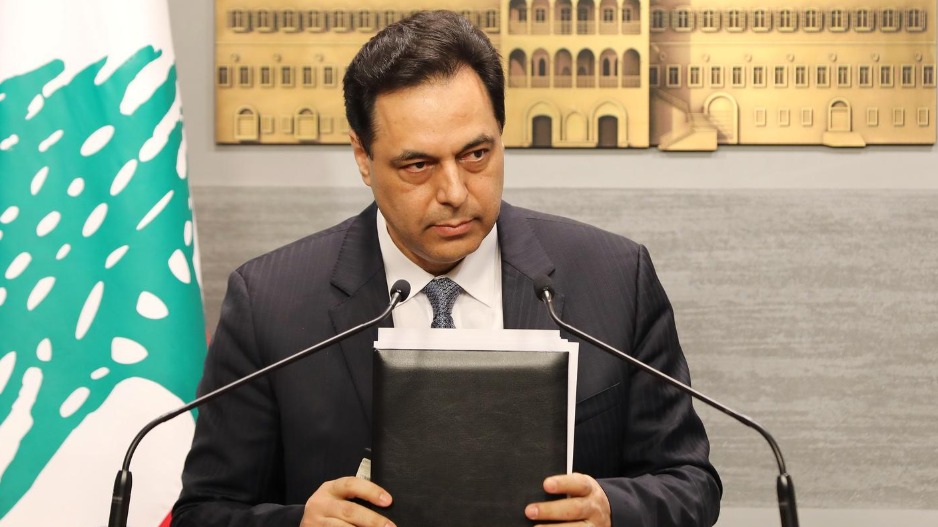
by Associated Press --- Beirut: Lebanon's prime minister has said the government will suspend payment of $1.2 billion in loans, marking the crisis-hit country's first-ever default on its sovereign debt amid ongoing popular unrest. Hassan Diab made the announcement in a televised address to the Lebanese people, saying the country will seek to restructure its massive debt. The $1.2 billion Eurobond matures on Monday. The default marks a new chapter in the crisis and could have severe repercussions on the tiny country, risking legal action by lenders that could further aggravate and push Lebanon's economy toward financial collapse. The currency has already lost up to 60 per cent of its value on the dollar on the black market and banks have imposed crippling capital controls on cash withdrawals and transfers.
Diab said Lebanon's debt reached $90 billion or 170 per cent of GDP, making it one of the highest in the world. He added that the total debt and interest Lebanon had to pay back in 2020 is at $4.6 billion "Lebanon's debt is greater than the country can handle," he said. By saying that Lebanon will suspend paying back the debt rather than directly saying it will not pay it, Diab's government appeared to be keeping the door open for negotiations with creditors. Late last month, the government appointed Cleary Gottlieb Steen & Hamilton LLP as a legal adviser on the country's Eurobond debt and financial advisory and asset management firm Lazard as a financial adviser. Diab said Lebanon's foreign currency reserves "have reached a critical stage" leading the government to suspend its debt payment so that it can continue to provide basic commodities to the Lebanese people. "The decision to suspend payment is the only way to stop the attrition and protect our national interests, while at the same time launching a comprehensive reform program," Diab said.

Bassam Za za, Special to Gulf News -- Beirut: Loujain Adada, a well-known Lebanese supermodel and TV presenter, has tested positive for coronavirus following a trip to Britain. The news was reported in various Arabic news outlets. In even more grim news, her two daughters also tested positive. With this, the number of coronavirus cases in Lebanon has gone up to 22. Lebanese Public Health Ministry officials said the woman had just returned from the UK, without naming Adada. On Wednesday, Lebanese health officials had said there were 15 cases, including a 14-year-old girl, all of whom were being quarantined at the Rafik Hariri University Hospital (RHUH). One of the cases discovered on Wednesday was of a man who visited Egypt. “The woman [Adada] suffered high fever and other respiratory symptoms that were bit similar to the coronavirus signs … she was suspected to be suffering from coronavirus disease so we transferred her to the government-appointed hospital [RHUH] as all suspected cases are being referred to it,” an administrator at the American University of Beirut Medical Centre (AUBMC) told Gulf News.
“She was transferred to RHUH for diagnosis and further isolation and treatment measures,” read AUBMC’s media statement on Thursday. Adada married Saudi billionaire businessman Walid Juffali at a Venice ceremony in 2012. Dr Hamad Hassan, Lebanese Minister of Public Health, said hospitals were prepared to tackle coronavirus in the country. All the patients so far were those coming from affected countries or were infected through “close contact” with a family member or neighbour, he said. All patients with Covid-19 are being treated at RHUH, according to Dr Hassan, and more than 140 beds have been designated to isolate and monitor suspected cases.
Population Movements to Keserwan - The Khazens and The Maans
ما جاء عن الثورة في المقاطعة الكسروانية
ثورة أهالي كسروان على المشايخ الخوازنة وأسبابها
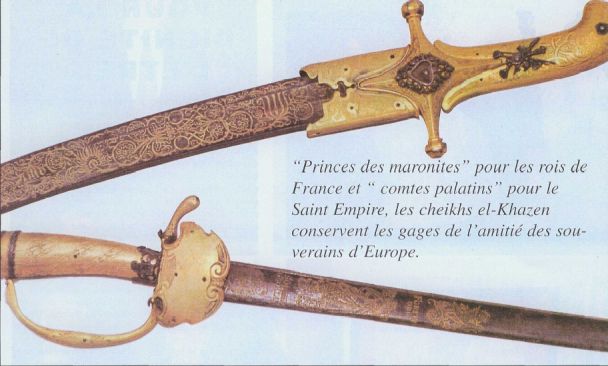
Origins of the "Prince of Maronite" Title
Growing diversity: the Khazin sheiks and the clergy in the first decades of the 18th century
Historical Members:
Barbar Beik El Khazen [English]
Patriach Toubia Kaiss El Khazen(Biography & Life Part1 Part2) (Arabic)
Patriach Youssef Dargham El Khazen (Cont'd)
Cheikh Bishara Jafal El Khazen
Patriarch Youssef Raji El Khazen
The Martyrs Cheikh Philippe & Cheikh Farid El Khazen
Cheikh Nawfal El Khazen (Consul De France)
Cheikh Hossun El Khazen (Consul De France)
Cheikh Abou-Nawfal El Khazen (Consul De France)
Cheikh Francis Abee Nader & his son Yousef
Cheikh Abou-Kanso El Khazen (Consul De France)
Cheikh Abou Nader El Khazen
Cheikh Chafic El Khazen
Cheikh Keserwan El Khazen
Cheikh Serhal El Khazen [English]
Cheikh Rafiq El Khazen [English]
Cheikh Hanna El Khazen
Cheikha Arzi El Khazen
Marie El Khazen