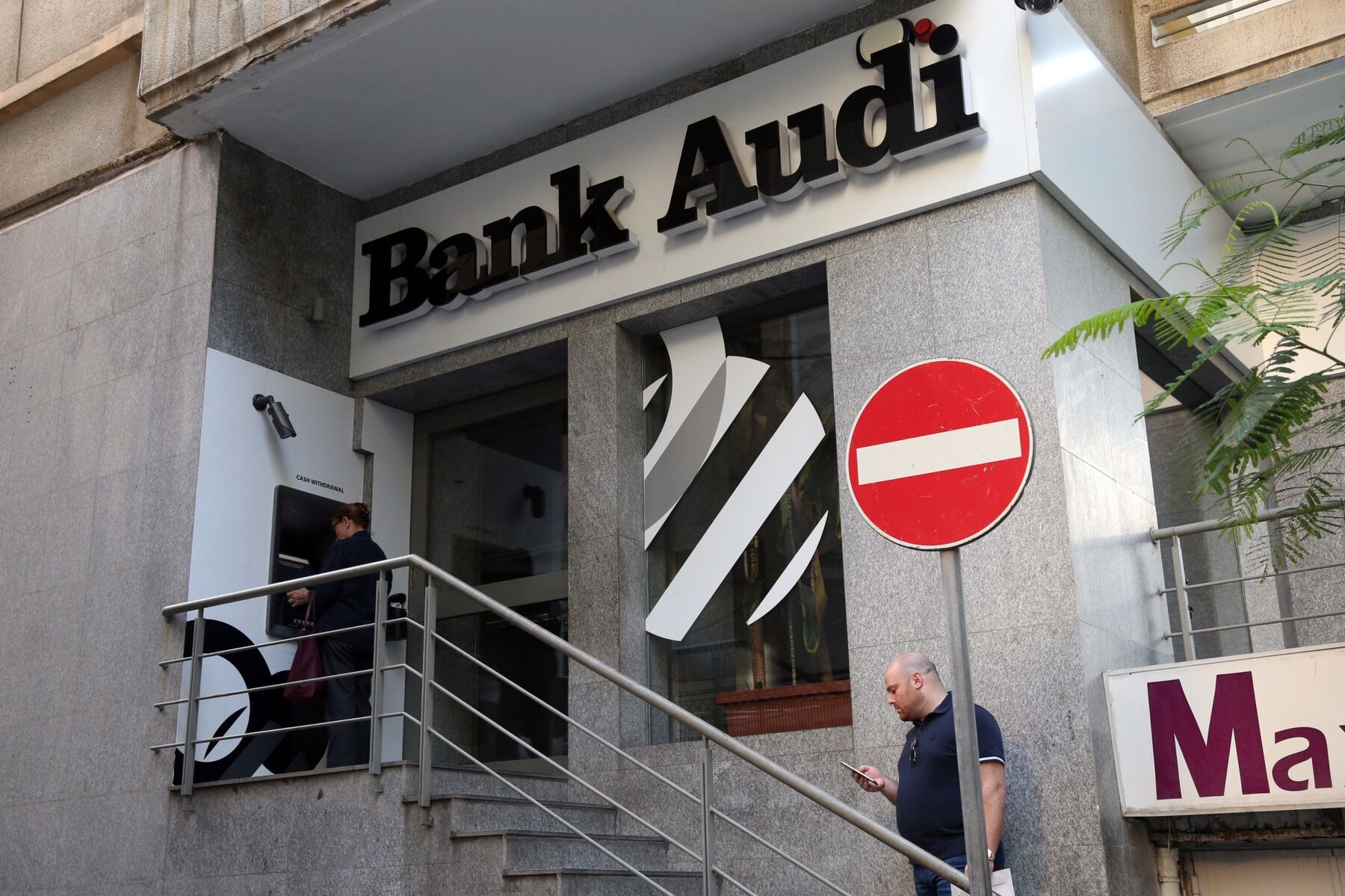
By Dana Khraiche and Lin Noueihed -- Bloomberg -- Lebanon’s banking lobby made a last-ditch appeal to the government to avoid a debt default and instead offer a swap into new notes for all bondholders. In the clutches of its worst financial crisis in decades, Lebanon is running out of time to decide how to handle a debt burden that economists say is no longer sustainable. It faces a choice of repaying more than $1.2 billion of Eurobonds due March 9 or restructuring liabilities to preserve dwindling foreign-exchange reserves. The best solution is to repay the debt through a swap for new securities and embark on immediate reforms to clean up public finances and restore the confidence of diaspora investors, according to Salim Sfeir, head of the Association of Banks in Lebanon. Foreign bondholders could be willing to agree to such an exchange if the country can convince them of acting in good faith to carry out reforms and implement a credible plan, he said. “We still believe that a wise approach to the economic crisis and the financial obligations toward the international community is feasible if there is goodwill by the government to adopt the necessary reform plans and restructuring policies for our economy,” said Sfeir, who is also chairman of Bank of Beirut.
Lebanon’s central bank had proposed a debt swap with local lenders in January as a way to avert default. Prospects for a swap faded, however, after local banks sold some of their Eurobond holdings at a discount to overseas funds such as Ashmore Group, a British fund that’s bet the government would pay out. The sales mean that foreign funds now hold a larger proportion of the Eurobond series maturing in 2020, giving them more leverage in any restructuring discussion. The Justice Ministry asked the prosecutor last month to investigate the transactions on the ground that local banks might have obstructed the government’s efforts to restructure debt. Sfeir defended banks by saying they sold their holdings to get hold of fresh dollars needed to pay outstanding liabilities of almost $9 billion and meet demand for fuel, wheat and medicine suppliers. “This is also why many of the banks were forced in recent months to sell their own bonds at a discount, thus taking great losses just to be able not to default,” he said.

By Matilda Coleman -- Beirut, Lebanon – Lebanon has asked all schools, universities and nurseries to close until March 8 as a precaution against the new coronavirus. So far, the country has recorded seven cases of the virus that was first detected in China at the end of last year, while dozens have been tested and are waiting for results or have been negative. Three of the patients, two Lebanese and an Iranian, had returned from Iran, the regional epicenter of the virus. The fourth case, of Syrian nationality, is suspected of coming into contact with someone who visited Iran, the Lebanese Ministry of Health said on Saturday in a statement. Three of the cases were in a stable condition, but an elderly patient suffered several diseases prior to his coronavirus infection and "his condition is unstable."
Later, on Saturday, the ministry said the number of cases had increased to seven, and that the three new patients had previously been in contact with infected people. All patients are currently in quarantine at the Rafik Hariri University Hospital in the capital, Beirut. Almost all educational institutions are expected to respect the request of the Minister of Education, Tarek Majzoub, on Friday night about the closure. However, the prestigious American University of Beirut, which has about 10,000 students, announced that it would remain open, "based on consultations with several experts in the field of infectious diseases."
Travel restrictions

Beirut: Every year the Lebanese capital´s parking meters generate the equivalent of six million dollars, but the municipality on whose soil most operate says it has yet to see a penny. The case is just one to have sparked public anger in a country rocked since October 17 by unprecedented anti-government protests. A source with the borough claims that, under a 2004 deal with the Traffic Authority, a share of the coins slipped into Beirut´s parking meters are supposed to land in the municipality´s coffers. But "until now, the municipality has not received anything," the source told AFP. During the mass protests of recent months, the municipality filed a complaint with the Council of State and obtained permission to choose an auditor to investigate the case. "We want to know how much they earned each day, we want to know everything on each and every pound," the source said. The municipality has also requested to be put back in charge of the parking metres on its turf.
Lebanese-American consortium Duncan-Nead, operates some 900 meters in Greater Beirut under a contract with the Traffic Authority. An employee at the company, who requested to remain anonymous, said they generate an annual income of 10 billion Lebanese pounds, or a little more than six million dollars. They were set up under a wider transport plan for Greater Beirut, with funds from donors including the World Bank. Some have asked why the municipality is only now complaining, more than a decade into the project under which the Traffic Authority was supposed to pay a concession fee to the municipalities. But the source at the borough blamed previous municipality officials who did not look into the matter, as well as grinding bureaucracy. Until 2012, he said, the municipality didn´t even have a copy of the contract with the Traffic Authority and seemed to know little about the deal. The Traffic Authority in November said money it collected from parking meters was used to maintain the meters themselves as well as traffic lights, surveillance cameras and electric road signs.

by foreignpolicy.com -- BETSY JOLES -- Fear of the COVID-19 epidemic has spread across the Middle East after Iran recorded the highest number of deaths from the virus outside of China this week. The high mortality rate indicates the outbreak might be larger than Iran’s official recorded figures. Saudi Arabia has responded by banning foreign pilgrims from traveling to the holy sites of Mecca and Medina. Lebanon has confirmed three cases so far, people who had returned from recent trips to Iran. The threat could not come at a worse time: The country is teetering on the edge of bankruptcy and reeling from several months of anti-government protests. Lebanon is facing its worst economic crisis since its 1975-1990 civil war, with a looming $1.2 billion Eurobond payment on March 9. If the government defaults, it would deal another major blow. These financial shortcomings limit the country’s ability to respond to the coronavirus, from hiring enough trained health workers to conduct fever screenings at the airport to equipping hospitals with specialized gear such as respirators for quarantine areas. Coming up with the human and capital resources needed to handle severe virus cases would put an already ailing health care system in dire straits.
The state of the economy has already overwhelmed Lebanon’s public health care system. Medical suppliers are unable to import the products they need due to a shortage of U.S. dollars caused in part by a slowdown of foreign currency injections into the banking sector. Health care is another item on the list of demonstrators’ public grievances, with medical professionals decrying corruption and inattention from the government when it comes to providing hospitals with what they need. Doctors are also protesting the government’s failure to reimburse hospitals for care provided to patients who should be covered by social security and military health funds, according to Human Rights Watch. The procedures put in place so far to prevent the spread of the virus inside Lebanon show the health care system’s strain.




Population Movements to Keserwan - The Khazens and The Maans
ما جاء عن الثورة في المقاطعة الكسروانية
ثورة أهالي كسروان على المشايخ الخوازنة وأسبابها
Origins of the "Prince of Maronite" Title
Growing diversity: the Khazin sheiks and the clergy in the first decades of the 18th century
Historical Members:
Barbar Beik El Khazen [English]
Patriach Toubia Kaiss El Khazen(Biography & Life Part1 Part2) (Arabic)
Patriach Youssef Dargham El Khazen (Cont'd)
Cheikh Bishara Jafal El Khazen
Patriarch Youssef Raji El Khazen
The Martyrs Cheikh Philippe & Cheikh Farid El Khazen
Cheikh Nawfal El Khazen (Consul De France)
Cheikh Hossun El Khazen (Consul De France)
Cheikh Abou-Nawfal El Khazen (Consul De France)
Cheikh Francis Abee Nader & his son Yousef
Cheikh Abou-Kanso El Khazen (Consul De France)
Cheikh Abou Nader El Khazen
Cheikh Chafic El Khazen
Cheikh Keserwan El Khazen
Cheikh Serhal El Khazen [English]
Cheikh Rafiq El Khazen [English]
Cheikh Hanna El Khazen
Cheikha Arzi El Khazen
Marie El Khazen