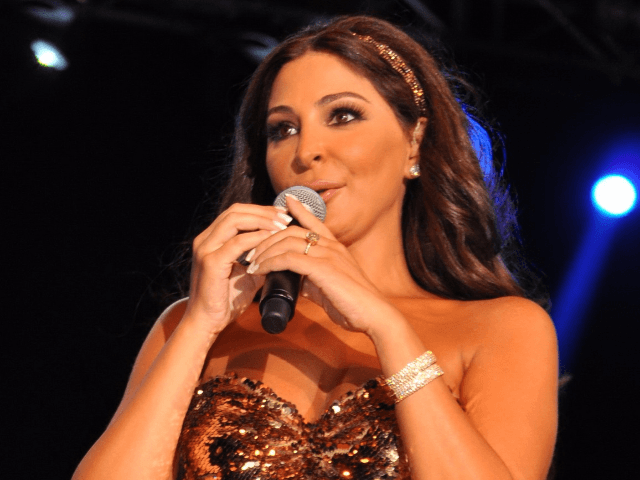
by breitbart.com -- Outspoken Lebanese pop star Elissa, one of the most popular female singers in the Arab world, on Monday accused her government of refusing to cancel flights from Iran to keep the Wuhan coronavirus at bay because officials feared to antagonize Hezbollah. “Only because we don’t want to upset Hezbollah, we don’t stop Iran flights. On top of all that, they tell us not to panic!” she exclaimed. “When will we be rid of the sheep’s mentality and start talking logic and science?? What is this place we live in??” she asked.
The singer was responding to Lebanon’s first confirmed case of the coronavirus, a 45-year-old woman who apparently brought the virus with her from Iran and is currently hospitalized in Beirut. A second case was confirmed and quarantined in Beirut after Elissa made her remarks. The second patient reportedly arrived on the same flight from Iran as the first one. In the course of reporting Elissa’s comments, al-Arabiya News noted that other Lebanese are making similar points about the recklessness of allowing travel from Iran even as coronavirus cases add up quickly in that country. Iran has reported 139 infections and 19 deaths to date, the highest numbers outside China. “Lebanon continues to allow Iran to export its virus, sectarianism, arms, and funds to Hezbollah,” Lebanese journalist Jerry Maher charged.
![Lebanon's banks, which have imposed increasingly restrictive informal restrictions on cash withdrawals and transfers abroad, have incurred the ire of anti-government protesters amid the country's worst economic crisis in decades [File: Mohamed Azakir/Reuters]](https://www.aljazeera.com/mritems/imagecache/mbdxxlarge/mritems/Images/2020/2/24/fbad2933472d40cbbe34a7f08720fb7f_18.jpg)
by aljazeera.com -- Timour Azhari -- Beirut, Lebanon - When Maher, an engineer in his mid-30s, returned to Lebanon flush with cash from working in the Gulf, he deposited his hard-earned savings in a bank - believing they would be safe. But as Lebanon has spiralled into its worst economic crisis in decades, banks have imposed informal capital controls that force people to withdraw their savings in Lebanese pounds at the official exchange rate that effectively values their savings at 40 percent less than what its worth on the parallel market. "Nothing can prepare you for the shock of this," Maher told Al Jazeera. But Maher, who asked his surname be withheld to protect his privacy, is not standing by helplessly. He is trying to move what is left of his savings out of Lebanon via a financial instrument many in the country have not embraced - until recently.
Bitcoin.
"Suddenly everything turns upside down and all the options are open," said Maher. With confidence in Lebanese banks at an all-time low over increasing restrictions on foreign currency movements, more Lebanese are turning to digital currencies like bitcoin as a way to shift their money in and out of the country. "Right now, Lebanese are interested in escaping tight restrictions on cash withdrawals and transfers. They basically want financial freedom," 29-year old Mahmoud Dgheim, who has traded bitcoin since 2015, told Al Jazeera. "If you want to go around the banking system, bitcoin is a solution." Bitcoin - the first and most well-known cryptocurrency - is neither issued nor controlled by any government or financial entity. Rather than go through a bank or another middleman, transactions made in bitcoin are peer-to-peer, anonymous and verified by a centralised global network of computers.

by voanews.com --AMMAN, JORDAN - Lebanon is engulfed in a crippling financial crisis as the government seeks support from an International Monetary Fund technical delegation visiting the country. The IMF is trying to help draw up a comprehensive economic, monetary and financial rescue plan for the tiny Mediterranean country. So far, Lebanon has not asked for financial assistance from the IMF, but meetings are still continuing. Protests since October have seen the ruling elite blamed for decades of financial mismanagement. Lebanese economist Kamal Hamdan directs the Consultation & Research Institute in Beirut. He said the government has not yet provided a detailed action plan or roadmap out of Lebanon’s financial turmoil, but he expects one to be announced in the next 10 days. He sees the IMF visit as perhaps helping or accelerating the emergence of such a plan.
He said Lebanon’s gross domestic product for 2019 was negative and the same can be expected this year. The U.S. dollar has also increased by 60 percent against the Lebanese lira currency, while the consumer price index hovers around 10 percent. He warns that with these indicators, the short-term outlook is not good. "We are in an economic catastrophe. Higher inflation, higher deprivation of the purchasing power of many Lebanese — maybe two-thirds of Lebanese have their income in Lebanese pounds. The whole pension system is based on Lebanese pounds. I don’t know how to say … we have to expect shocks with respect to social issues in the coming weeks and months," said Hamdan.
Public debt
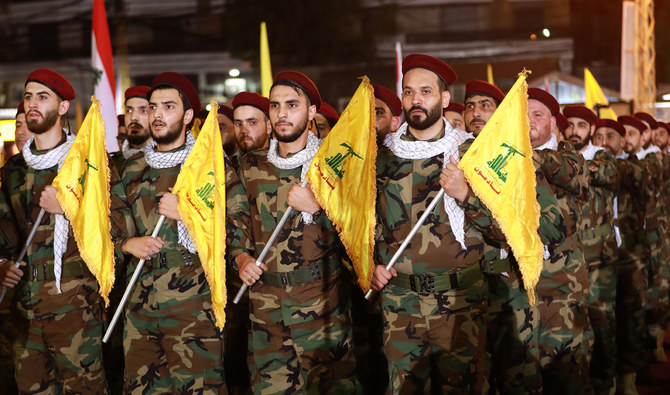
by arabnews.com -- NAJIA HOUSSARI --BEIRUT: Activists in Lebanon, in particular those who speak out against Hezbollah, continue to face physical attacks, arrest, psychological pressure and threats to their families. The individuals being targeted include lawyers, journalists, media personalities and writers. On Monday, Asrar Shebaro, a correspondent for An-Nahar newspaper, was attacked in a public place. It happened while she was working at Rafic Hariri International Airport in Beirut covering the arrival of a flight from Iran as part of a story about the response of Lebanese authorities to the coronavirus threat A video she filmed showed an unidentified young man attacking her and taking her phone by force. He told her she was not allowed to film in the airport because these were “families” there, which is a term Hezbollah uses to describe its supporters. The man deleted a number of videos Shebaro had filmed of passengers arriving from Iran. When she asked him under whose authority he was acting and who he represented, he said that he belonged to a political party. In a message posted on the An-Nahar website, the newspaper said: “The bullying of the media and the truth will not dissuade this newspaper from completing its message by accurately conveying information and holding those responsible for their fragile measures taken to combat the Coronavirus.”
Activists in Lebanon, especially Shiites, have faced threats as the protests against corruption, the financial crisis in the country, high levels of unemployment and the lack of basic services escalated. Some told Arab News they have been prevented from visiting their families in the southern suburbs of Beirut, and that pressure has been put on their relatives. In some cases, protesters have been forced to sleep in tents at protest sites or other locations. “The pressure and attacks have diminished after a decision was taken to prevent the supporters of the Amal Movement and Hezbollah from confronting activists in the protest squares, but this does not stop moral pressure,” said activist Mohamed Kassem, who is a secondary school teacher. Protester Mahmoud Fakih, who lives in Beirut, said he avoids neighborhoods dominated by the Amal Movement and Hezbollah. “At the beginning of the revolution, the pressure on us was great but it decreased with the decline of the movement,” he said. “Yet, we are still cautious. For example, I do not go to my village in the south. There is real social hostility to us there. We were previously attacked in the Zuqaq Al-Blat area but nobody documents these attacks.”
Population Movements to Keserwan - The Khazens and The Maans
ما جاء عن الثورة في المقاطعة الكسروانية
ثورة أهالي كسروان على المشايخ الخوازنة وأسبابها
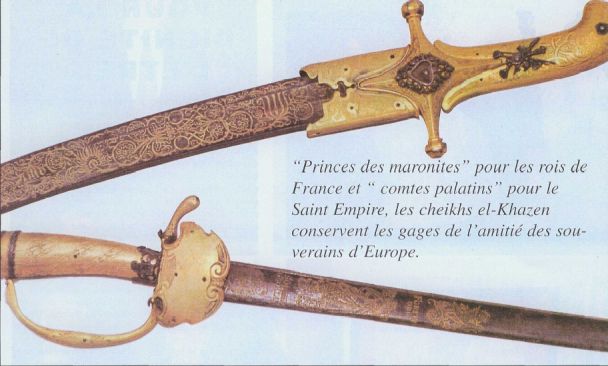
Origins of the "Prince of Maronite" Title
Growing diversity: the Khazin sheiks and the clergy in the first decades of the 18th century
Historical Members:
Barbar Beik El Khazen [English]
Patriach Toubia Kaiss El Khazen(Biography & Life Part1 Part2) (Arabic)
Patriach Youssef Dargham El Khazen (Cont'd)
Cheikh Bishara Jafal El Khazen
Patriarch Youssef Raji El Khazen
The Martyrs Cheikh Philippe & Cheikh Farid El Khazen
Cheikh Nawfal El Khazen (Consul De France)
Cheikh Hossun El Khazen (Consul De France)
Cheikh Abou-Nawfal El Khazen (Consul De France)
Cheikh Francis Abee Nader & his son Yousef
Cheikh Abou-Kanso El Khazen (Consul De France)
Cheikh Abou Nader El Khazen
Cheikh Chafic El Khazen
Cheikh Keserwan El Khazen
Cheikh Serhal El Khazen [English]
Cheikh Rafiq El Khazen [English]
Cheikh Hanna El Khazen
Cheikha Arzi El Khazen
Marie El Khazen