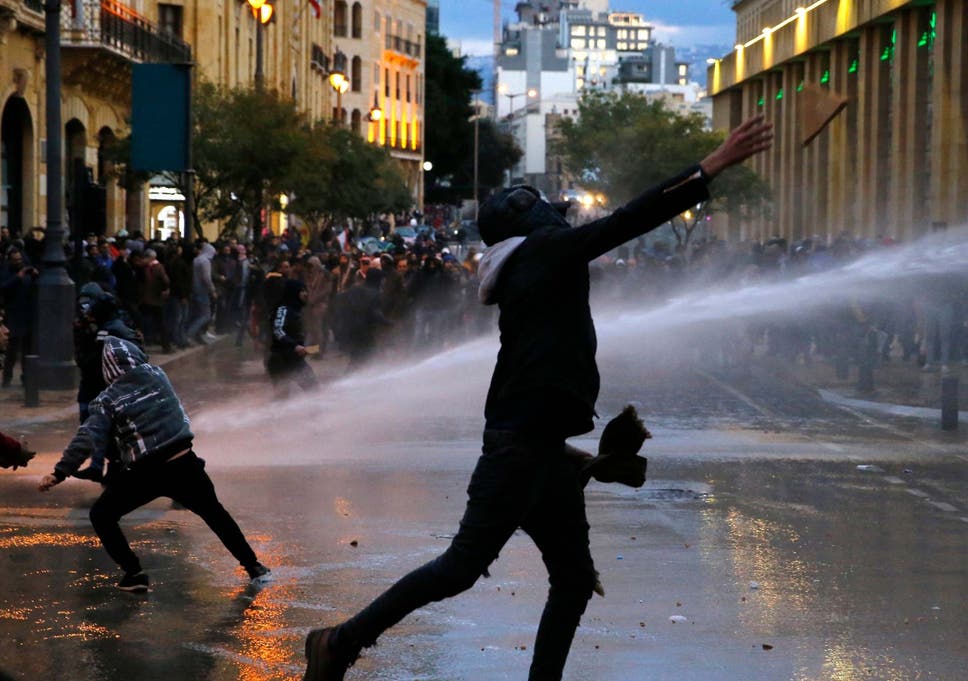
by independent.co.uk -- Robert Fisk -- The freezing Mediterranean squalls that slash across downtown Beirut and the seafront to the west may give the impression this week that Lebanon is lapsing back into its favourite pastime: forgetting history and praying for a return to the good old days. Revolution? Now that the country’s old parliamentary sectarians have gathered to support Hassan Diab’s deeply uninspiring government, it’s hard to see how the wretched system behind this country’s fragile grip on reality can ever change. True, the graffiti is still there – including the “God is Great” imprecations spray-painted on the walls just down from my home – and the broken windows on downtown offices and the steel shutters of the banks in the city centre and in Hamra. But there’s a bigger storm coming. More inflation, more taxes, more poverty – though I noticed that the parliamentarians who gathered to vote for the new government were literally very well-heeled – is coming in this tempest. A government which tries to alleviate anger by promising yet more economic suffering is a scenario which only Lebanon can invent.
New taxes on fuel and electricity plus a rise in VAT to 15 per cent – a rate still below EU nations, but likely to rise to 20 per cent – will probably hit first. But the revolution may well return among government employees who receive their salaries in Lebanese pounds, and whose income has already fallen by up to 40 per cent. Compared to price increases of 50 per cent. What many non-Lebanese fail to appreciate is that the Lebanese army and its associated military personnel – all 72,000 of them – are among these government employees. Policemen are going to suffer just as much as the civil society whose anger they must confront in order to protect the government. It’s hard to know whether to laugh or simply dismiss as satire the efforts of Hassan Diab’s cabinet to survive the country’s economic collapse. We all know that Hezbollah’s imprimatur is stamped heavily on the government – those brave symbols of national resistance having long ago decided that their political power is more important than the legions of militia martyrs who died to preserve the independence of the Lebanese civilians, many of whom have protested in downtown Beirut. Yet around 14 of the 20 newly appointed ministers are said to hold US passports. If this true, don’t tell Donald Trump, although the White House insane asylum probably wouldn’t understand the irony – the US embassy in Beirut still cannot get the State Department to answer all their phone calls – not many people there, it seems. But American diplomats in Beirut have been dubiously putting it about among Lebanese banking officials that far too much US dollar currency is making its way from Lebanon to the regime in Syria.
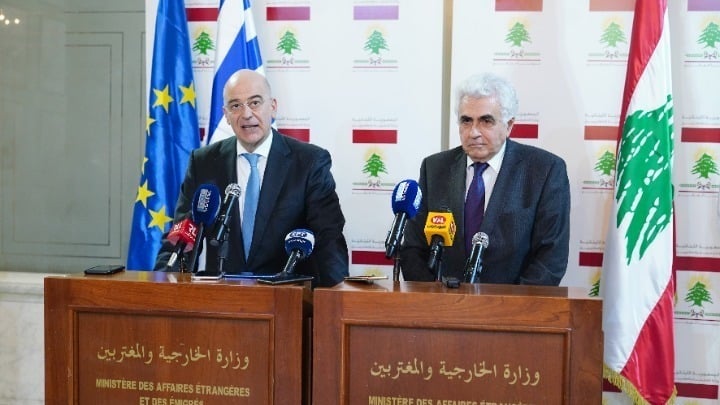
by greekcitytimes.com --Greece’s Minister Foreign Affairs, Nikos Dendias met with his Lebanese counterpart Nassif Hitti, the President of Lebanon Michel Aounthe and the President of the Lebanese parliament Nabih Berri, in Beirut on Wednesday. Following their meeting, during their press conference Dendias declared that “Lebanese-Greek relations are based upon solid foundations of friendship and mutual respect,’’ adding that the trilateral cooperation of the two countries with Cyprus “has produced positive results up to now.” Both Dendias and Hitti “expressed support for political solutions under the guidance of the UN, both in Libya and Syria,” with the Greek Minister praising Lebanon’s “impressive efforts in hosting and addressing the needs of the refugees.” Dendias said he had the opportunity to discuss with his colleague this Monday’s decision at the EU’s Foreign Affairs Council on a new operation aimed at ensuring the implementation of the arms embargo in Libya, then reiterated Greece’s stance on a peaceful resolution there.
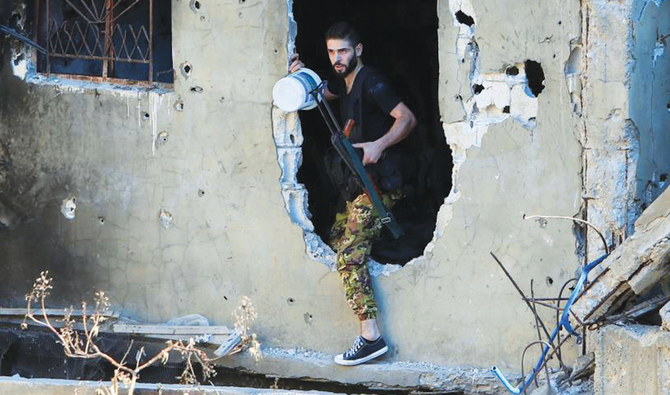
by NAJIA HOUSSAR -- arabnews.com --BEIRUT: Authorities are battling to prevent “a social explosion” among Palestinian refugees crammed into camps in Lebanon, a top official has revealed. Fathi Abu Al-Ardat, secretary of Palestine Liberation Organization (PLO) factions in Lebanon, told Arab News that urgent measures were being put in place to try and stop the “crisis” situation getting out of control. “Conditions in Palestinian refugee camps in Lebanon are very difficult due to the economic crisis facing the country, and we are trying to delay a social explosion in the camps and working on stopgap solutions,” he said.
And Dr. Hassan Mneimneh, the head of the Lebanese-Palestinian Dialogue Committee (LPDC), said: “More Palestinian refugees from the camps in Lebanon are immigrating. Embassies are receiving immigration requests, and Canada is inundated with a wave of immigration because its embassy has opened doors to applications.” According to a population census conducted in 2017 by the Central Administration of Statistics in Lebanon, in coordination with the Palestinian Central Bureau of Statistics (PCBS), there are 174,422 Palestinian refugees in Lebanon spread across 12 camps and nearby compounds. Mneimneh insisted the figure was accurate despite the UN Relief and Works Agency (UNRWA) estimating there to be 459,292 refugees in the country. He said: “The census we had conducted refers to the current reality in Lebanon.” He added that he feared “increased pressure on European donor countries over UNRWA in the coming days after the unilateral implementation of the ‘Deal of the Century’ (the US peace plan for the Middle East) by Israel. “Israel’s goal is to undermine UNRWA’s mission as a prelude to ending the Palestinian cause and, thus, preventing the return of Palestinians.”

BEIRUT (AP) - Bassem Mroue— If the government decides to refinance Lebanon's massive debt, it should be orderly and include negotiations with debt holders as foreign funds are ready for such discussions, the head of Lebanon's banking association said Wednesday. Lebanon is going through its worst financial and economic crisis since the end of the 1975-90 civil war after decades of corruption and mismanagement by the ruling elite. Nationwide protests broke out in mid-October against the country's rulers, after which banks closed for two weeks, triggering a run on the banks and worsening the crisis. Chairman of Association of Banks in Lebanon Salim Sfeir made his comments after meeting Prime Minister Hassan Diab, during which they discussed Eurobond debt due in 2020 worth $2.5 billion.
The first to mature are Eurobonds worth $1.2 billion on March 9, and Lebanese officials have been discussing whether to pay on time as they have always have or default. Sfeir's comments came a day after Fitch Ratings said Lebanon's financial situation points to a likely restructuring of the country's debt and financial sector to preserve declining foreign currency reserves. Sfeir said in a statement after the meeting that if the government makes a decision on rescheduling the debt they should "negotiate with bond holders especially foreign funds who have expressed until now readiness to negotiate." "Any decision regarding Eurobonds is a decision that should be taken by the government only in accordance to what it sees as the good of Lebanon," he said, adding that the bank association's aim is to preserve the money of depositors.

Population Movements to Keserwan - The Khazens and The Maans
ما جاء عن الثورة في المقاطعة الكسروانية
ثورة أهالي كسروان على المشايخ الخوازنة وأسبابها
Origins of the "Prince of Maronite" Title
Growing diversity: the Khazin sheiks and the clergy in the first decades of the 18th century
Historical Members:
Barbar Beik El Khazen [English]
Patriach Toubia Kaiss El Khazen(Biography & Life Part1 Part2) (Arabic)
Patriach Youssef Dargham El Khazen (Cont'd)
Cheikh Bishara Jafal El Khazen
Patriarch Youssef Raji El Khazen
The Martyrs Cheikh Philippe & Cheikh Farid El Khazen
Cheikh Nawfal El Khazen (Consul De France)
Cheikh Hossun El Khazen (Consul De France)
Cheikh Abou-Nawfal El Khazen (Consul De France)
Cheikh Francis Abee Nader & his son Yousef
Cheikh Abou-Kanso El Khazen (Consul De France)
Cheikh Abou Nader El Khazen
Cheikh Chafic El Khazen
Cheikh Keserwan El Khazen
Cheikh Serhal El Khazen [English]
Cheikh Rafiq El Khazen [English]
Cheikh Hanna El Khazen
Cheikha Arzi El Khazen
Marie El Khazen