Brian Sozzi -- by finance.yahoo.com --The million-dollar question for IBM market observers? Did Big Blue — in promoting 30-year insider Arvind Krishna on Thursday night to replace long-time CEO Ginni Rometty in early April — just have its Microsoft Satya Nadella moment? “I wouldn’t be surprised if [IBM] is looking at Microsoft and hoping the same thing happens here,” said Sevens Report Research founder Tom Essaye on Yahoo Finance’s The First Trade. Mostly everyone by now knows the Nadella folk story at Microsoft.
Microsoft promoted Nadella to CEO in 2014, taking over for the always charismatic Steve Ballmer. Nadella joined Microsoft in 1992 and rose the ranks on the technical side of the business. Before assuming the CEO role, Nadella was instrumental in pivoting Microsoft to the cloud. In Nadella, Microsoft got a CEO with real technical chops that could pivot the company to the future of computing and work. That was different from the salesman like skills of Ballmer, which garnered mixed results in terms of stock and financial performance. Since Nadella took over, Microsoft’s stock has surged more than 300%. The company’s market cap is a staggering $1.3 billion. Nadella has used his technical skills to accelerate Microsoft’s shift to cloud and enter into new businesses such as LinkedIn (which he led Microsoft in acquiring). Above all else, most experts would agree Nadella has completely transformed Microsoft’s culture to one focused on speed and execution. To Essaye’s point, IBM is probably hoping to catch Nadella-like magic in the battle with Krishna. Indeed the resumés are very similar.
BEIJING, (UrduPoint / Pakistan Point New) :The newly-appointed Lebanese agriculture minister said on Friday that his first priority is to restore good …
thearabweekly.com — LONDON – Lebanon has moved to combat “capital flight” after it emerged that $1 billion has already been transferred out …
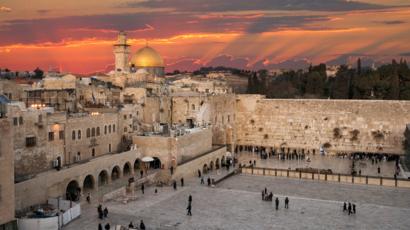
by catholicherald.co.uk -- The proposed Israeli-Palestinian peace plan announced this week is “no solution,” Catholic bishops of the Holy Land said on Wednesday. “This plan will bring no solution but rather will create more tensions and probably more violence and bloodshed,” read a statement on Wednesday from the Assembly of Catholic Ordinaries of the Holy Land, which represents Christians from Latin, Melkite, Maronite, Syrian, Armenian, and Chaldean churches in communion with Rome. The ordinaries said that the plan was one-sided in favor of Israel’s traditional demands for a two-state solution and was a “unilateral initiative” that did not involve the agreement of the Palestinians, nor respected their “equal rights and dignity.” “It is to be considered a unilateral initiative, since it endorses almost all the demands of one side, the Israeli one, and its political agenda,” the statement read. “On the other hand, this plan does not really take into considerations the just demands of the Palestinian people for their homeland, their rights and dignified life.”
The proposed “Peace-to-Prosperity” plan, announced on Wednesday by U.S. President Donald Trump and Israeli Prime Minister Benjamin Netanyahu, outlined a path to statehood for Palestine as part of a “two-state solution.” Tuesday’s proposal is open to acceptance by Palestinian leaders for a four-year term. It would set up borders for a new Palestinian state with its capital of “al-Quds,” the Arabic name for Jerusalem, encompassing parts of East Jerusalem. However, the rest of the city—including the Old City—would remain part of Israel. Israel would also keep around a third of the West Bank, including existing settlements and the Jordan Valley. There would be a four-year halt to an expansion of Israeli settlements into the proposed Palestinian territory, but there is no freeze on settlements within Israel’s proposed future boundary in the West Bank. Appearing with President Trump on Tuesday at the White House, Netanyahu said that Israel would not wait to “apply its laws” to areas that would fall under its control in the proposed boundaries, including the Jordan Valley and Jewish communities in Judea and Samaria.

Population Movements to Keserwan - The Khazens and The Maans
ما جاء عن الثورة في المقاطعة الكسروانية
ثورة أهالي كسروان على المشايخ الخوازنة وأسبابها
Origins of the "Prince of Maronite" Title
Growing diversity: the Khazin sheiks and the clergy in the first decades of the 18th century
Historical Members:
Barbar Beik El Khazen [English]
Patriach Toubia Kaiss El Khazen(Biography & Life Part1 Part2) (Arabic)
Patriach Youssef Dargham El Khazen (Cont'd)
Cheikh Bishara Jafal El Khazen
Patriarch Youssef Raji El Khazen
The Martyrs Cheikh Philippe & Cheikh Farid El Khazen
Cheikh Nawfal El Khazen (Consul De France)
Cheikh Hossun El Khazen (Consul De France)
Cheikh Abou-Nawfal El Khazen (Consul De France)
Cheikh Francis Abee Nader & his son Yousef
Cheikh Abou-Kanso El Khazen (Consul De France)
Cheikh Abou Nader El Khazen
Cheikh Chafic El Khazen
Cheikh Keserwan El Khazen
Cheikh Serhal El Khazen [English]
Cheikh Rafiq El Khazen [English]
Cheikh Hanna El Khazen
Cheikha Arzi El Khazen
Marie El Khazen