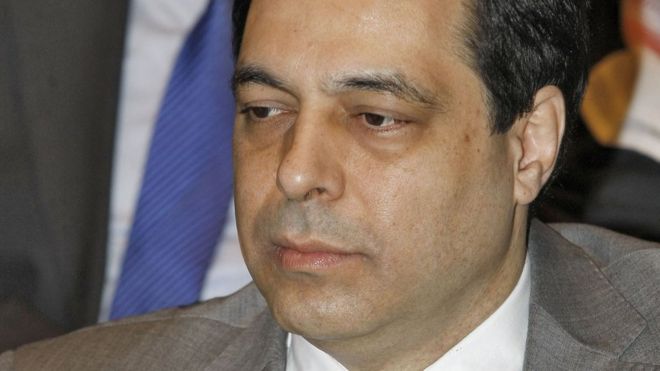
by bbc.com -- Lebanon's Shia Hezbollah movement and its allies have nominated university professor and former education minister Hassan Diab to be prime minister. Mr Diab reportedly failed to secure the backing of the main Sunni-led bloc, which could make it difficult to form a new government and secure Western aid. He emerged as a candidate when outgoing PM Saad Hariri withdrew on Wednesday. Mr Hariri resigned in October following mass protests fuelled by anger over corruption and economic mismanagement. Negotiations on a replacement stalled over the make-up of the new government, with some parties backing the protesters' demand for an independent cabinet of unaffiliated technocrats and others insisting that the cabinet includes politicians.
How was the prime minister chosen?
On Thursday, President Michel Aoun held formal consultations with members of parliament on who to name as prime minister - a post that must go to a Sunni Muslim under Lebanon's complex confessional power-sharing system. Mr Aoun was required to designate the candidate with the most support. Mr Diab was nominated by the biggest Shia Muslim factions, Hezbollah and Amal, as well as Mr Aoun's Maronite Christian Free Patriotic Movement (FPM). Together the groups control a majority of the seats in the 128-member parliament. The second-placed candidate was Nawwaf Salam, a former judge at the International Criminal Court at The Hague. Mr Hariri's Sunni-led Future Movement did not nominate anyone and told the president that it would not participate in the next government, a source close to the prime minister told Reuters news agency. Mr Hariri had been expected to be nominated for a third term in office after the Sunni religious establishment threw its support behind his candidacy.
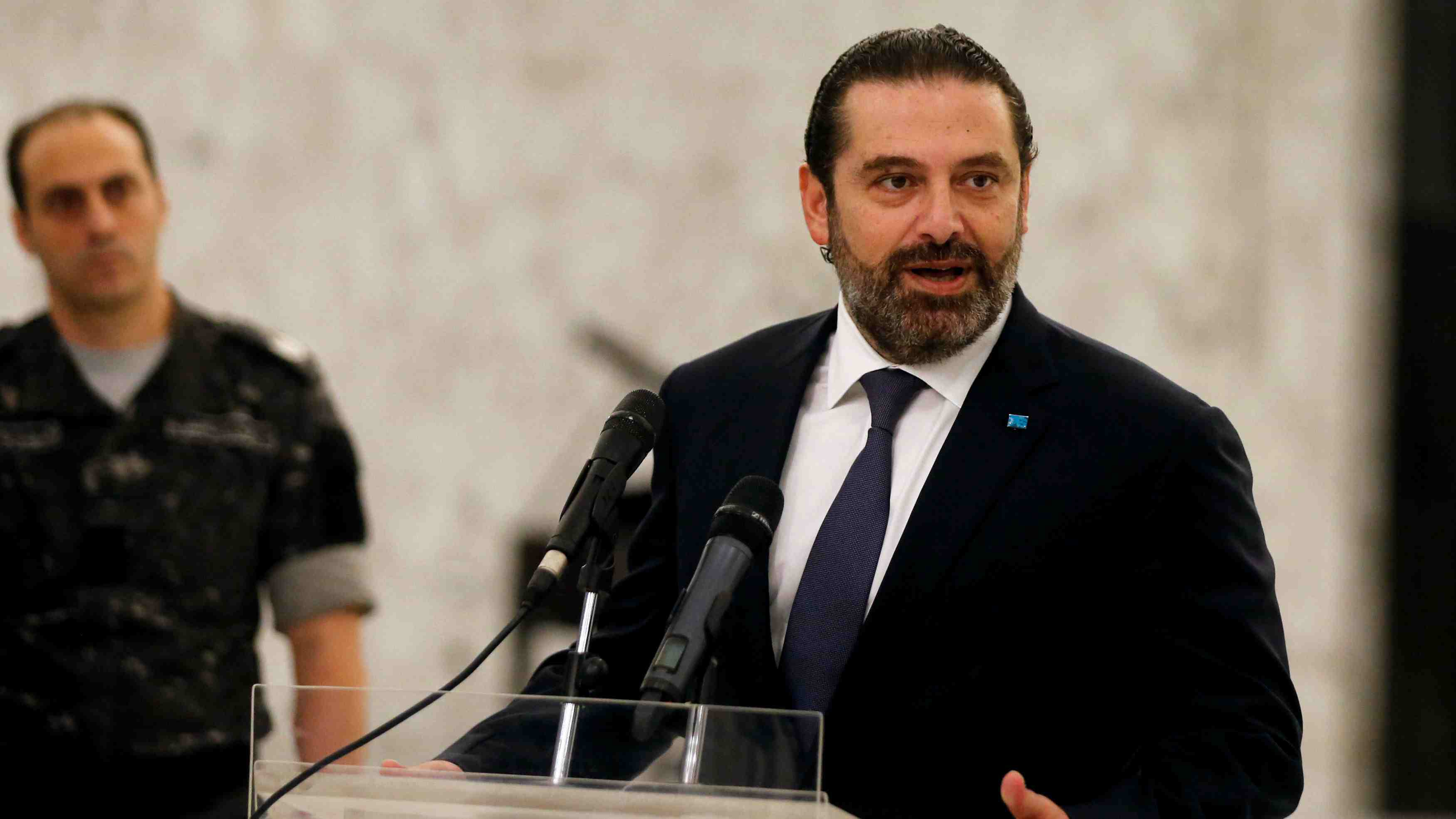
by AFP-- Lebanon's caretaker Prime Minister Saad Hariri said Wednesday he would not seek to stay on as prime minister, ahead of much-delayed consultations to give the protest-wracked country a new government. The announcement came after his forced resignation following the protests erupted on October 17. The protesters have demanded a government made up solely of experts not affiliated to the country's traditional political parties. However, religious leaders said that they did not rule out considering his candidacy. Sunni Muslim establishment has also voiced support for the country's leading Sunni politician. Hariri said his name was drawing too much opposition for him to be a candidate when official consultations to pick a new line-up begin on Thursday. "I have strived to meet their demand for a government of experts, which I saw as the only option to address the serious social and economic crisis our country faces," Hariri said. "I announce I will not be a candidate to form the next government," he said in a statement. Lebanon's economy has been sliding towards default in recent weeks, but the main political parties have so far failed to respond to calls from the street and international partners by forming a credible cabinet capable of undertaking key reforms. The consultations for a new cabinet have been postponed twice already and it remains to be seen whether they will indeed take place on Thursday and whether Hariri's chances of a third mandate as prime minister are really over.
Lebanon's contested PM election


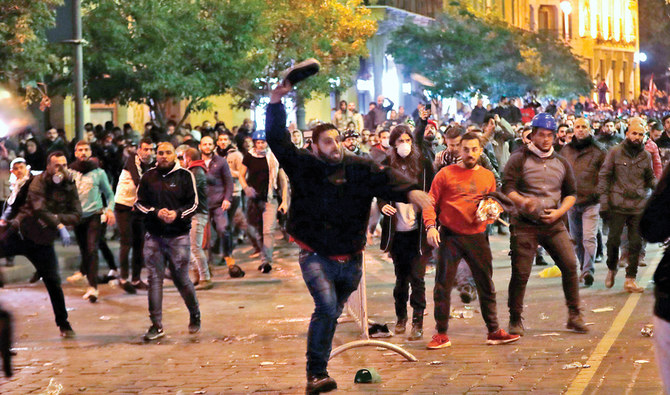
By Associated Press -- BEIRUT - Supporters of Lebanon's two main Shi'ite groups Hezbollah and Amal clashed with security forces and set fires to cars in the capital early Tuesday, apparently angered by a video circulating online that showed a man insulting Shi'ite figures. Police used tear gas and water cannons trying to disperse them. It was the third consecutive night of violence, and came hours after Lebanon's president postponed talks on naming a new prime minister, further prolonging the turmoil and unrest in the Mediterranean country. President Michel Aoun postponed the binding consultations with leaders of parliamentary blocs after the only candidate — caretaker Prime Minister Saad Hariri — failed to win the backing of the country's largest Christian groups amid a worsening economic and financial crisis.
The postponement followed a violent weekend in the small nation that saw the toughest crackdown on demonstrations in two months. Lebanese security forces repeatedly fired tear gas, rubber bullets and water cannons to disperse hundreds of protesters in downtown Beirut in the worst violence since demonstrations against the political elite erupted in mid-October. On Monday night, a group of young men clashed with security forces in downtown Beirut after a video began circulating online in which a man insulted Shi'ite political and religious figures, heightening sectarian tensions. The group, apparently supporters of Hezbollah and the Amal Movement led by Parliament Speaker Nabih Berri, set at least three cars on fire and hurled stones and firecrackers at riot police. Police responded with tear gas and water cannons.
by NAJIA HOUSSARI arabnews.com -- BEIRUT: The UN Special Coordinator for Lebanon Jan Kubis accused Lebanese politicians of “trying to buy time” after crucial parliamentary talks to nominate a replacement prime minister faced a further delay. Discussions due to take place on Monday were postponed an hour beforehand amid a widening rift between Lebanese President Michel Aoun and the Free Patriotic Movement (FPM) on one side and caretaker PM Saad Hariri on the other. It is the second time talks over the replacement leadership and composition of the new government have been delayed.
More than seven weeks after Hariri quit as prime minister, politicians are still unable to agree on a new administration despite the deepening financial crisis facing the country. Kubis warned that “with a collapsing economy, buying time to form a government is a risky hazard for politicians, but even more so for Lebanon and its people.” Plans for parliamentary talks on Monday fell into confusion following the Christian-based Lebanese Forces’ refusal to nominate a new prime minister. The party said that it will only approve “a government of independent experts trusted by the people.” Aoun postponed the discussions until Thursday after Hariri asked for “more consultation on the government’s formation.” Moustafa Allouch, a member of the Future Movement’s political bureau, told Arab News that Hariri is refusing to lead a government without the backing of the Christian vote. “Hariri doesn’t want to face accusations of lacking a national consensus,” Allouch said.

Population Movements to Keserwan - The Khazens and The Maans
ما جاء عن الثورة في المقاطعة الكسروانية
ثورة أهالي كسروان على المشايخ الخوازنة وأسبابها
Origins of the "Prince of Maronite" Title
Growing diversity: the Khazin sheiks and the clergy in the first decades of the 18th century
Historical Members:
Barbar Beik El Khazen [English]
Patriach Toubia Kaiss El Khazen(Biography & Life Part1 Part2) (Arabic)
Patriach Youssef Dargham El Khazen (Cont'd)
Cheikh Bishara Jafal El Khazen
Patriarch Youssef Raji El Khazen
The Martyrs Cheikh Philippe & Cheikh Farid El Khazen
Cheikh Nawfal El Khazen (Consul De France)
Cheikh Hossun El Khazen (Consul De France)
Cheikh Abou-Nawfal El Khazen (Consul De France)
Cheikh Francis Abee Nader & his son Yousef
Cheikh Abou-Kanso El Khazen (Consul De France)
Cheikh Abou Nader El Khazen
Cheikh Chafic El Khazen
Cheikh Keserwan El Khazen
Cheikh Serhal El Khazen [English]
Cheikh Rafiq El Khazen [English]
Cheikh Hanna El Khazen
Cheikha Arzi El Khazen
Marie El Khazen