by foreignpolicy.com -- Michal Kranz -- Expectations were high for Hezbollah leader Hassan Nasrallah’s speech on Nov. 1, which arrived at the end of a tumultuous week in Lebanon that included widespread street violence in Beirut and Prime Minister Saad Hariri’s resignation after two weeks of nationwide protests. But the militant group’s leader had little to say. Like in his previous speech on Oct. 25, Nasrallah stressed pragmatism over idealism and delivered bland criticisms of Lebanon’s politicians while echoing their calls for a speedy government formation process following Hariri’s departure. “We call for dialogue between political parties, parliamentarians, and honest leaders of the protests,” Nasrallah said. “We must all get past the wounds that were created in the last two weeks.”
For the leader of a party that has branded itself as the vanguard of Lebanon’s grassroots resistance for decades, Nasrallah’s backing of the country’s corrupt establishment might seem odd. Yet for now—struggling to adapt to the sudden changes in the political system around it and on the ground beneath it—the group has left itself with few alternatives other than backing the current order and betting on the power of its brand and its ability to dispense violence and threats to keep its supporters in line. Hezbollah will almost certainly be able to weather the growing storm and will retain its powerful position in Lebanese politics—but Hariri’s resignation, together with the social and political uncertainty that has resulted from the protests, has left the group looking unmoored. Through careful deal-making, success at the ballot box, and calculated use of force over the last decade and a half, Hezbollah has played a key role in crafting a political reality in Lebanon that has allowed the group to maintain stability, expand its missile arsenal, and to use the country as a reliable base from which to wage a campaign in Syria on President Bashar al-Assad and Iran’s behalf.

by arabnews.com -- BEIRUT: Anti-government protesters clashed with security forces as demonstrators on Monday took to the streets in force and again blocked roads throughout Lebanon. Last week’s resignation of Lebanese Prime Minister Saad Hariri had prompted a lull in protests which have rocked the country since Oct. 17. But with no new Cabinet in place, crowds packed Beirut and other Lebanese towns and cities amid reports that Hariri had on Monday afternoon met in his residence with government Minister Gebran Bassil. It was the first meeting between them since Hariri quit but there was a media blackout on the discussions. Sources close to the former premier told Arab News: “Consultations are taking place away from the media because the situation is critical and the search for solutions is underway so that the country cannot collapse.”
The source added that there was unlikely to be any truth in social media claims that a process for forming a new government was coming together. The UN special coordinator for Lebanon, Jan Kubis, on Monday offered the international organization’s assistance to Lebanon’s President Michel Aoun “in the matters it wishes to achieve to face the current circumstances.” After a weekend of relative calm, protesters filled streets in Beirut, Sidon, Tripoli, Zahle and Jal El-Dib on Sunday night in response to supporters of Aoun and the Free Patriotic Movement (FPM) gathering around the presidential office. Jihad Nammour, an activist and coordinator of the Arab Master in Democracy and Human Rights (ARMA) program, told Arab News: “After seeing the people around the presidential palace and listening to Aoun and the head of the FPM, Bassil, it became clear that the powers had ignored the people’s movement. “Aoun and Bassil presented themselves as honest and trying to fight corruption. Aoun ignored the issue of scheduling parliamentary consultations, which enraged people and led them to renew their protests on a larger scale. The protests seem to be happening according to the people’s will,” he added.

BEIRUT (Reuters) - Lebanese protesters demanding the overthrow of their country’s elite poured back onto the streets on Sunday in the largest numbers since the government was toppled and hours after opposing supporters of President Michel Aoun staged a big rally. Prime Minister Saad al-Hariri resigned on Tuesday following unprecedented nationwide protests, deepening a political crisis and complicating efforts to enact badly needed economic reforms in Lebanon. On Sunday evening anti-government protesters flooded streets in Beirut and north and south of the capital, rejecting Aoun’s attempt to position himself as the guarantor of the protest movement and its anti-corruption drive. “All of them means all of them,” protesters chanted in central Beirut, a reference to the wholesale removal of an elite they accuse of pillaging the state and steering it into crisis.
Earlier in the day, thousands of Aoun supporters had attended a rally just outside Beirut, some waving his Free Patriotic Movement party’s orange flags, engulfing a main road leading to the presidential palace. It was the biggest counter punch to the broader wave of demonstrations that have gripped Lebanon since Oct. 17 and which have included Aoun’s removal among a set of sweeping demands. In a televised speech, Aoun, who must now hold consultations with members of parliament to designate a new premier, called for protesters to unify behind efforts to stamp out corruption, which he described as having become “nested” in the state. He said a three-point plan had been drawn up around tackling corruption, revitalizing the economy and building a civil state.

by cnbc.com -- Cory Stieg -- Bill Gates is passionate about reading and recommending books he finds particularly thought-provoking. During an Oct. 2 speech at his alma mater Lakeside School, the Seattle high school where he met Microsoft co-founder Paul Allen, Gates pointed to two books he thinks are “pretty fundamental” to read for the people he hires to work at the Bill and Melinda Gates Foundation and Microsoft: “Factfulness by Hans Rosling and Steven Pinker’s “Better Angels of Our Nature.” Gates fans won’t be surprised that “Factfulness” is about “how life is getting better, and where the world still needs to improve,” according a Gates blog post from 2018, topics that are central to the work his foundation does — helping to improve the health and welfare of people in developing countries.
It’s one of Gates’ favorite books, and in 2018, he gave away a downloadable copy to anyone who graduated from college. “Although I think everyone should read it, it has especially useful insights for anyone who’s making the leap out of college and into the next phase of life,” Gates wrote on his blog, Gates Notes. Similarly, “The Better Angels of Our Nature” “offers a really fresh perspective on how to achieve positive outcomes in the world,” Gates wrote in another blog post. The 700-page book is about violence, which Gates says is important to understand in order to “build more peaceful societies.” “Steven Pinker shows us ways we can make those positive trajectories a little more likely,” Gates wrote. “That’s a contribution, not just to historical scholarship, but to the world.”

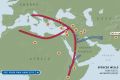
Population Movements to Keserwan - The Khazens and The Maans
ما جاء عن الثورة في المقاطعة الكسروانية
ثورة أهالي كسروان على المشايخ الخوازنة وأسبابها
Origins of the "Prince of Maronite" Title
Growing diversity: the Khazin sheiks and the clergy in the first decades of the 18th century
Historical Members:
Barbar Beik El Khazen [English]
Patriach Toubia Kaiss El Khazen(Biography & Life Part1 Part2) (Arabic)
Patriach Youssef Dargham El Khazen (Cont'd)
Cheikh Bishara Jafal El Khazen
Patriarch Youssef Raji El Khazen
The Martyrs Cheikh Philippe & Cheikh Farid El Khazen
Cheikh Nawfal El Khazen (Consul De France)
Cheikh Hossun El Khazen (Consul De France)
Cheikh Abou-Nawfal El Khazen (Consul De France)
Cheikh Francis Abee Nader & his son Yousef
Cheikh Abou-Kanso El Khazen (Consul De France)
Cheikh Abou Nader El Khazen
Cheikh Chafic El Khazen
Cheikh Keserwan El Khazen
Cheikh Serhal El Khazen [English]
Cheikh Rafiq El Khazen [English]
Cheikh Hanna El Khazen
Cheikha Arzi El Khazen
Marie El Khazen