By Julia Horowitz, CNN Business — Saudi Arabia is moving forward with an initial public offering of its huge state oil producer …
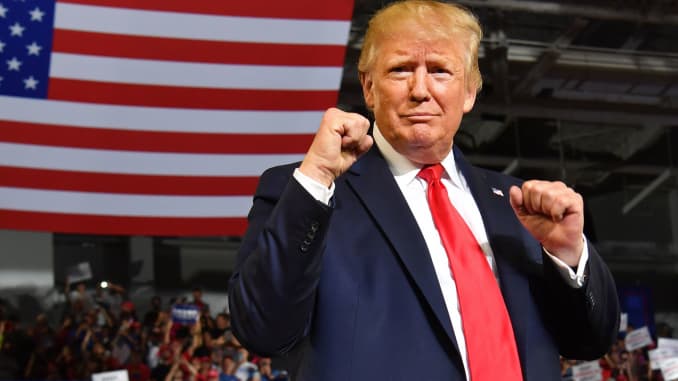
by cnbc.com Jeff Cox-- President Donald Trump looks likely to cruise to reelection next year under three different economic models Moody’s Analytics employed to gauge the 2020 race. Barring anything unusual happening, the president’s Electoral College victory could easily surpass his 2016 win over Democrat Hillary Clinton, which came by a 304-227 count. Moody’s based its projections on how consumers feel about their own financial situation, the gains the stock market has achieved during Trump’s tenure and the prospects for unemployment, which has fallen to a 50-year low. Should those variables hold up, the president looks set to get another four-year term.
The modeling has been highly accurate going back to the 1980 election, missing only once. “If the economy a year from now is the same as it is today, or roughly so, then the power of incumbency is strong and Trump’s election odds are very good, particularly if Democrats aren’t enthusiastic and don’t get out to vote,” said Mark Zandi, chief economist at Moody’s Analytics and co-author of the paper along with Dan White, the firm’s director of government counsulting and fiscal policy research, and Bernard Yaros, an assistant director and economist. “It’s about turnout.”
Three models show Trump getting at least 289 electoral votes, assuming average turnout. His chances decrease with maximum turnout on the Democratic side and increase with minimum turnout expected. Of the three models, he does best under the “pocketbook” measure of how people feel about their finances. In that scenario, assuming average nonincumbent turnout, he gets 351 electoral votes to the generic Democrat’s 187. “Record turnout is vital to a Democratic victory,” the report said.
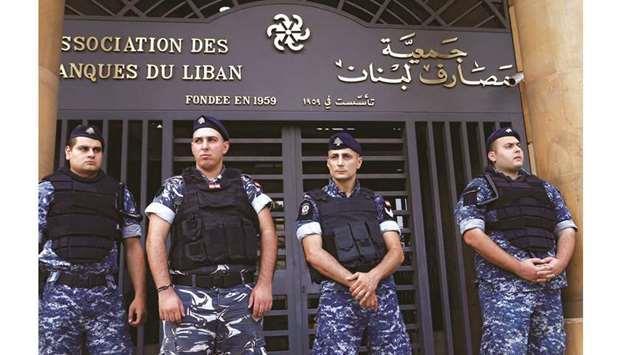
(MENAFN - Gulf Times) Lebanese banks have curtailed the transfer of dollar deposits abroad until political turbulence that has engulfed the country and raised fears of a collapse in its currency peg subsides. Lebanon has not imposed official restrictions on the movement of money as lenders reopen their doors after two weeks of nationwide anti-government protests. But banks have independently moved to tighten informal limits already in place for months to avoid capital flight amid crumbling confidence. Tellers working in four of Lebanon's major banks said transfers of deposits abroad had been stopped until further notice, regardless of the amount and destination. Some said they were making exceptions for clients who could prove they needed to pay for university fees, loans or healthcare abroad, for instance. The restrictions were confirmed by at least two senior bank officials, who declined to be named because of the sensitivity of the issue. Banks have fielded calls from high net worth depositors asking to move their money abroad, but both bankers said big clients had been broadly understanding when told to wait until the political uncertainty eases. 'It's gone better than expected, one of the senior bankers added.
Capital controls are becoming the weapon of choice for embattled governments in need of breathing room, with Argentina tightening its restrictions after a left-leaning populist won the presidential elections. Though Lebanon's restrictions are informal and temporary, some economists have warned they could discourage inflows from diaspora investors, the country's financial lifeline. But Lebanon, one of the world's most indebted nations, has few viable alternatives. Hundreds of thousands of Lebanese have been on the streets for two weeks, demanding the resignation of a political class they say has pillaged state coffers to the verge of bankruptcy whilst leaving the public with failing services. The protests prompted the resignation this week of Prime Minister Saad Hariri. A replacement has yet to be named, raising concerns the country will be unable to implement measures needed to avert economic crisis.
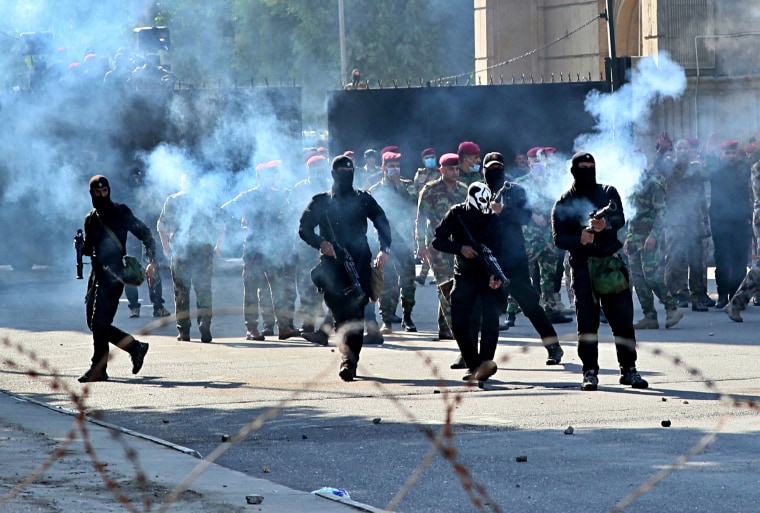
by nbcnews.com -- Saphora Smith -- They came dressed in black and wielding sticks. Images emerged on social media of men widely believed to be supporters of powerful Lebanese militant group Hezbollah tearing through a camp of anti-government protesters in Beirut on Oct. 29, smashing chairs and setting fire to tents. Meanwhile, the anti-corruption protesters regularly can be heard chanting slogans against Sayyed Hassan Nasrallah, the Iran-backed militia and political party’s leader.
The tensions between Hezbollah and the largely leaderless anti-corruption protests sweeping Lebanon are a sign of the great unease that Iran and its proxies across the region are feeling at the upsurge of anti-government demonstrations. After all, Tehran has worked for years to deepen its influence in these countries — and it’s precisely this domestic order that the demonstrators are looking to shake up, according to Neil Quilliam, an associate fellow at Chatham House, an international affairs think tank in London. “The protests pose a threat to Iranian interests in Lebanon and Iraq because they are national in character and therefore challenge the current political order, which is shored up by groups supported and underpinned by Iran,” he said.
Iran has a lot to lose if its allies such as the politically powerful Hezbollah in Lebanon, as well as Iraqi Prime Minister Adil Abdul-Mahdi's government and Iraq’s Shiite militias are shunted from power or see their influence diminish. In Iraq, after U.S. forces overthrew Saddam Hussein in 2003, Shiite allies replaced the Baathist regime. And these are the people in power today and are currently the object of the protesters’ ire. Iran also supports Shiite armed groups in the oil-rich country, who are accused by protesters of building economic empires while many Iraqis struggle in poverty.


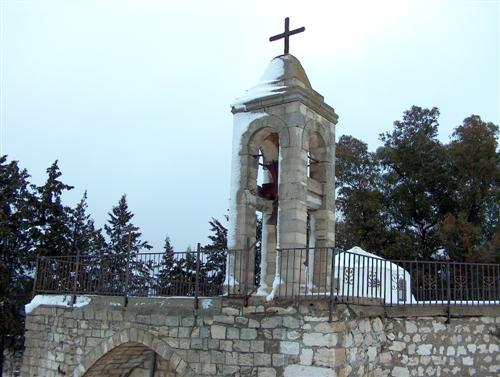
Population Movements to Keserwan - The Khazens and The Maans
ما جاء عن الثورة في المقاطعة الكسروانية
ثورة أهالي كسروان على المشايخ الخوازنة وأسبابها
Origins of the "Prince of Maronite" Title
Growing diversity: the Khazin sheiks and the clergy in the first decades of the 18th century
Historical Members:
Barbar Beik El Khazen [English]
Patriach Toubia Kaiss El Khazen(Biography & Life Part1 Part2) (Arabic)
Patriach Youssef Dargham El Khazen (Cont'd)
Cheikh Bishara Jafal El Khazen
Patriarch Youssef Raji El Khazen
The Martyrs Cheikh Philippe & Cheikh Farid El Khazen
Cheikh Nawfal El Khazen (Consul De France)
Cheikh Hossun El Khazen (Consul De France)
Cheikh Abou-Nawfal El Khazen (Consul De France)
Cheikh Francis Abee Nader & his son Yousef
Cheikh Abou-Kanso El Khazen (Consul De France)
Cheikh Abou Nader El Khazen
Cheikh Chafic El Khazen
Cheikh Keserwan El Khazen
Cheikh Serhal El Khazen [English]
Cheikh Rafiq El Khazen [English]
Cheikh Hanna El Khazen
Cheikha Arzi El Khazen
Marie El Khazen