BEIRUT (Reuters) - The Mzannar family’s 300-year-old textile business survived Lebanon’s civil war by making uniforms for militiamen. But its business savvy was no match for years of economic malaise that followed and it has now shut its factory. The head of Lebanon’s chamber of commerce chief said last year nearly 2,200 businesses had closed, warning that more would collapse. And while there is dispute over those numbers, Lebanese mostly agree the economy is in dire shape. For Naji Mzannar, who started working at the fabric factory in the 70s before running it, an array of challenges drove the decline of his business and its inability to compete with cheaper goods from abroad. “It was a build-up. Everything became losses, losses,” he said. “How long are you supposed to keep suffering?”
Built in 1946 and spread over three storeys, the factory made textiles for clothing and household use such as curtains or towels. Mzannar fought to keep it afloat until production came to a halt in 2018. In interviews with Reuters, business owners such as Mzannar, employees, and experts blamed the slowdown on problems including regional turmoil, lousy infrastructure, government waste or corruption, and high interest rates. Whether the new government tries to improve conditions, as it vows urgently to do, the effects of years of political sclerosis and stalled reforms are already inescapable: more companies going out of business and workers losing jobs.
The government publishes few reliable economic statistics, and gives no regular unemployment numbers, but last year Prime Minister Saad al-Hariri said it stood at about 30 percent. With pillars such as tourism and real estate in the doldrums, economic growth has averaged 1-2 percent since the conflict erupted in neighboring Syria in 2011, after averaging 8-9 percent growth in the years before that. “There is a deterioration. There is a rise in companies closing down and in unemployment. For sure, they come together,” said former economy minister Raed Khoury.

by reuters -- Tokyo — The wife of former Nissan boss Carlos Ghosn has left Japan and flown to Paris to appeal to the French government to do more to help him, the Financial Times reported on Sunday. Japanese prosecutors arrested Ghosn for a fourth time on Thursday on suspicion he had tried to enrich himself at the carmaker’s expense, in another dramatic twist his lawyers said was an attempt to muzzle him. “I think the French government should do more for him. I don’t think he’s had enough support and he’s calling for assistance. As a French citizen, it should be a right”, Carole Ghosn told the Financial Times in an interview before boarding a flight out of Japan late on Friday.
She said her husband’s previous 108-day imprisonment had left him “a different person” and that normal life under bail conditions had been impossible. “You could see the fear in his eyes,” as rumours of his rearrest spread last week, she was quoted as saying. Ghosn, who holds French, Lebanese and Brazilian citizenship, has denied charges against him and called on the French government for help. Tokyo prosecutors, Ghosn’s lawyer and his spokesperson were not immediately available for comment.
Public broadcaster NHK said on Sunday that prosecutors suspect Ghosn siphoned off part of the payments through a company where his wife is an executive to buy a yacht and a boat. The prosecutors asked Carole Ghosn to meet them for voluntary questioning as an unsworn witness, but the request was turned down, which prompted them to ask judges to question her on their behalf, the broadcaster said. Such a request gives judges the power to question, on a mandatory basis, witnesses who refuse to testify, according to NHK. Ghosn’s lead lawyer, Junichiro Hironaka, said on Thursday prosecutors confiscated Ghosn’s mobile phone, documents, notebooks and diaries, along with his wife’s passport and mobile phone.
Dawn raid
The Financial Times said prosecutors had confiscated his wife’s Lebanese passport in a dawn raid on their apartment in central Tokyo on Thursday morning, but did not discover her US passport. “I’m all alone here. It’s traumatising what happened,” she was quoted as saying while awaiting her flight. “If my husband is in detention and I’m here, I won’t be useful. I’m going to France … and be more useful where I can be.” Under Japanese law, prosecutors will be able to hold Ghosn for up to 22 days without charging him.

by cnbc.com -- Matt Clinch | Natasha Turak -- Elias Bou Saab, the minister of national defense of Lebanon, believes that dialogue with Hezbollah rather than sanctions would prove more successful in dealing with tensions in the region. Speaking in Jordan at the World Economic Forum (WEF) on the Middle East and North Africa (MENA), he said Lebanon was a "mosaic country" that had to be dealt with in a different way. "I believe the policy on Lebanon with that regard is not going to be paying off," he told CNBC's Hadley Gamble on Saturday, referring to the U.S. administration's approach to Hezbollah, which is financially and militarily supported by Iran. "Lebanese people know how to handle the situation internally without creating another civil war in Lebanon. No-one should or could be pressing us in one direction that may create instability in my country," he added.
Saab's comments come after recent reports indicating that the United States is considering sanctions against allies of Lebanon's parliamentary speaker Nabih Berri due to his ties with Hezbollah and Iran. "We are talking with the Americans. We are having dialogues with them and we are explaining the situation. Hezbollah they are Lebanese, they are part of the Lebanese community, the have mayors, they have elected members of the Parliament, they are in the government," he added. Hezbollah, which operates as both a political party and paramilitary group and is designated by the U.S. as a terrorist organization, made record gains during Lebanon's elections in May 2018. It is widely seen as the most powerful political force in Lebanon today.
The only group to maintain a paramilitary force since the end of Lebanon's bloody 15-year civil war in 1990, the Shia organization ignores the official Lebanese policy of staying out of regional conflicts and has been active most notably in Syria in support of Syrian President Bashar Assad. Saab is a member of Lebanese President Michel Aoun's Free Patriotic Movement, a Maronite Christian party and a political ally of Hezbollah. In 2006, the two parties signed a memorandum of understanding, the first such alliance between major Shia and Christian parties in Lebanon's history.

by newsweek.com --A powerful Libyan general in charge of much of the country has set out to claim the capital, potentially overthrowing a United Nations-backed government and allied militias. Field Marshal Khalifa Haftar, the commander of the self-proclaimed Libyan National Army, ordered his troops on Thursday via an audio message to begin a new bid to take Tripoli just as U.N. General Secretary António Guterres paid a visit to the disputed city. The military leader said "the time has come" for his forces to "advance," but would do so in "peace" as he'd ordered his forces to not "shoot civilians waving a white flag." As Haftar's men took the town of Gharyan, located about 31 miles south of Tripoli, a joint statement by France, Italy, the United Arab Emirates, the United Kingdom and the United States warned that "military posturing and threats of unilateral action only risk propelling Libya back toward chaos." The country has been beset by frequent bouts of civil unrest since the U.S.-led NATO Western military alliance helped to overthrow Muammar el-Qaddafi in 2011 by backing an insurgency against his 42-year rule.
By Friday, the Libyan National Army had entered the capital's outskirts, taking the nearby town of Al-Aziziyah. Spokesperson Ahmed al-Mismari announced that Tripoli's international airport was "fully under the control" of the faction as part of an operation now officially named Flood of Dignity During a press conference Friday, Mismari outlined the operation, displaying graphics and a cross-country push from nearly 620 miles away, including positions such as the Al-Jufra desert air base. He vowed that the Libyan National Army "has not stopped and will not stop until the completion of the task." Awaiting Haftar in Tripoli was his rival Fayez al-Sarraj, the U.N.-backed chairman of the Presidential Council and prime minister of the Government of National Accord. Both men previously worked for Qaddafi's government—Sarraj as a housing minister and Haftar as a leading military officer who ultimately turned on the longtime leader with support from the U.S., where he later fled and gained citizenship.

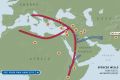
Population Movements to Keserwan - The Khazens and The Maans
ما جاء عن الثورة في المقاطعة الكسروانية
ثورة أهالي كسروان على المشايخ الخوازنة وأسبابها
Origins of the "Prince of Maronite" Title
Growing diversity: the Khazin sheiks and the clergy in the first decades of the 18th century
Historical Members:
Barbar Beik El Khazen [English]
Patriach Toubia Kaiss El Khazen(Biography & Life Part1 Part2) (Arabic)
Patriach Youssef Dargham El Khazen (Cont'd)
Cheikh Bishara Jafal El Khazen
Patriarch Youssef Raji El Khazen
The Martyrs Cheikh Philippe & Cheikh Farid El Khazen
Cheikh Nawfal El Khazen (Consul De France)
Cheikh Hossun El Khazen (Consul De France)
Cheikh Abou-Nawfal El Khazen (Consul De France)
Cheikh Francis Abee Nader & his son Yousef
Cheikh Abou-Kanso El Khazen (Consul De France)
Cheikh Abou Nader El Khazen
Cheikh Chafic El Khazen
Cheikh Keserwan El Khazen
Cheikh Serhal El Khazen [English]
Cheikh Rafiq El Khazen [English]
Cheikh Hanna El Khazen
Cheikha Arzi El Khazen
Marie El Khazen