BEIRUT, (Xinhua) — David Frem, ambitious founder of Frem Industry, will finally realize his dream of launching “Frem Immortal,” the first car …
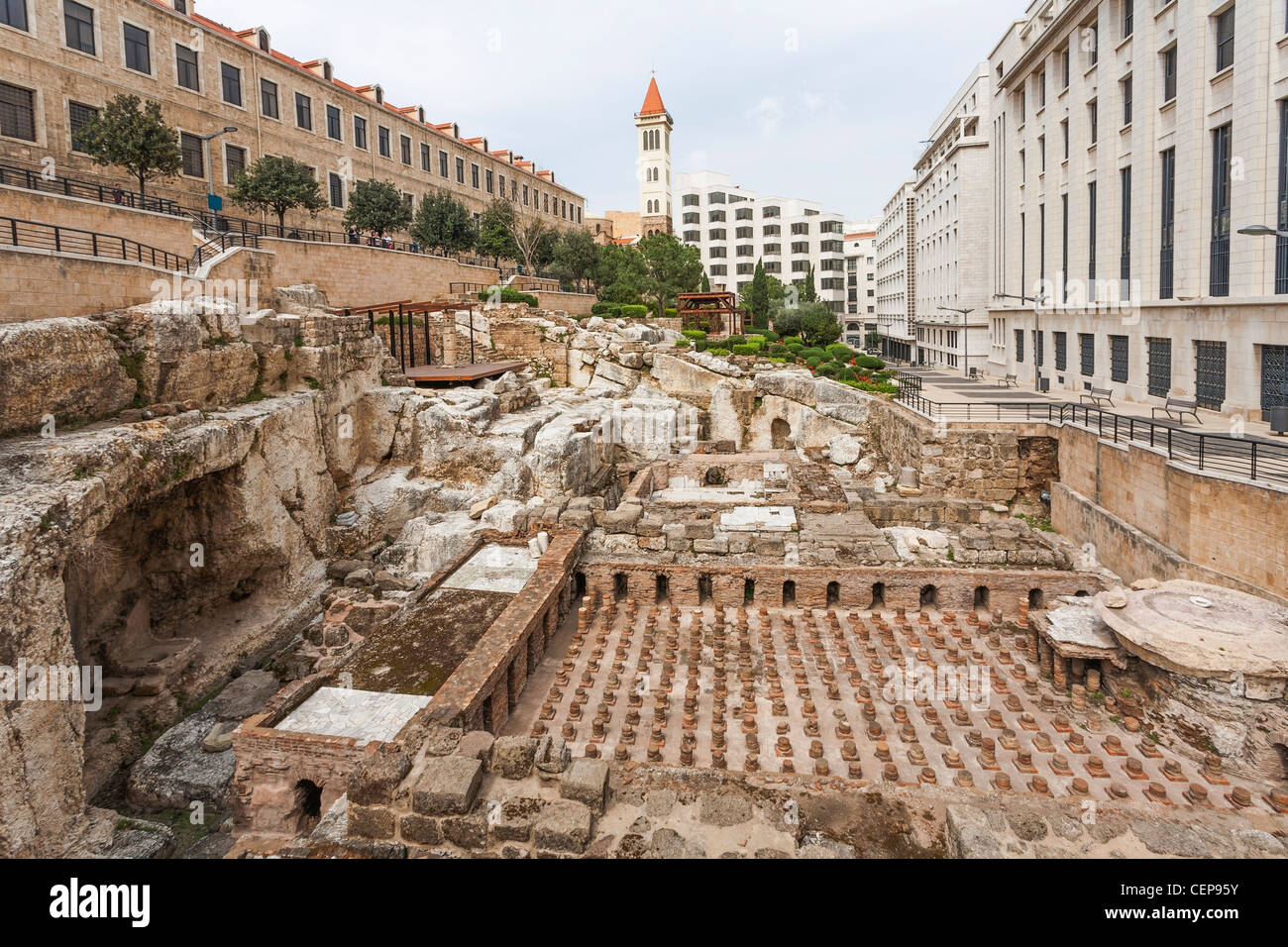
BY ABBY SEWELL nationalgeographic.com --- In the mountains above Beirut, a stately Ottoman-era hotel came to life again last autumn after decades of abandonment. The Grand Hotel Casino Ain Sofar–once a preferred vacation spot for the region’s stars and the site of weddings and lavish parties–was left to looters and the occupying Syrian Army during Lebanon’s civil war, which lasted from 1975 to 1990. It was finally left empty and in disrepair. But this past fall, hundreds of Lebanese and foreign guests once again flooded the hotel—renovated but still deliberately bearing the scars of its past—this time for weeks of events that included an art exhibition, storytelling nights, and DJ sets. The hotel has once again become the site of weddings and parties. It’s one of a handful of examples in a growing push in Lebanon toward rehabilitating threatened landmarks, many of them damaged in the war, and re-envisioning them as collective spaces. Amid the largely privatized post-war reconstruction process, developers and politicians imagined Beirut transforming into a glittering modernist metropolis like Dubai. Many of the city’s historic French Mandate and Ottoman-era buildings were leveled and replaced by high rises. Get amazing videos, travel tips, and pictures of the world’s most beautiful and far-flung places, plus special offers.
By signing up for this email, you are agreeing to receive news, offers, and information from National Geographic Partners and our partners. Click here to visit our Privacy Policy. Easy unsubscribe links are provided in every email. But as the construction has picked up pace, with cranes hovering over half-finished towers in most of Beirut’s neighborhoods, so has the push to preserve the heritage sites that remain. “It’s a matter of identity,” says Joana Hammour, one of the organizers of Save Beirut Heritage, an organization formed in 2010 that has pushed to save threatened sites and for legislation that would preserve more. In a country with 18 recognized religious sects and a complicated patchwork of political groups, Hammour says, “We need to have those spaces of collective memory, spaces of gathering, spaces of community, to live together.” Beit Beirut is one attempt at creating such a space. The imposing yellow building, elegant despite the bullet holes riddling its exterior, occupies a prominent corner in central Beirut on the former demarcation line that separated East and West Beirut during the civil war. Formerly a family home known as the Barakat building, it became a snipers’ perch during the war.

by Rachel Cooke @msrachelcooke -theguardian.com --- Nadine Labaki is a Lebanese actor and director whose latest film, Capernaum (meaning confusion or chaos in Arabic), won the jury prize at the 2018 Cannes film festival and has since been nominated for a Bafta (beaten by Roma) and an Academy Award. The film tells the story of a 12-year-old boy, Zain, who lives in a Beirut slum and whose parents are incapable of taking care of him. Having run away from home, he lives for a while with an illegal immigrant from Ethiopia, Rahil. None of those who appear in the film is a professional actor.
How did you come to start thinking about Capernaum?
In Lebanon, we are exposed to the sight of children suffering on a daily basis. They are there on the streets, selling gum or flowers or carrying heavy loads, such as gas tanks. Sometimes, they’re just lying there. I once saw this kid on a cement block in the middle of the road at one o’clock in the morning. He wanted to sleep, but he couldn’t. It began with feeling responsible, with wanting to become the voice of these kids. I thought: if I stay silent, I’m complicit in this crime – and it is a crime that we allow this to happen. I don’t know how we live with ourselves. These children are in perpetual danger. So I started going out with my co-writers to the most difficult neighbourhoods – to the slums, to the detention centres, to the courts – just watching.
The boy at the centre of the film, Zain, decides to sue his parents. Where did you get that idea?
I asked the children I spoke to if they were happy to be alive and for most the answer was no. One of them told me: “I don’t know why I was born if no one is going to love me, if no one is going to kiss me before I go to sleep, if I’m going to be beaten up every day.” One day, it hit me. This is going to be the story of a child who says: no more. For the character of Zain’s mother, I was inspired by a woman who’d had 16 children, seven of whom died from neglect.

by catholicherald.co.uk --This last January 30, I was present in London for two very interesting occurrences. The first was a wreath-laying ceremony at the equestrian statue of King Charles I in Trafalgar Square; the second was an Anglo-Catholic style Anglican Mass at the Banqueting House. That evening, at St George’s Chapel at Windsor Castle, there was a service of Evensong honouring the murdered Monarch. In all three ceremonies, Charles was referred to as a Saint. Indeed, surprising as it may sound to Catholics, the King is the only individual the Church of England has ever tried to canonize. The reason is that it was made very clear that his life would have been spared had he been willing to sanction the abolition of bishops in the Church of England by Cromwell. His feast day was removed from the Book of Common Prayer by a Whig government in the mid-19th century, but the Anglo-Catholic wing of the CofE fostered devotional societies who ever since have tried to bring the holiday back. Chief among these are the Society of King Charles the Martyr and the Royal Martyr Church Union. Interesting as all these facts may be to students of English history and Anglican beliefs, what interest could the question of Charles I’s sanctity possibly have for Catholics? Quite a bit, really.
For one thing, his cultus plays a prominent role in that Anglican Patrimony which Pope Benedict XVI created the Personal Ordinariates to preserve within the Catholic Church. When various Eastern Orthodox groups have been reconciled to the Church, they have been allowed to continue to venerate a number of post-1054 figures as Saints. So, might our newly admitted brethren of Anglican background be able to do the same with Charles I? A close reading of his life and reveals some striking points. Raised by a Catholic mother and married to a Catholic Queen, Charles demonstrated a sympathy for Catholics unseen since Mary I died. At various times throughout his reign he negotiated with several Popes for reunion, assuring them that his beliefs were the same as theirs – a fact that helped bring him to the axe. He venerated Mary and the Saints and believed in the Real Presence. It must be remembered that this was two centuries before Apostolicae Curae, meaning Rome had not yet ruled Anglican Orders invalid and it was still very much an open question whether Anglicans had the Apostolic Succession. Though in retrospect they did not, it was a doctrine Charles was willing to die for.




Population Movements to Keserwan - The Khazens and The Maans
ما جاء عن الثورة في المقاطعة الكسروانية
ثورة أهالي كسروان على المشايخ الخوازنة وأسبابها
Origins of the "Prince of Maronite" Title
Growing diversity: the Khazin sheiks and the clergy in the first decades of the 18th century
Historical Members:
Barbar Beik El Khazen [English]
Patriach Toubia Kaiss El Khazen(Biography & Life Part1 Part2) (Arabic)
Patriach Youssef Dargham El Khazen (Cont'd)
Cheikh Bishara Jafal El Khazen
Patriarch Youssef Raji El Khazen
The Martyrs Cheikh Philippe & Cheikh Farid El Khazen
Cheikh Nawfal El Khazen (Consul De France)
Cheikh Hossun El Khazen (Consul De France)
Cheikh Abou-Nawfal El Khazen (Consul De France)
Cheikh Francis Abee Nader & his son Yousef
Cheikh Abou-Kanso El Khazen (Consul De France)
Cheikh Abou Nader El Khazen
Cheikh Chafic El Khazen
Cheikh Keserwan El Khazen
Cheikh Serhal El Khazen [English]
Cheikh Rafiq El Khazen [English]
Cheikh Hanna El Khazen
Cheikha Arzi El Khazen
Marie El Khazen