BEIRUT(Xinhua) — Visiting Cyprus Foreign minister Ioannis Kasoulidis stressed Tuesday his country’s support to Lebanon in the face of terrorism and the …
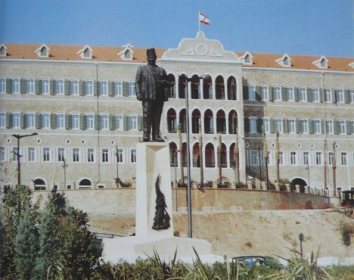
A final political agreement was reached Tuesday afternoon on the 15-district electoral law and the Cabinet is expected to approve it during its session on Wednesday. "An agreement has been reached on the electoral law and all obstacles have been resolved," LBCI television reported. According to MTV, the draft law splits Beirut into two districts and moves the minorities seat to the first district. The first district contains Ashrafieh, Rmeil, Saifi and Medawwar while the second contains Bashoura, Marfa, Zokak al-Blat, Mazraa, Ras Beirut, Ain el-Mreisseh, Minet el-Hosn and Mousaitbeh.
The parties also agreed that any electoral list has to reach a certain threshold to become eligible to win seats. The threshold is determined by the so-called electoral quotient: the total number of voters in a certain district divided by the number of seats. The so-called preferred vote will meanwhile be counted in the administrative district and not in the electoral district, a demand that the Free Patriotic Movement had long called for.
An agreement was also reached on other technical details while no agreement was reached on the issues of “allowing the armed forces to vote, lowering the voting age and introducing a women's quota.” The parties also agreed that expat voting will be introduced in the next elections and that the diaspora will be granted six seats. President Michel Aoun and Prime Minister Saad Hariri are meanwhile supposed to agree on the elections date, as per the agreement.

by Nazeer RidaBeirut – A meeting between Lebanese President Michel Aoun and Prime Minister Saad Hariri on Sunday helped overcome some of the remaining obstacles that are hindering the approval of a new parliamentary electoral law. The meeting at the presidential palace in Baabda raised the level of optimism in the country that the thorny electoral law dispute will be resolved after years of political wrangling. The lingering differences over the current law lies in the distribution of seats in electoral districts and if the preferential vote should be held on the basis of the district or province (qadaa), revealed Lebanese Forces MP Georges Adwan. Hariri said after his talks with the president: “The meeting with Aoun was positive and we should speed up the drafting of the new electoral law.” The premier stated that the drafting should be complete before Wednesday’s cabinet session. Lebanon witnessed a flurry of political consultations last week in an attempt to eliminate the remaining obstacles in the electoral law and set a date for the parliamentary elections that have been twice postponed due to dispute over the law. The factions are also seeking to extend parliament’s term before it expires on June 20.
Finance Minister Ali Hassan Khalil stated that “time is running up”. “It is unacceptable for us to reach vacuum,” he added, warning that vacuum will not be limited to parliament, but it will extend to the whole state. He stressed: “We will forge ahead with openness and positivity to reach an agreement.” He called for the adoption of an electoral law that is based on proportional representation and 15 districts, saying that there are no disputes over the essence of the new law. Adwan echoed Khalil’s statements, adding that some issues of contention will be resolved this week. The differences center on the preferential vote, he said. “If we failed to reach an agreement, then we have no choice but to resort to a vote on it,” he explained. The MP also denied that there are differences between the Lebanese Forces and Free Patriotic Movement, saying: “We are in agreement over 98 points, while two remain.” Should a new law be adopted, then the date of the parliamentary elections will be set by the president and prime minister. “The economic situation in the country depends on the adoption of this law,” stated Adwan. Mustaqbal Movement MP Mohammed al-Hajjar meanwhile called for “preparing for the polls as if they were taking place tomorrow.” He pledged that a new law will be approved soon and all officials should be responsible for preparing the country for voters to head to the ballot boxes to practice their democratic rights. Not all sides in Lebanon have been pleased with the latest developments regarding the law, as Marada Movement chief MP Suleiman Franjieh lashed out at the Lebanese Forces and Free Patriotic Movement saying that they had reneged on an agreement made with Maronite Patriarch Beshara al-Rahi in Bkirki. “They have gone against what we agreed on at Bkirki. Their fear has driven them to devise electoral laws that suit their interests,” he noted.
Kuwait News Agency (KUNA)) FALUGA, Lebanon, June 11 (KUNA) –– Kuwait inaugurated on Sunday Sadd (Dam) Al-Qaismani project in Faluqa town, funded …
Population Movements to Keserwan - The Khazens and The Maans
ما جاء عن الثورة في المقاطعة الكسروانية
ثورة أهالي كسروان على المشايخ الخوازنة وأسبابها
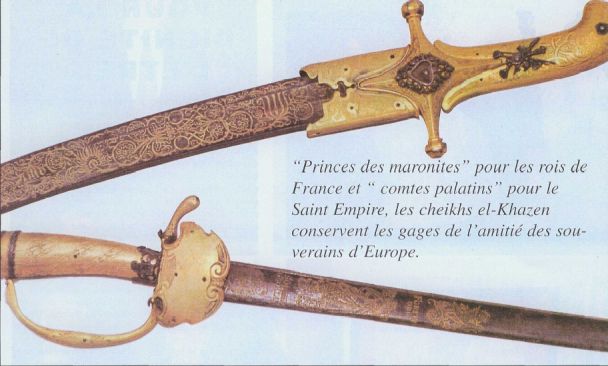
Origins of the "Prince of Maronite" Title
Growing diversity: the Khazin sheiks and the clergy in the first decades of the 18th century
Historical Members:
Barbar Beik El Khazen [English]
Patriach Toubia Kaiss El Khazen(Biography & Life Part1 Part2) (Arabic)
Patriach Youssef Dargham El Khazen (Cont'd)
Cheikh Bishara Jafal El Khazen
Patriarch Youssef Raji El Khazen
The Martyrs Cheikh Philippe & Cheikh Farid El Khazen
Cheikh Nawfal El Khazen (Consul De France)
Cheikh Hossun El Khazen (Consul De France)
Cheikh Abou-Nawfal El Khazen (Consul De France)
Cheikh Francis Abee Nader & his son Yousef
Cheikh Abou-Kanso El Khazen (Consul De France)
Cheikh Abou Nader El Khazen
Cheikh Chafic El Khazen
Cheikh Keserwan El Khazen
Cheikh Serhal El Khazen [English]
Cheikh Rafiq El Khazen [English]
Cheikh Hanna El Khazen
Cheikha Arzi El Khazen
Marie El Khazen