By Al Bawaba –Article represent opinion of the author It seems that Lebanese channel Al Jadeed just cannot catch a break …
Asharq Al-Awsat English – The Custodian of the Two Holy Mosques King Salman bin Abdulaziz has sent an official invitation to Lebanese …

A Lebanese banker has agreed to buy Pikes Peak National Bank to make the Colorado Springs financial institution a hub for expansion across the U.S. and possibly internationally, according to a spokesman. Antoun Sehnaoui, chairman of Société Générale de Banque au Liban SGBL in Beirut, agreed to buy Pikes Peak National Friday from the Georgeson family, which has owned the bank for nearly 40 years. The transaction is scheduled for completion in July, pending approval from the U.S. Comptroller of the Currency's office. Terms were not disclosed.
Pikes Peak, one of just six locally owned banks among the 40 that operate branches in Colorado, has three branches with combined assets of $88.9 million and about 30 employees. The bank was started by a group of Westside businessmen on July 1, 1957. Earl Georgeson, John Georgeson's father, bought an interest in the bank in the early 1970s and bought out other owners in 1978. The bank was ordered in 2009 to reduce its problem loans and boost capital, an order that was lifted in 2014. John Georgeson, the bank's chairman and CEO, said he and his sister, who own the bank's holding company, were first approached by Sehnaoui's representatives nearly two years ago, when he told him the bank wasn't for sale, but could be for "the right offer," which would not require Pikes Peak National to be merged with another bank and its employees, officers and board would be retained. He said Sehnaoui's representatives approached the Georgesons last summer with those terms and began negotiating a sale. Georgeson, 71, said he will move onto "a new career that may be retirement."
Mark Corallo, an Alexandria, Va.-based spokesman for Sehnaoui, said the 44-year-old Beirut banker had been searching two years for a U.S. bank "with a national charter that had a local feel. He also wanted a bank that had gone through extensive regulatory scrutiny so he knew what he was buying and he wanted a fabulous executive management team."
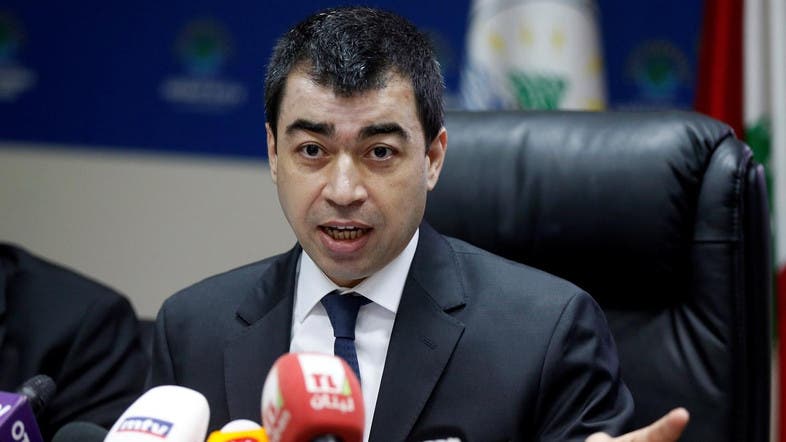
Lebanon’s tender process for offshore
exploration and production stalled in 2013 because political deadlock
left the country with no president for 2-1/2 years and squabbling
between parties prevented the passage of necessary laws. But
late last year, a president and prime minister were chosen. A newly
formed government restarted the tender process in January by passing two
important hydrocarbon decrees and holding a pre-qualification round in
April.
Uncertainty reared its head again when
President Michel Aoun suspended parliament for a month in mid-April,
temporarily blocking plans to extend the assembly’s term with no popular
vote for a third time since 2013 to try to push for electoral law
reforms and to hold a parliamentary election.
But
oil and gas will no longer be subject to political deadlock, the
chairman of the board of directors of the Lebanese Petroleum
Administration, Wissam Chbat, told the third Lebanon International Oil
and Gas Summit in Beirut. “We are decoupled from
the political track, there has been a lot of consensus from all
political parties towards achieving a successful bid round. Everyone is
putting his effort towards achieving that,” Chbat said.
The
delay in development has come at a cost, Chbat told Reuters, as oil and
gas prices have fallen significantly and east Mediterranean neighbors
such as Egypt, Cyprus and Israel have been developing their sectors. “In 2013 we had better dynamics for the industry, better prices for oil and gas and better conditions,” Chbat said. The
Lebanese government has estimated with a probability of 50 percent it
has 96 trillion cubic feet of natural gas reserves and 865 million
barrels of oil offshore, but the true size of the reserves cannot be
known until exploration begins. “There is much more than the local market needs and a big portion of it would be for export,” Chbat said. Chbat said 60 targets had been identified as potential reservoirs.




Population Movements to Keserwan - The Khazens and The Maans
ما جاء عن الثورة في المقاطعة الكسروانية
ثورة أهالي كسروان على المشايخ الخوازنة وأسبابها
Origins of the "Prince of Maronite" Title
Growing diversity: the Khazin sheiks and the clergy in the first decades of the 18th century
Historical Members:
Barbar Beik El Khazen [English]
Patriach Toubia Kaiss El Khazen(Biography & Life Part1 Part2) (Arabic)
Patriach Youssef Dargham El Khazen (Cont'd)
Cheikh Bishara Jafal El Khazen
Patriarch Youssef Raji El Khazen
The Martyrs Cheikh Philippe & Cheikh Farid El Khazen
Cheikh Nawfal El Khazen (Consul De France)
Cheikh Hossun El Khazen (Consul De France)
Cheikh Abou-Nawfal El Khazen (Consul De France)
Cheikh Francis Abee Nader & his son Yousef
Cheikh Abou-Kanso El Khazen (Consul De France)
Cheikh Abou Nader El Khazen
Cheikh Chafic El Khazen
Cheikh Keserwan El Khazen
Cheikh Serhal El Khazen [English]
Cheikh Rafiq El Khazen [English]
Cheikh Hanna El Khazen
Cheikha Arzi El Khazen
Marie El Khazen