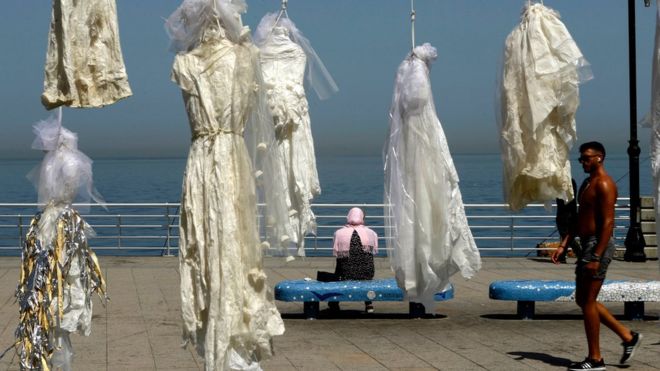
by BBC - Activists campaigning to change Lebanon's law on rape have staged a macabre protest on Beirut's famous sea front. What appeared to be more than 30 white wedding dresses were hung from nooses, strung up between the palm trees. Lebanese law currently allows a rapist to be exonerated if he marries his victim. The activists are pressing to have the legislation abolished at an upcoming session of parliament. Minister for Women's Affairs Jean Oghassabian described the article as being "from the stone age". "There are 31 days in a month and every single day, a woman may be raped and forced to marry her rapist," said Alia Awada from the non-governmental organisation Abaad. A proposal to scrap Article 522 of the penal code, which deals with rape, assault, kidnapping and forced marriage, was introduced last year and approved by a parliamentary committee in February.

By Jordan Grantham, Catholic Outlook
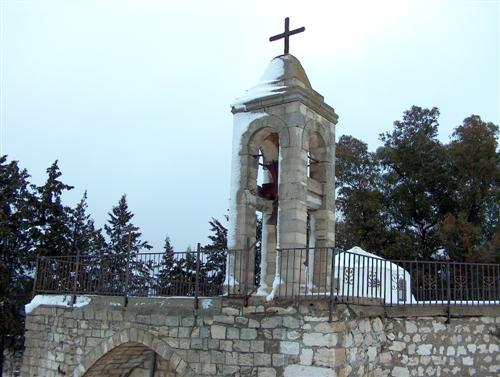
The Ijdabra Cross rises as a powerful witness of faith in the war torn Middle East. When the cross is complete, the Church of St Saba, Ijdabra, in Northern Lebanon will have the largest inhabitable cross in the Middle East. The 60 metre high cross will contain a small church and a gallery to view the sea and mountains. The cross will be the focus point of a place of pilgrimage, camps, prayer and recreation. The project also provides employment opportunities to the inhabitants of the Batroun region. The cross symbolises Christ’s victory over death and the project takes inspiration from the scripture verse: “And I, if I be lifted up from the earth, will draw all things to myself.” (John 12:32)
The Ijdabra cross is nearing completion. Watch this video of its progress.
The cross also aims to inspire peace in the conflicted region and will promote dialogue between conflicting groups. “The cross in its horizontal and vertical dimensions is in its essence a symbol of connection between God and men on the one hand and between men among each other on the other, no matter their race, religious beliefs or social status. The cross is an invitation for love, reconciliation and coexistence,” the Ijdabra Project website states. The Maronite Patriarch Moran Mar Bechara Boutros al-Rahi has encouraged the project, as seen in this photograph of His Beatitude cutting a colourful cake displaying the cross.

BEIRUT (Reuters) - Lebanese Prime Minister Saad al-Hariri asked the United Nations on Friday to help Lebanon and Israel move towards a permanent ceasefire and end what he called Israel's "continuous violations" of Lebanese territory. Israel and Lebanon's Shi'ite Hezbollah group fought a month-long war in 2006 that concluded with a cessation of hostilities but without a formal peace deal. "I urge the U.N. secretary general to support efforts to secure, as soon as possible, a state of permanent ceasefire. This is long overdue and my government is committed to move this agenda forward," Hariri said. Hariri was speaking on a visit to south Lebanon a day after Hezbollah officials staged a media tour near the same area to view what they said were recent Israeli fortifications on the border and to state their preparedness in c
The tour drew a response from Israeli military spokesman Lieutenant Colonel Peter Lerner, who said in a Facebook post that Hezbollah's media tour was to "shake their sabres and pound their chests". Under U.N. resolution 1701, which ended the 2006 war between Israel and Hezbollah, the Lebanese army is responsible for security on its side of the border in a zone from which any other armed force, including Hezbollah, is banned. The United Nations also maintains a peacekeeping force on the border. Resolution 1701 also required Israel to withdraw from Lebanese territory. Lebanon says that Israel has not fulfilled this because it continues to occupy a disputed area known in Lebanon as the Shebaa Farms. (Reporting By Angus McDowall and Ellen Francis; Additional reporting by Ari Rabinovitch in Jerusalem; Editing by Tom Heneghan)
Nasser Karimi, Associated Press TEHRAN, Iran (AP) — Iranian state TV said Thursday that the body charged with vetting candidates has disqualified …

Population Movements to Keserwan - The Khazens and The Maans
ما جاء عن الثورة في المقاطعة الكسروانية
ثورة أهالي كسروان على المشايخ الخوازنة وأسبابها
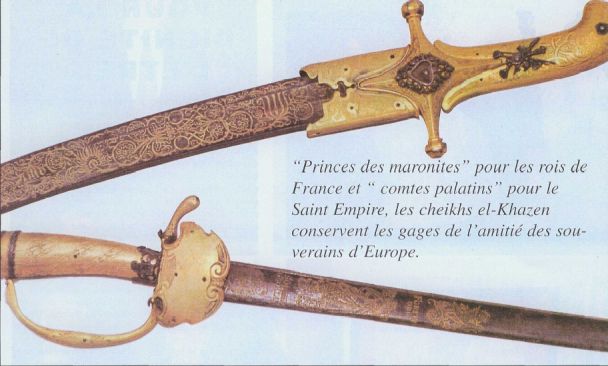
Origins of the "Prince of Maronite" Title
Growing diversity: the Khazin sheiks and the clergy in the first decades of the 18th century
Historical Members:
Barbar Beik El Khazen [English]
Patriach Toubia Kaiss El Khazen(Biography & Life Part1 Part2) (Arabic)
Patriach Youssef Dargham El Khazen (Cont'd)
Cheikh Bishara Jafal El Khazen
Patriarch Youssef Raji El Khazen
The Martyrs Cheikh Philippe & Cheikh Farid El Khazen
Cheikh Nawfal El Khazen (Consul De France)
Cheikh Hossun El Khazen (Consul De France)
Cheikh Abou-Nawfal El Khazen (Consul De France)
Cheikh Francis Abee Nader & his son Yousef
Cheikh Abou-Kanso El Khazen (Consul De France)
Cheikh Abou Nader El Khazen
Cheikh Chafic El Khazen
Cheikh Keserwan El Khazen
Cheikh Serhal El Khazen [English]
Cheikh Rafiq El Khazen [English]
Cheikh Hanna El Khazen
Cheikha Arzi El Khazen
Marie El Khazen