By Arwad Khalifeh – Article represents opinion of the author I watched Lebanese filmmakers Sophie Boutros and Nadia Eliewat’s new romcom, “Solitaire,” last …

by Victor Argo - yourmiddleeast.com
Can there be a fashion designer from the Middle East without a political conscience? Probably not. A little more than one month ago Your Middle East spoke to Lara Khoury, a fashion designer from Beirut, and learned about her opinionated views. Today it’s Cynthia Chamat’s turn to give her perspective about the fault lines between fashion and politics in Lebanon and beyond. Cynthia Chamat is a self-made entrepreneur, has majored in Law and Political Science and prefers to be called clothing caterer, rather than fashion designer. While Lara Khoury and Cynthia Chamat are very different personalities they have one thing in common that sets both of them even more apart from the crowd: their shaved heads.
Who do you have in mind when you design fashion?
I design for the marginalized. Mainly women going through post-pregnancy or menopausal physical and hormonal metamorphosis. It could be any woman really, not necessarily Lebanese, because the syndromes are global and inherent to women's nature. But I do take into consideration Middle Eastern pear-shaped body features.However I've recently introduced a few unisex pieces to URBAN SENSE to test male waters and a few unisex brands with a confirmed younger crowd.
How have the markets that you create for changed over the years?
I first started off in the fashion business in 2012. In 2014, Boutique Hub was born with URBAN SENSE, the in-house label, simultaneously. Today the market is still the same as when I started, but what has changed is customer behavior because of Internet shopping which was not too widespread in Lebanon back then. So now, it is just more challenging to convince my potential clients why they should buy from my shop and support local production rather than benefiting from seemingly more attractive offers on the net.
BEIRUT, April 8 (Xinhua) — Clashes at south Lebanon’s Palestinian refugee camp of Ain el-Hilweh in Sidon, continued on Saturday between the …

Population Movements to Keserwan - The Khazens and The Maans
ما جاء عن الثورة في المقاطعة الكسروانية
ثورة أهالي كسروان على المشايخ الخوازنة وأسبابها
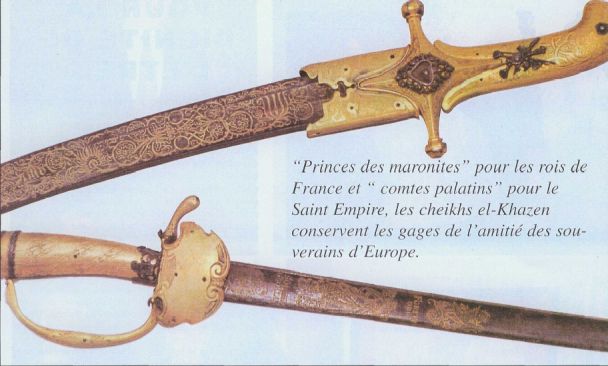
Origins of the "Prince of Maronite" Title
Growing diversity: the Khazin sheiks and the clergy in the first decades of the 18th century
Historical Members:
Barbar Beik El Khazen [English]
Patriach Toubia Kaiss El Khazen(Biography & Life Part1 Part2) (Arabic)
Patriach Youssef Dargham El Khazen (Cont'd)
Cheikh Bishara Jafal El Khazen
Patriarch Youssef Raji El Khazen
The Martyrs Cheikh Philippe & Cheikh Farid El Khazen
Cheikh Nawfal El Khazen (Consul De France)
Cheikh Hossun El Khazen (Consul De France)
Cheikh Abou-Nawfal El Khazen (Consul De France)
Cheikh Francis Abee Nader & his son Yousef
Cheikh Abou-Kanso El Khazen (Consul De France)
Cheikh Abou Nader El Khazen
Cheikh Chafic El Khazen
Cheikh Keserwan El Khazen
Cheikh Serhal El Khazen [English]
Cheikh Rafiq El Khazen [English]
Cheikh Hanna El Khazen
Cheikha Arzi El Khazen
Marie El Khazen