The daily Star Lebanon - A leading international tourism agency said the sector in Lebanon is expected to generate a revenue of $3.4 billion in 2017. “The World Travel & Tourism Council estimated that the travel & tourism industry would directly contribute $3.4 billion to the Lebanese economy in 2017, equivalent to about 7.1 percent of GDP, down from more than 10 percent of GDP in 2010,” the report said. The WTTC said the direct contribution of Travel & Tourism to GDP in 2015 was LL5.436 trillion (8.1 percent of GDP) and forecast that the sector would rise by 4.8 percent in 2016. There are no official figures on the revenues generated from tourism sector in 2016 but all experts agree that the hospitality industry did not perform well due to the decline in the number of tourists.
Tourism was once viewed as one of the main sources of revenue for the Lebanese economy. However, officials hope that Arab tourists and especially Arab Gulf nationals will return to Lebanon in great number this summer after the thaw in relations with Saudi Arabia, UAE, Kuwait and Qatar. WTTC also anticipated that direct industry employment will reach 123,800 persons in 2017, representing 6.9 percent of total employment. It expected that the tourism sector’s contribution to the Lebanese economy to expand by 2.9 percent in real terms in 2017. “The decline in the sector’s contribution to economic activity since 2010 cannot be attributed only to domestic and regional political and security developments. It is part of the decline in the Lebanese economy’s overall competitiveness, especially the weakening state of the infrastructure and the deterioration in public service delivery,” Nassib Ghobril, chief economist at Byblos Bank, said.

Slaughtered migratory birds in Lebanon © Georges Hareb
By Luca Bonaccorsi - Lebanon's President, Michel Aoun, has made a heartfelt pledge to prevent the annual slaughter of the thousands of migratory birds who fly over the small Middle Eastern state twice a year. Dozens of storks lie dead on the ground, neatly lined up. Behind them, the men smile at the camera, holding up by their long, silent beaks yet more dead birds. It’s been a good hunt, one worthy of sharing with friends on Twitter or Facebook.
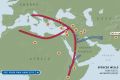
Welcome to Lebanon, where hundreds of such macabre photos offer testimony to what conservationists have been denouncing for years. The little Mediterranean state is a black hole where some 2.6 million birds disappear every year, shot or trapped illegally (http://www.birdlife.org/sites/default/files/attachments/01-28_low.pdf ). The wealth and diversity of birds packed into this relatively small country (at least 399 species of birds have been recorded here), is the pride and joy of local people, and a massive concern for local conservationists, such as those who work at the Society for the Protection of Nature in Lebanon (BirdLife Partner). The country lies on the west side of the African Eurasian Flyway (Red Sea – Rift Valley Flyway) which is considered one of the most important flyways in the world for bird migration. The long perilous journey from Europe and Asia to Africa, via the Sinai and the Red Sea, ends here, in this small stretch of land, for million of birds. In terms of “intensity”- birds killed per square kilometre - Lebanon ranks third, trailing only Malta and Cyprus.
But Lebanon’s days as a high-flyer in the chart no-one wants to top could be numbered, because a new, bird-friendly era has been announced. The announcement came straight from the Lebanese President, Michel Aoun, last Saturday with a heartfelt appeal to put the country’s nature first: “It is a shame to turn Lebanon into a wasteland without plants, trees, birds and sea animals, and cutting off trees to erect buildings is a major crime” he said. “ There should be a peace treaty between Man and the tree as well as Man and birds, because we continue to transgress upon them". A “peace treaty”, in a country that has paid an immense price for numerous conflicts: words do not get stronger than that in Lebanon. The issue of course is illegal hunting, rife in many areas. According to the President, "There should be a hunting season assigned from September to December, with the State exercising strictness in its execution”.
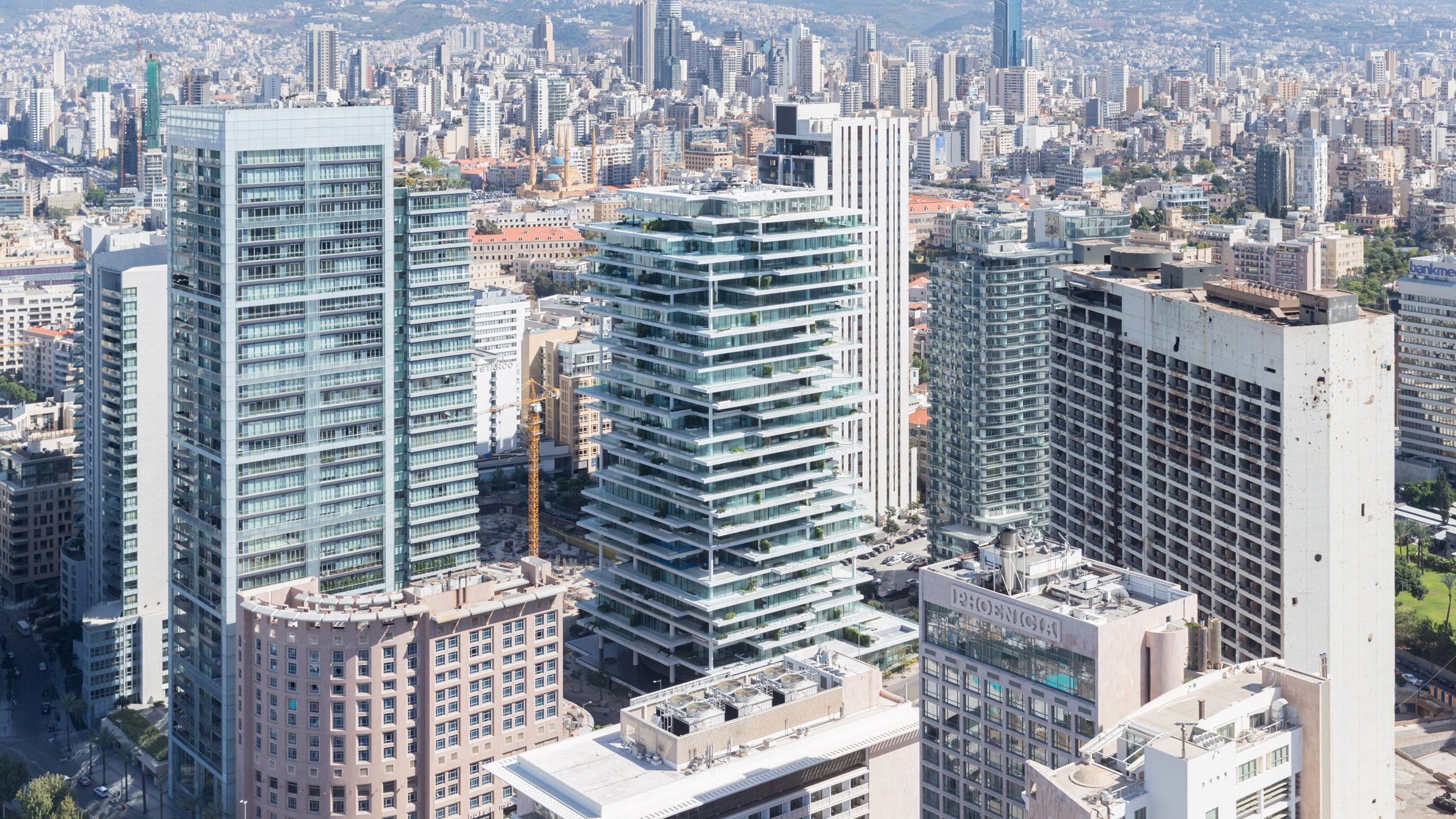
Staggered floor plates and set-back glazing create large planted terraces around this 119-metre tower by Swiss architects Herzog & de Meuron, which overlooks Beirut's marina.
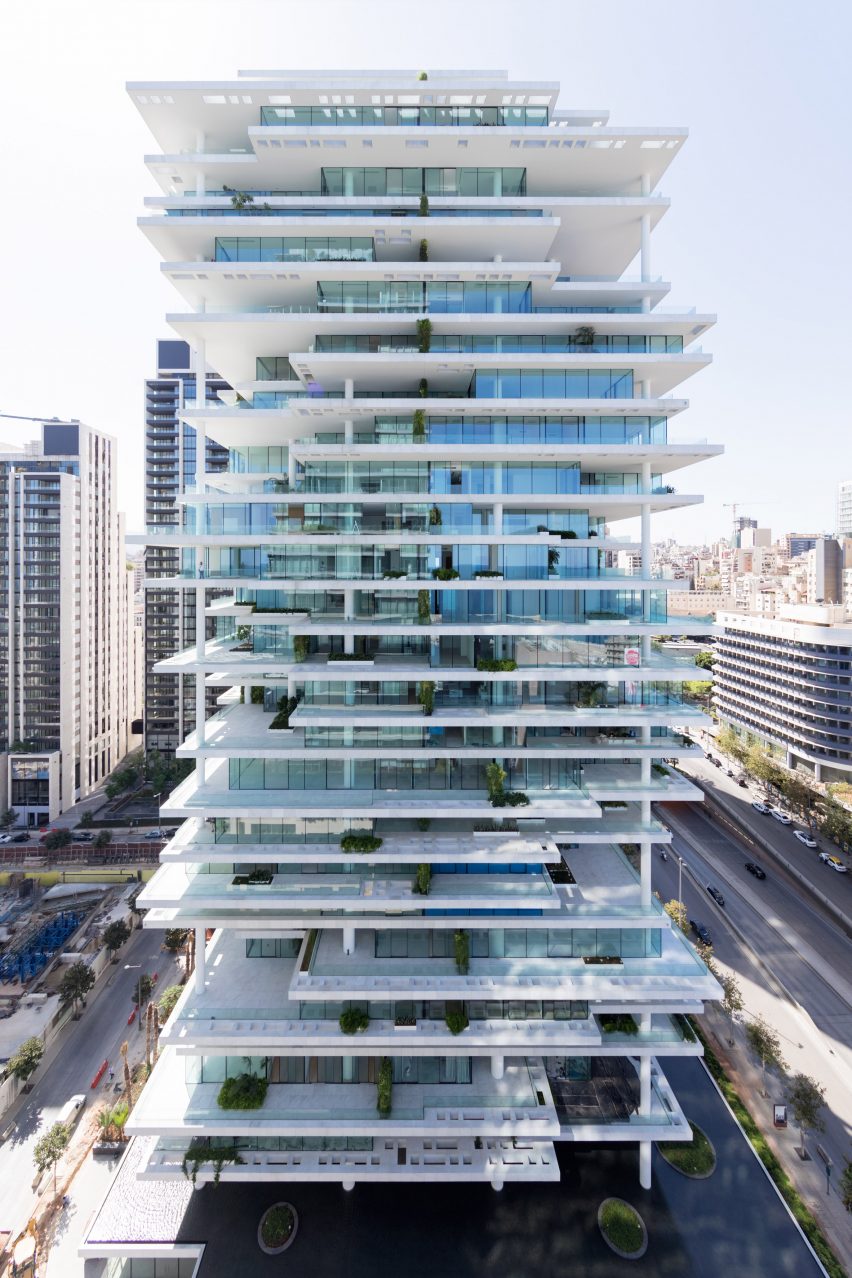
Jacques Herzog and Pierre de Meuron designed Beirut Terraces as part of a new masterplan developing around the St Georges Hotel. This area of the Lebanese capital is gradually being regenerated following a devastating car bomb attack that killed prime minister Rafik Hariri in 2005.
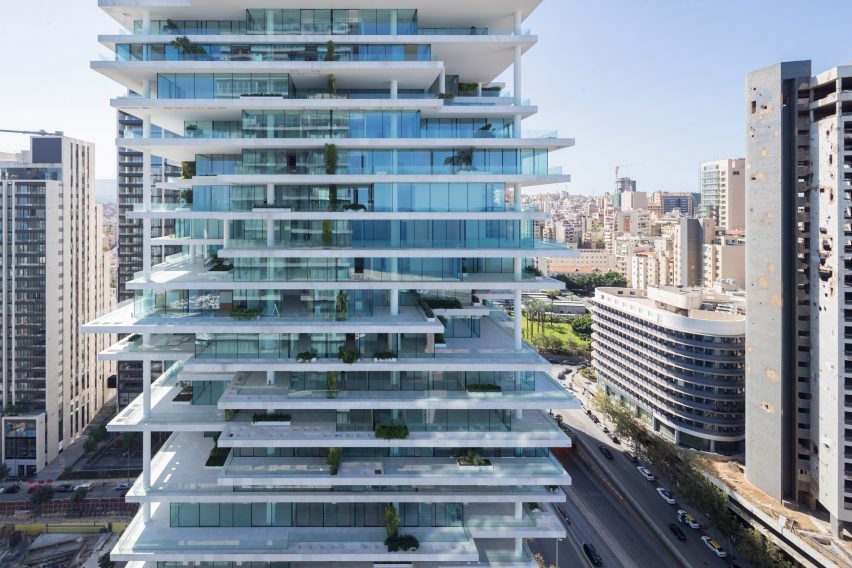
The residential tower is made up of irregularly sized floor slabs
that give it an indefinite outline, not dissimilar to the firm's Jenga-like 56 Leonard skyscraper in New York.
Five modular floors are repeated in different combinations to create the staggered arrangement. The white slabs overhang the double-glazed walls by at least 60 centimetres to provide shade and to create terraces.

by Joseph A. Kechichian - gulf news - Tokyo: Lebanon’s Speaker Nabih Berri scheduled for Thursday and Friday new plenary sessions to “pave the way for extending parliament’s term” after promises to introduce and agree on a new electoral law fell by the wayside. The last parliamentary elections in Lebanon, held under the universally rejected 1960 electoral law, were organised in 2009. Ever since, the legislature circumvented the process by extending its own mandate on two separate occasions, first on May 15, 2013 for 17 months, followed on November 5, 2014 by another duly approved extension for an additional 31 months (that is until June 20, 2017), ostensibly because deputies were deadlocked over the sorely needed new law.
According to an unnamed member of parliament quoted in the pan-Arab daily Al Hayat, “The session will pave the way for extension”, which is opposed by President Michel Aoun and his parliamentary bloc [the Free Patriotic Movement (FPM)], as well as the Kataeb Party. “This means that Speaker Berri is once again taking the initiative after he had left the mission of finding an electoral law to the political forces, especially to the new cooperation channels between Aoun and Prime Minister Sa‘ad Hariri”, both of whom have failed to reach a consensus on what to do next. The speaker has said that it is necessary to issue a law extending parliament’s term before an April 15 deadline, “or else the legislative authority would slide into vacuum”, which he is unwilling to accept because failure to doing so would result in a complete collapse of one of the last remaining institutions still standing.
Though he expected an electoral miracle before April 15, Nabih Berri is aware that such an accord is nearly impossible at this late hour, given existing gaps among stakeholders. Hezbollah, one of the country’s leading parties, has repeatedly called for an electoral law that is fully based on proportional representation that will consider Lebanon to be a single district. It favoured proportionality and was willing to tolerate several large electorate districts but this was not particularly serious since just about all of the remaining parties rejected the model.
Population Movements to Keserwan - The Khazens and The Maans
ما جاء عن الثورة في المقاطعة الكسروانية
ثورة أهالي كسروان على المشايخ الخوازنة وأسبابها
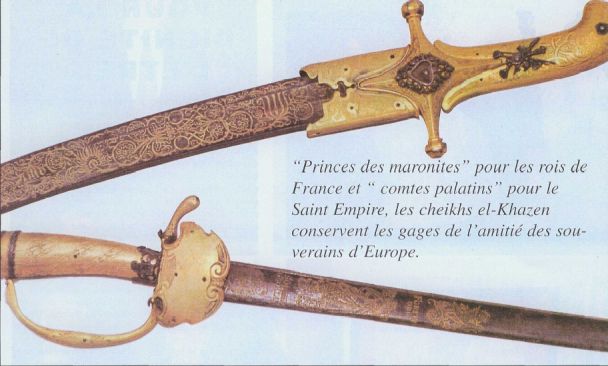
Origins of the "Prince of Maronite" Title
Growing diversity: the Khazin sheiks and the clergy in the first decades of the 18th century
Historical Members:
Barbar Beik El Khazen [English]
Patriach Toubia Kaiss El Khazen(Biography & Life Part1 Part2) (Arabic)
Patriach Youssef Dargham El Khazen (Cont'd)
Cheikh Bishara Jafal El Khazen
Patriarch Youssef Raji El Khazen
The Martyrs Cheikh Philippe & Cheikh Farid El Khazen
Cheikh Nawfal El Khazen (Consul De France)
Cheikh Hossun El Khazen (Consul De France)
Cheikh Abou-Nawfal El Khazen (Consul De France)
Cheikh Francis Abee Nader & his son Yousef
Cheikh Abou-Kanso El Khazen (Consul De France)
Cheikh Abou Nader El Khazen
Cheikh Chafic El Khazen
Cheikh Keserwan El Khazen
Cheikh Serhal El Khazen [English]
Cheikh Rafiq El Khazen [English]
Cheikh Hanna El Khazen
Cheikha Arzi El Khazen
Marie El Khazen