by AFP - Bulldozers worked atop the roof of the Brasserie du Levant on Wednesday, knocking down portions of the massive concrete building as neighbours looked on quietly. Established in the 1930s, the factory brewed the Lebanese beer Laziza for decades before closing in the mid-1990s. In its place will come "Mar Mikhael Village" -- dozens of apartments and townhouses, as well as retail spaces, named after the eastern district that has become a hybrid of loud bars and sleepy residential streets. Residents of the neighbourhood have already begun complaining about the noise pollution and dusty construction site created by the project. In designs posted on the architectural firm's website, the sleek development continues to feature the arched sign reading "Levant Brewery" that hung at the complex's entrance for decades. But a video posted online by local activist Ghassan Salameh on Tuesday showed bulldozers knocking the sign back down onto the roof, producing a cloud of dust. "It got really real when we started seeing the sign come down and the windows being dismantled," Salameh told AFP.
Speaking in an interview on MTV Lebanon on Friday, Lebanese Tourism Minister and Deputy Chairman of Tashnag, a Lebanese Armenian party, Avadis …
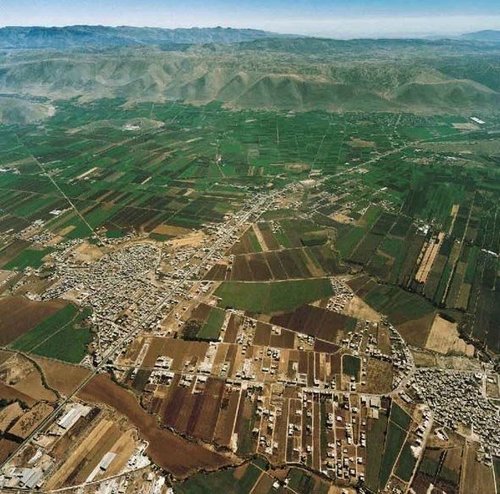
BAR ELIAS, LEBANON: by reuters -- At the entrance of a rural town in Lebanon’s Bekaa
valley, a blue sign says “Welcome to Bar Elias, population 50,000” but
in the past six years, that number has more than doubled with Syrians
seeking shelter from the war across the border. “They are our guests,” said Mayor Mawas Araji. “But we don’t have the capacity to serve them as we should.” The
refugee crisis has drained public services in the historically poor
area in Lebanon’s farming heartland, Araji said. Yet perhaps the most
glaring strain has been the garbage mountain rising among the hills, or
the open water canals overflowing with trash in the winter. With the
influx of people, Bar Elias now handles 40 extra tons of refuse every
day, in a country that already had no national waste disposal plan. Since
the Syrian conflict began in 2011, at least 1.5 million people have
poured into Lebanon — around a quarter of the country’s population —
where most languish in severe poverty.
Makeshift settlements have
popped up all around the country as the Lebanese government has long
rejected setting up refugee camps. To stem the flow of Syrians making
the perilous journey to Europe by boat, the EU has funneled billions
into Syria’s neighboring countries, giving Lebanon €147 million ($157 )
between 2014 and 2016. For government officials, the need for foreign
funding is clear in cases like Bar Elias, where aid groups have warned
of dire environmental hazards. The EU funded a €4.5 million ($4.8
million) waste management facility set to open next month in the town,
around 12 km from the Syrian border. The massive hangar will process
150 tons of waste daily from Bar Elias and two nearby towns, creating
several jobs, Araji said. “For us, this was a dream.” Nestled between
the fields of Bar Elias, Hassan Ibrahim, 62, lives amid hundreds of
cramped tents pitched haphazardly in the mud. “We’ve appointed
someone here to collect the garbage ... so when the municipality comes,
everything is ready,” said Ibrahim, who escaped shelling in Aleppo five
years ago. But in another makeshift camp a few streets away, Maamar
Al-Alawi seems less cheerful. Across from her tent, a large cesspit is
brimming with sewage water and rubbish.
During heavy rainfall, the gutters also spill over with floating plastic bags. “It’s all garbage on top of garbage,” said Al-Alawi, who cleans around her family’s spot every day in vain. “You go into the tent, and it stinks.” As well as the dangers of open dump sites and burning waste, trash also often fills irrigation canals that feed nearby vegetable fields, according to the EU-funded agency that designed the Bar Elias facility. Lebanon has been plagued by a waste disposal crisis, regardless of refugees, with politicians repeatedly failing to agree a solution, sparking several mass protests in recent years.
BEIRUT (Reuters) (Reporting by Tom Perry; editing by John Stonestreet) – Prime Minister Saad al-Hariri said Lebanon was close to “breaking point” …


Population Movements to Keserwan - The Khazens and The Maans
ما جاء عن الثورة في المقاطعة الكسروانية
ثورة أهالي كسروان على المشايخ الخوازنة وأسبابها
Origins of the "Prince of Maronite" Title
Growing diversity: the Khazin sheiks and the clergy in the first decades of the 18th century
Historical Members:
Barbar Beik El Khazen [English]
Patriach Toubia Kaiss El Khazen(Biography & Life Part1 Part2) (Arabic)
Patriach Youssef Dargham El Khazen (Cont'd)
Cheikh Bishara Jafal El Khazen
Patriarch Youssef Raji El Khazen
The Martyrs Cheikh Philippe & Cheikh Farid El Khazen
Cheikh Nawfal El Khazen (Consul De France)
Cheikh Hossun El Khazen (Consul De France)
Cheikh Abou-Nawfal El Khazen (Consul De France)
Cheikh Francis Abee Nader & his son Yousef
Cheikh Abou-Kanso El Khazen (Consul De France)
Cheikh Abou Nader El Khazen
Cheikh Chafic El Khazen
Cheikh Keserwan El Khazen
Cheikh Serhal El Khazen [English]
Cheikh Rafiq El Khazen [English]
Cheikh Hanna El Khazen
Cheikha Arzi El Khazen
Marie El Khazen