By
ARSAL, LEBANON—A
frigid wind rips across the mountaintop as Col. Ahmed Assir, a commander
in the Lebanese Army’s Ninth Infantry Brigade, peers into the valley
below. The restive town of Arsal lies at the bottom, inside an army
cordon set up two years ago after a brief Daesh takeover. I
ask him where the Daesh fighters are now. He points to the snow-capped
mountains on the other side of the town that form Lebanon’s border with Syria. It’s a few kilometres away. “It’s empty,” he replies. “They can have it. Like dogs.” He’s talking tough, but he’s also begrudgingly acknowledging the jihadists control Lebanese territory. I’m
travelling with the Ninth Brigade around Arsal, on Lebanon’s
mountainous northeastern border with Syria. In August 2014, fighters
from Daesh — also known as ISIS and ISIL —
and the formerly al Qaeda-linked Jabhat Fateh al-Sham stormed out of
the mountains and overran the town, winning a stunning victory.
But
it was short-lived. During five days of fierce fighting, the army
wrested back control. In the end, 17 soldiers, dozens of militants and
at least 42 civilians were dead. The
defeated fighters were pushed out, but they didn’t go far. Thousands of
them dug into the outskirts of town, taking refuge in the caves and
natural defences of the mountains between here and the Syrian border. The
battle came with another cost: the jihadists kidnapped 29 Lebanese
police officers and soldiers on their way out. Four have since been
executed; several are still being held. Last February, then-foreign affairs minister
Stéphane Dion announced a Canadian mission to stabilize Lebanon. He
warned it was at a “tipping point” and needed Canadian help to avoid
collapse as it struggles with the pressures of the Syrian civil war next
door. It is part of Canada’s revamped mission to counter Daesh, put in
motion after Canada pulled out of airstrikes against the group when
Justin Trudeau came to power.
So far
Lebanon has weathered the storm, but containing Syria’s chaos is an
ongoing struggle. There have been bombings, arrests of jihadist leaders
and foiled terror plots, all linked to Daesh. As state infrastructure
buckles under the enormous strain of the refugee influx, Lebanon’s warm
welcome is cooling. One in four people in Lebanon are now Syrian
refugees. Foreign aid has poured in to ease
the burden. But against the towering needs of Syria’s displaced, the
response falls short. In an interview, UNICEF’s chief of field
operations for Lebanon said that as of November — almost year’s end —
just 50 to 60 per cent of the group’s annual appeal had been funded.
Canada’s
contribution is a $1.6-billion development and security package (spread
over three years) for Lebanon and Jordan — another Mideast ally deemed
at risk of collapse. Signs of the crisis
are on full display in Arsal. Originally home to some 30,000 people, it
now hosts an additional 60,000 to 90,000 Syrian refugees. Looking down
from the army position in the mountains, clusters of white refugee tents
dominate the town. One of Canada’s
principal aims in Lebanon is to promote “social cohesion” between Syrian
refugees and their Lebanese hosts. But with refugees vastly
outnumbering locals in Arsal, and a widely held belief that refugees are
sheltering jihadi fighters, the relationship has coarsened. Last summer
the municipality imposed a curfew requiring refugees to stay inside
between 10 p.m. and 7 a.m.

By reuters, A Syrian Christian Orthodox family was turned back from Philadelphia International Airport after traveling to the United States from Lebanon, airport sources in Beirut said on Sunday.
The family of six were denied entry under U.S. President Donald Trump’s new ban on nationals of seven Muslim-majority countries, including Syria, and flew back to Lebanon via Doha, the sources said. (Writing by John Davison, editing by Larry King)
DUBAI: Emirates airline has changed pilot and flight attendant
rosters on flights to the United States following the sudden U.S. travel
ban on seven Muslim-majority countries, but it said U.S. flights
continue to operate to schedule. The world’s largest long-haul
carrier, who flies daily to 11 U.S. cities, has made “the necessary
adjustments to our crewing, to comply with the latest requirements,” an
Emirates spokeswoman told Reuters by email on Sunday. President
Donald Trump on Friday temporarily suspended the entry of people from
Iran, Iraq, Libya, Somalia, Sudan, Syria and Yemen. The decision caught
airlines off guard, according to the International Air Transport
Association
The ban applies to pilots and flight attendants from the seven
countries, even though all flight crew who are not U.S. citizens already
need a special visa to enter the country. Another Emirates
spokeswoman said the impact of the ban on operations would be minimal.
The airline employs over 23,000 flight attendants and about four
thousand pilots from around the world, including the United States,
Europe and the Middle East.

By Harry Enten
Donald Trump signed a wide-ranging executive order on Friday that resets the United States’ immigration and refugee programs. The policy bars immigrants from seven heavily Muslim countries from entering the U.S. for 90 days, including people with green cards. It bans all
refugees from entering the U.S. for 120 days, and indefinitely bans
Syrian refugees. And it cuts the number of refugees the U.S. will accept
overall in 2017. (For a more detailed rundown, read here.)
The scope of Trump’s executive order is such that we’re largely in
uncharted waters. Past polls are only so useful, as most of them did not
ask about actions as broad as the ones Trump undertook. This isn’t like
same-sex marriage, or other more straightforward yes-no issues that
have been polled for years. I’d be suspect of anyone claiming it’s clear
which way public support will go on Trump’s actions — at least until we
get more polling.
Slight differences in framing and question wording can also have big
effects on how well immigration, refugee and terrorism policies poll.
Whether Trump’s executive order is viewed in humanitarian terms or (as
the Trump administration has tried to frame it) in the context of
counterterrorism could go a long way towards determining how much the
public supports it.
In the meantime, here’s what we do know:
1. In the context of terrorism, at least a plurality of Americans are OK with immigration bans.
The Trump administration has argued that this is not a ban on Muslims. Rather, they’ll likely argue, as the order itself does,
that the policies are meant “to protect the American people from
terrorist attacks by foreign nationals admitted to the United States.”
It’s not at all clear these policies will actually improve national security, but the American people have been more supportive of immigration restrictions in the name of counterterrorism. In a Quinnipiac University poll
conducted in January, 48 percent of voters supported “suspending
immigration from ‘terror prone’ regions, even if it means turning away
refugees from those regions.” Forty-two percent were opposed. And a
December Politico/Harvard T.H. Chan School of Public Health poll
found 50 percent of Americans were in favor of “banning future
immigration from regions where there are active terrorist groups.”
2. But a majority of Americans oppose a religion-based immigration ban.
Just 41 percent of Americans supported a temporary ban on Muslims
entering the country who are not U.S. citizens, according to an August
2016 ABC News/Washington Post poll. A slight majority (52 percent) were opposed. A July CBS News/New York Times survey, which asked a similar question, found only 35 percent of voters thought the U.S. should temporarily ban Muslim immigration.

By The Hill ^
| Max Greenwood
The United States could prioritize the resettlement of Christian
refugees over members of other religious groups, President Trump said on
Friday. “They’ve been horribly treated,” Trump said in an
interview with Christian Broadcasting Network anchor David Brody. “Do
you know if you were a Christian in Syria it was impossible, at least
very tough, to get into the United States?”
“If you were a Muslim
you could come in, but if you were a Christian, it was almost
impossible and the reason that was so unfair, everybody was persecuted
in all fairness, but they were chopping off the heads of everybody but
more so the Christians. And I thought it was very, very unfair. So we
are going to help them.” When asked by Brody if he saw helping persecuted Christians abroad as a “priority,” Trump promptly replied, “yes.”

Rep. Tulsi Gabbard (D-Hawaii) meets with Syrian religious leaders in
Aleppo, led by Archbishop Denys Antoine Chahda of the Syrian Catholic
Church of Aleppo, and joined by Archbishop Joseph Tabji of Maronite
Church of Aleppo, Rev. Ibrahim Nseir of the Arab Evangelical
Presbyterian Church of Aleppo, and others. Each called for peace, and an
end to foreign support of terrorists who are trying to rid Syria of its
secular, pluralistic, free society. (Photo from Gabbard’s website,
courtesy of Abraham Williams)
By Susan Jones |
CNSNews.com) – Rep. Tulsi Gabbard, a Hawaii Democrat, says she made a
secret, four-day trip to Syria — meeting with ordinary people and even
President Bashar al-Assad — because the suffering of the Syrian people
“has been weighing heavily on my heart.” “I wanted to see if
there was in some small way, a way that I could express the love and the
aloha and the care that the American people have for the people of
Syria, and to see firsthand what was happening there, to see that
situation there,” Gabbard told CNN’s “The Lead” with Jake Tapper on
Wednesday.
She returned with a message:
“I’ll tell you what I
heard from the Syrian people that I met with, Jake, walking down the
street in Aleppo, in Damascus, hearing from them. “They expressed
happiness and joy at seeing an American walking through their streets.
But they also asked why the U.S. and its allies are providing support
and arms to terrorist groups like al-Nusra, al-Qaida or al-Sham, ISIS
who are on the ground there, raping, kidnapping, torturing and killing
the Syrian people.
“They asked me, why is the United States and its allies supporting
these terrorist groups who are destroying Syria when it was al Qaida who
attacked the United States on 9/11, not Syria. I didn’t have an answer
for them,” Gabbard said. “The reality is… every place that I
went, every person that I spoke to, I asked this question to them, and
without hesitation, they said, there are no moderate rebels. Who are
these moderate rebels that people keep speaking of?
Regardless of
the name of these groups, the strongest fighting force on the ground in
Syria is al Nusra, or al Qaida and ISIS. That is a fact,” Gabbard said. “There
is a number of different, other groups — all of them essentially are
fighting alongside, with, or under the command of the strongest group on
the ground that’s trying to overthrow Assad.

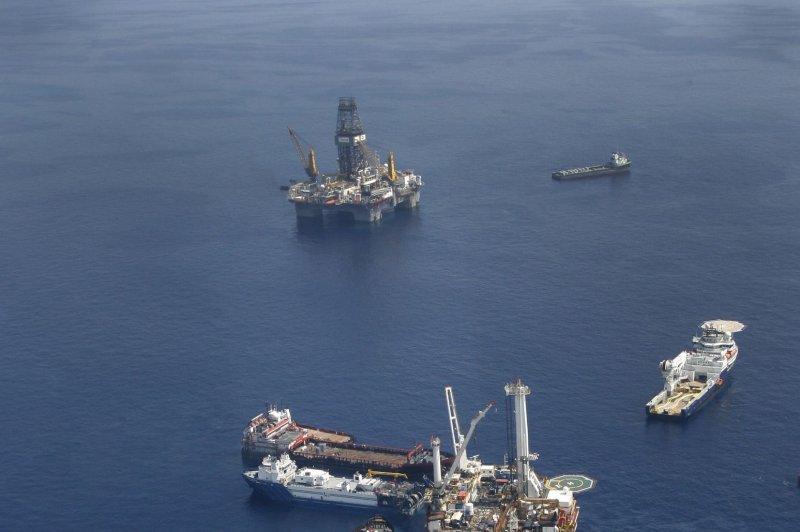
Transparency is a top priority for a Lebanese government looking to
bring bidders back to its offshore oil and gas reserves, the energy
minister said. Lebanon this week filed a request to join the Extractive Industries
Transparency Initiative, a body that aims to cast light on how countries
manage their oil, gas and mineral resources. Energy Minister Cesar Abi
Khalil said that, as the country opens itself up to foreign energy investors, accountability was essential.
“At the beginning of the new term [of office], transparency is our
main focus,” he was quoted by The Daily Star in Lebanon as saying.The effort follows a decision to put five offshore oil and gas blocks
up for auction in Lebanon’s Exclusive Economic Zone by the end of
February. State profits, the minister said, would be decided after the
bidding process is completed.
Decrees put forward by the Lebanese government outline a model for
revenue sharing, something that derailed previous efforts to court
foreign investors. Three years ago, Beirut postponed an offshore natural
gas auction after rancor erupted over the amount of revenue Beirut would get from energy companies. The Lebanese government estimates there are 95 trillion cubic feet of
natural gas and 750 million barrels of oil in its territorial waters.
The country, meanwhile, has been at odds over maritime borders in the
Mediterranean Sea. According to the Lebanese newspaper, Israel has been
the hold out in U.N.-mediated efforts to settle border disputes.

BEIRUT,
Lebanon — There was once a nice sea view at the Al Jazira beach club,
and umbrellas of palm fronds sticking from the sand are reminders of
nicer days. Nowadays, the place is surrounded by an ever-growing garbage
dump. “It
used to be a beach,” said Hassan, a Syrian man who works as a caretaker
at the club and insisted on being identified only by his first name
because of a lawsuit concerning the city. “There was sea. There were
rocks. I used to fish.”
Just
up the shoreline, Mohammed Jradi, who has been fishing the waters of
the Mediterranean off Beirut for 20 years, said the trash had driven
even the fish away. “All over the world, they have solutions for this, but not here,” he said.
by Nick Ames California architect firm Morphosis has designed a new US Embassy in Beirut, Lebanon and the US State Department has granted the construction contract to BL Harbert of Birmingham, Alabama. A department spokesperson said “The multi-building complex will be situated on a 43-acre site in Awkar, near the current US Embassy compound. “The […]

by Naharnet Newsdesk and dailystar
The General Directorate of General Security announced
Wednesday that it has arrested two Lebanese men, two Nepalese women and a
Palestinian man on charges of “spying for Israeli embassies abroad.” “During interrogation, the detainees confessed to the
charges, admitting that they had called phone numbers belonging to the
Israeli enemy’s embassies in Turkey, Jordan, Britain and Nepal with the
aim of spying and passing on information,” a General Security statement
said.
According to the source, the four are also charged with handing
Israeli authorities information with the aim of assassinating
pro-Hezbollah Sheikh Maher Hammoud, Sunni cleric Saheeb Habli and former
MP Oussama Saed in the southern city of Sidon, monitoring the convoy of
General Security chief Maj. Gen. Abbas Ibrahim when moving from the
capital Beirut to his southern hometown of Kaouthariyet Es Siyad in
Sidon, and mapping army posts. The suspects allegedly confessed to gathering information on specific
security officials and targets within Lebanon, while taking pictures
and videos of “sensitive” areas in the south and sending them to Israel.
The investigations revealed that the two aforementioned
Nepalese women were actively recruiting Nepalese domestic workers in
Lebanon with the aim of spying for Israel. “They gave them the phone number of the Israeli embassy
in Nepal so that they pass on information about their employers to the
Mossad Israeli intelligence agency,” the statement added. “Following interrogation, they were referred to the
relevant judicial authorities on charges of collaborating with the
Israeli enemy and efforts are underway to arrest the rest of the
culprits,” General Security said.
Emmanuel Haddad – published in equaltimes.org
A fundamental rupture was preventing Christiane
from moving forward in life, even though she did not really know why.
Until one day, during a somewhat drunken night out, her best friend told
her she had been adopted: “Your whole life is demolished within
seconds. All your foundations have been a lie. Your identity,
everything,” stammers the thirty-something year old woman in a café in
the Lebanese capital, Beirut, where she came back to live three years
ago to find her biological family.
Christiane is one of the 10,000 children who were illegally adopted during the conflict that tore Lebanon apart between 1975 and 1990.
During that period, everything could be bought and sold: weapons,
drugs, toxic waste, prominent and less prominent hostages… and children. For Zeina Allouche, co-founder of the NGO Badael Alternatives,
which supports adopted adults in their quest for their origins, one
thing is certain: “They were not adoptions, it was trafficking, a
business. The children were sold for prices as high as €10,000
(approximately US$10,700).”
Badael is fighting for a law to protect the right of these stolen children to know their origins.