BEIRUT,
Lebanon — There was once a nice sea view at the Al Jazira beach club,
and umbrellas of palm fronds sticking from the sand are reminders of
nicer days. Nowadays, the place is surrounded by an ever-growing garbage
dump. “It
used to be a beach,” said Hassan, a Syrian man who works as a caretaker
at the club and insisted on being identified only by his first name
because of a lawsuit concerning the city. “There was sea. There were
rocks. I used to fish.”
Just
up the shoreline, Mohammed Jradi, who has been fishing the waters of
the Mediterranean off Beirut for 20 years, said the trash had driven
even the fish away. “All over the world, they have solutions for this, but not here,” he said.
by Nick Ames California architect firm Morphosis has designed a new US Embassy in Beirut, Lebanon and the US State Department has granted the construction contract to BL Harbert of Birmingham, Alabama. A department spokesperson said “The multi-building complex will be situated on a 43-acre site in Awkar, near the current US Embassy compound. “The […]
by Naharnet Newsdesk and dailystar
The General Directorate of General Security announced
Wednesday that it has arrested two Lebanese men, two Nepalese women and a
Palestinian man on charges of “spying for Israeli embassies abroad.” “During interrogation, the detainees confessed to the
charges, admitting that they had called phone numbers belonging to the
Israeli enemy’s embassies in Turkey, Jordan, Britain and Nepal with the
aim of spying and passing on information,” a General Security statement
said.
According to the source, the four are also charged with handing
Israeli authorities information with the aim of assassinating
pro-Hezbollah Sheikh Maher Hammoud, Sunni cleric Saheeb Habli and former
MP Oussama Saed in the southern city of Sidon, monitoring the convoy of
General Security chief Maj. Gen. Abbas Ibrahim when moving from the
capital Beirut to his southern hometown of Kaouthariyet Es Siyad in
Sidon, and mapping army posts. The suspects allegedly confessed to gathering information on specific
security officials and targets within Lebanon, while taking pictures
and videos of “sensitive” areas in the south and sending them to Israel.
The investigations revealed that the two aforementioned
Nepalese women were actively recruiting Nepalese domestic workers in
Lebanon with the aim of spying for Israel. “They gave them the phone number of the Israeli embassy
in Nepal so that they pass on information about their employers to the
Mossad Israeli intelligence agency,” the statement added. “Following interrogation, they were referred to the
relevant judicial authorities on charges of collaborating with the
Israeli enemy and efforts are underway to arrest the rest of the
culprits,” General Security said.
 Emmanuel Haddad – published in equaltimes.org
A fundamental rupture was preventing Christiane
from moving forward in life, even though she did not really know why.
Until one day, during a somewhat drunken night out, her best friend told
her she had been adopted: “Your whole life is demolished within
seconds. All your foundations have been a lie. Your identity,
everything,” stammers the thirty-something year old woman in a café in
the Lebanese capital, Beirut, where she came back to live three years
ago to find her biological family.
Christiane is one of the 10,000 children who were illegally adopted during the conflict that tore Lebanon apart between 1975 and 1990.
During that period, everything could be bought and sold: weapons,
drugs, toxic waste, prominent and less prominent hostages… and children. For Zeina Allouche, co-founder of the NGO Badael Alternatives,
which supports adopted adults in their quest for their origins, one
thing is certain: “They were not adoptions, it was trafficking, a
business. The children were sold for prices as high as €10,000
(approximately US$10,700).”
Badael is fighting for a law to protect the right of these stolen children to know their origins.
By Libyan Express The Lebanese judiciary has found Hannibal Gaddafi, son of deceased dictator, Moamar Gaddafi, not guilty for the charges of insulting and demeaning the Lebanese judicial system. The verdict was announced by the Lebanese judge, Ghassan Al-Khori, who said that all charges related to this case are dropped and Hannibal can now have […]

by Makram Rabah – .middleeasteye.net
The usual vibrancy of Beirut’s night life was briefly shattered on Saturday, as news broke of the arrest of a suicide bomber in Hamra Street, one of the most cosmopolitan quarters of the Lebanese capital. Disturbing
at it may seem, the Lebanese are no strangers to acts of violence such
as the occasional explosions which, up until recently, were restricted
to areas with a high Shia population.
The account of
the operation that the security agencies provided to the media resembled
a second-tier Hollywood production in many of its elements
Hezbollah’s full immersion in Syria, fighting on the side of the Assad regime, triggered a series of terrorist attacks
from the Islamic State group, which has tried and succeeded several
times at targeting Shia areas in the southern suburbs of Beirut. Yet
the most interesting part of last Saturday night was not the dramatic
thwarting of the terrorist attack, but the way in which the public
reacted to this incident.
No sooner had the euphoria subsided over
the capture of Omar al-Assi, the 25-year-old nurse turned suicide
bomber, than many Lebanese, used social media to ridicule the theatrical
fashion in which the security agencies (military intelligence and the
police information branch) had seized the culprit.

By George Friedman and Jacob L. Shapiro, Mauldin Economics
In geopolitics, a deep
understanding of geography and power allows you to do two things. First,
it helps you comprehend the forces that will shape international
politics and how they will do so. Second, it helps you distinguish what
is important from what isn’t. This makes maps a vital part of our work, here at This Week in Geopolitics. So we have decided to showcase some of the best maps our graphics team (TJ Lensing and Jay Dowd) made in 2016. These four maps help explain the foundations of what will be the most important geopolitical developments of 2017.

By Thomas Schellen – Make no mistake about it, it is not a new idea that media types are today’s variant of preachers. Whether
they work in advertising or in news media, the profession features a
whole gamut of prophets, proselytizers and missionaries. The message
about this land according to Amos (the prophet, not the communications
satellites) was that its previous inhabitants were “as tall as cedars
and as strong as oaks,” promising inbound migrants a fruitful
environment (after overcoming various obstacles). Given the Middle East’s known propensity
for starting religions – just think of the “land of milk and honey” that
a bunch of tribal nomads were promised millennia ago – it cannot come
as a surprise that even within the battered Lebanese economy, the media
crisis of spring 2016 caused an uproar of concern. Several newspaper
companies announced that they were running out of money and were
threatened in their survival.
According to reports, the organizations
faced with closure or forced to downsize were the venerable An-Nahar and
As-Safir newspapers as well as the Al-Akhbar and Future media
organizations. Unconfirmed numbers from the Syndicate of Lebanese
Journalists later said that of the 2,600 journalists with membership in
the organization, 70 percent were already affected by media closures or
at risk to be so in the near term. The crisis was exacerbated by the broad
failures of media owners to exhibit concerns for their journalists and
employees – omitting what AA President Georges Jabbour called a “CSR
spirit” (see interview) – and by ham-fisted publisher appeals of the give-us-money-or-death variety.
The 2016 media crisis occupied the minds
of professionals and people interested in the sector throughout 2016, as
was shown in November during a media conference when a panel was tasked
with discussing if the death or the rebirth of print media was in the
Lebanese future. Putting the topic on agenda was
beneficial to move the discussion to open ground and compare the
situation in the Lebanese media with that of foreign print media
markets, especially the UK and France, according to Bachir Khoury, the
Lebanese journalist who moderated the panel. (The two markets were
represented on the panel through an editor of Le Figaro and a former
Middle East correspondent of The Guardian.)
By Naharnet After two days of search operations, the dead body of Lebanese citizen Majid Raji al-Hashem, 61, was found Tuesday buried in sand at a stone factory in the Jbeil town of Akoura, state-run National News Agency reported. Al-Hashem had gone missing at dawn Sunday. Several of the stone factory’s Syrian workers had been […]

When compared with the banking sector and
the initiatives taken by Banque du Liban (BDL), the year was
unnervingly quiet for the country’s insurance industry. Preliminary
information on the performance of insurance companies suggests that the
4 percent growth in gross premiums to $1.2 billion at the end of the
third quarter was low when compared with growth rates achieved in most
of the past ten years. However, growth was not devastatingly low when
one compares it to the inflation rate in the Lebanese economy, which
edged into positive territory this year, but was too small to provide
the economy with growth incentives.
According to figures by the Association
des Compagnies d’Assurances au Liban (ACAL), premium growth rates in
several lines of non-life insurance were negative at end of September
2016. Indications of positive premiums growth came only from two small
business lines, miscellaneous and public liability insurance and from
motor, medical, and life premiums. Granted, the latter three lines are
the high-volume lines and represent some 93 percent of total insurance
sector turnover in 2016, but at growth rates of 7 percent for life
insurance – which includes savings contracts – and 6 and 3 percent,
respectively, in motor and medical premiums, no single coverage line or
subsector of insurance was reporting figures that could be described as
encouraging.
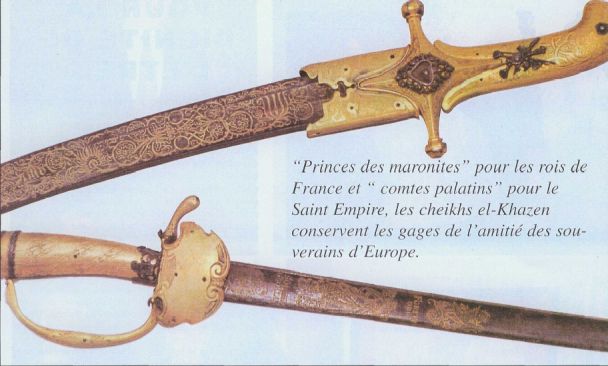
Population Movements to Keserwan - The Khazens and The Maans
ما جاء عن الثورة في المقاطعة الكسروانية
ثورة أهالي كسروان على المشايخ الخوازنة وأسبابها
Origins of the "Prince of Maronite" Title
Growing diversity: the Khazin sheiks and the clergy in the first decades of the 18th century
Historical Members:
Barbar Beik El Khazen [English]
Patriach Toubia Kaiss El Khazen(Biography & Life Part1 Part2) (Arabic)
Patriach Youssef Dargham El Khazen (Cont'd)
Cheikh Bishara Jafal El Khazen
Patriarch Youssef Raji El Khazen
The Martyrs Cheikh Philippe & Cheikh Farid El Khazen
Cheikh Nawfal El Khazen (Consul De France)
Cheikh Hossun El Khazen (Consul De France)
Cheikh Abou-Nawfal El Khazen (Consul De France)
Cheikh Francis Abee Nader & his son Yousef
Cheikh Abou-Kanso El Khazen (Consul De France)
Cheikh Abou Nader El Khazen
Cheikh Chafic El Khazen
Cheikh Keserwan El Khazen
Cheikh Serhal El Khazen [English]
Cheikh Rafiq El Khazen [English]
Cheikh Hanna El Khazen
Cheikha Arzi El Khazen
Marie El Khazen