Beirut: Prime Minister-designate Saad Hariri is engaged in traditional horse-trading negotiations with President Michel Aoun, Speaker Nabih Berri, and others, both to complete the formation of his national unity cabinet as well as satisfy a motley-crew anxious to reap benefits from their most recent political compromises.
Local media sources revealed Hariri’s frustrations with the process, with some underscoring how unrealistic these demands were. Apparently, three specific portfolios complicated talks, and are delaying his wish to complete the task over the next 72 hours.
According to Al Jumhuriyyah daily, Hariri is emphasising the necessity to accept a turnover of several key posts, including finance, defence and foreign affairs, though the real fight is over the energy and telecommunications ministries because those are seen as financial goldmines to officeholders.
For now, the prime minister-designate seemingly believes that a quick resolution of pending differences will help accomplish key issues and translate the oath of office into effective results. Towards that end, he sought and reportedly received pledges from both Lebanese Forces leader Samir Geagea and Progressive Socialist Party boss Walid Jumblatt, to facilitate his mission.
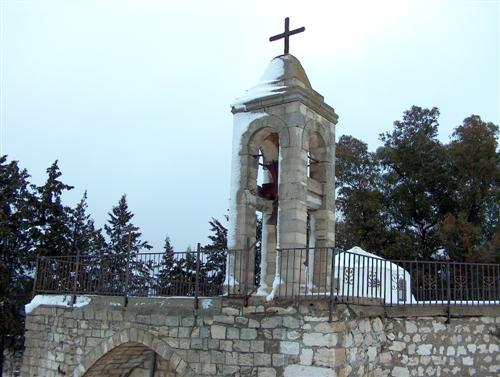
#khazen #LiveLoveLebanon #LebaneseArchitecture #LebaneseLandofSaints Kadisha Valley

By
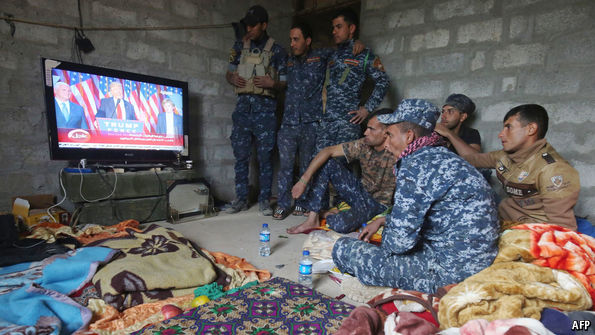
“The majority of Lebanese sided with Donald Trump as they believed that Obama’s Middle East strategy was not fruitful,” Elias Kattar, a Lebanese political analyst for albaladonline.com, told The Media Line. “People here felt that Hillary Clinton would have been a copy of Obama and they would like to see a new strategy implemented in the Middle East.”
On the other hand, there were those in Lebanon who are worried about Trump’s statements regarding refugees and Muslims. He said that on Facebook there is fierce criticism of Trump’s speeches and that those Lebanese who are concerned about human rights issues would have preferred to see Clinton as president. “Most Lebanese who live in the US also voted Trump,” Kattar said. “I saw an American TV program which interviewed Lebanese and they could not find even a single Lebanese who wanted to vote for Clinton.”
Regarding US-Russian relations, Kattar believes that US- Russian cooperation would be positive, as the war in Syria has been going on for more than 5 years and we have seen that no one country can resolve the situation there alone.
But in the end Kattar doesn’t believe that there will be major changes in policy as “small details may change but on the whole American policy tends to remain constant regardless of who is president.” The picture shifts again when it comes to Turkey. President Recep Tayyip Erdogan, who has had 37,000 people arrested and 110,000 people sacked in a purge following an attempted coup in July, had a close relationship with President Obama. Trump’s election calls this relationship into question.
The Economist
EXCEEDING all expectations,” was how Donald Trump described his luxury golf club in Dubai. If only his Middle East plans were as smooth as his putting greens. Far from marking a break with President Obama’s inclination to isolationism, Gulf rulers fear that President Trump could increase the distance. Instead of greater intervention, protection and the permanent troop presence in Iraq they hoped Mrs Clinton would deliver, they now fear Mr Trump will shy from long-standing Arab allies and abandon the region to others’ devices. “The honeymoon is over when it comes to relations with the US,” says a palace insider in Riyadh.
Maintaining a foothold, Mr Trump will probably let the Pentagon finish the job against Islamic State in Mosul if it has not fallen by January 20th. He might, he says, create safe zones in Syria, to prevent refugees from heading west. But unlike Mrs Clinton (though like Mr Obama) he opposes supplying more arms to Syria’s Sunni rebels or enforcing a no-fly zone to protect them. And he scorns intervention for ideological causes, such as regime-change, democracy and foreign nation-building, preferring to concentrate on America’s national self-interest instead. “I don’t think that was a very helpful thing,” he said of America’s overthrow of Saddam Hussein while on the campaign trail. “Iraq is a disaster right now.”
That is doubtless a relief for the region’s warring tyrants, like Bashar al-Assad in Syria, and strongmen, such as Abdel-Fattah al-Sisi in Egypt. In September Mr Trump promised Egypt’s president a “loyal friendship”, and unlike Mrs Clinton, did not bother him with talk of human rights. Both men not only endorse torture and the detention of dissidents, but also share a penchant for spreading conspiracy theories. Mr Sisi was one of the speediest world leaders to congratulate Mr Trump.
Population Movements to Keserwan - The Khazens and The Maans
ما جاء عن الثورة في المقاطعة الكسروانية
ثورة أهالي كسروان على المشايخ الخوازنة وأسبابها
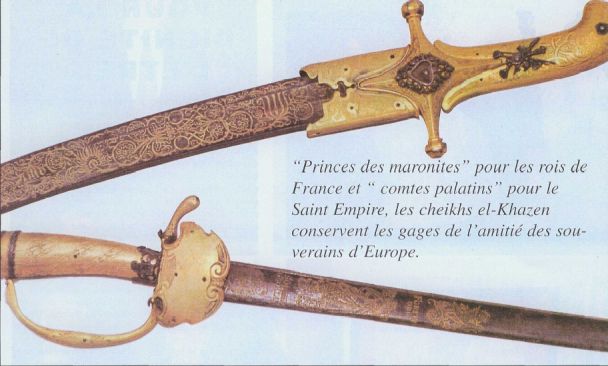
Origins of the "Prince of Maronite" Title
Growing diversity: the Khazin sheiks and the clergy in the first decades of the 18th century
Historical Members:
Barbar Beik El Khazen [English]
Patriach Toubia Kaiss El Khazen(Biography & Life Part1 Part2) (Arabic)
Patriach Youssef Dargham El Khazen (Cont'd)
Cheikh Bishara Jafal El Khazen
Patriarch Youssef Raji El Khazen
The Martyrs Cheikh Philippe & Cheikh Farid El Khazen
Cheikh Nawfal El Khazen (Consul De France)
Cheikh Hossun El Khazen (Consul De France)
Cheikh Abou-Nawfal El Khazen (Consul De France)
Cheikh Francis Abee Nader & his son Yousef
Cheikh Abou-Kanso El Khazen (Consul De France)
Cheikh Abou Nader El Khazen
Cheikh Chafic El Khazen
Cheikh Keserwan El Khazen
Cheikh Serhal El Khazen [English]
Cheikh Rafiq El Khazen [English]
Cheikh Hanna El Khazen
Cheikha Arzi El Khazen
Marie El Khazen