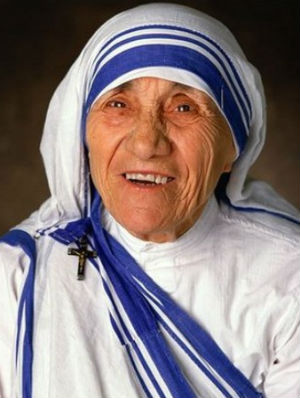
The relic of Mother Teresa, a vial of her blood, was presented on the altar in a simple but beautiful wooden vial embedded in the center of a cross. A large piece of the wood is of Lebanon.
LOS ANGELES, CA (Catholic Online) - Vatican Radio provided translations and commentary from Father Tomas Rosica of Salt and Light
during the canonization of Saint Mother Teresa, which was celebrated
before a crowd estimated to exceed 300,000 at St. Peter's Square.
The
crowd of thousands faced Italy's heat to witness the canonization as
the choir sang proudly and Pope Francis opened Sunday Mass, which
included a reading of Mother Teresa's life. The rite of canonization opened the ceremony and was a surprisingly short rite.
Pope Francis opened Mass with a prayer. The Holy Spirit was invoked from the beginning in a beautiful hymn.
Cardinal
Angelo stated: "After due deliberation and frequent prayer for divine
assistance, and having sought the counsel of many of our brother
bishops, we declare and define Blessed Teresa of Kolkata to be a saint,
and we enroll her among the saints, decreeing that she is to be
venerated as such by the whole church.

Dubai: Lebanese expatriates living in Gulf states should not involve themselves in the political affairs of their host states, Lebanon’s Army Commander General Jean Qahwaji said on Sunday. He stressed that it was important Lebanon maintain good relations with Gulf counries, according to the Kuwaiti daily Al Anbaa.
“Qahwaji reiterated eagerness to keep the best relations with the Arab Gulf countries including Saudi Arabia, Kuwait, the UAE and Qatar, which are hosting thousands of Lebanese as he reminded of their offering to Lebanon during its time of crises,” the news site quoted him as saying. “We do not want to boycott (relations) anyone, nor do we want to intervene in the affairs of anyone. I have called on the Lebanese expats working in the Gulf countries not to engage in political affairs of the hosting states. People of the gulf, mainly people of Kuwait, consider Lebanon their second home. We are aware of the magnitude of emotion they have for Lebanon and its stability and the Lebanese have the same feelings towards them,” he said.
By Magda Abu-Fadil Director of Media - Huffington post
v\:* {behavior:url(#default#VML);} o\:* {behavior:url(#default#VML);} w\:* {behavior:url(#default#VML);} .shape {behavior:url(#default#VML);}
Normal 0 false false false false EN-US X-NONE X-NONE /* Style Definitions */ table.MsoNormalTable {mso-style-name:"Table Normal"; mso-tstyle-rowband-size:0; mso-tstyle-colband-size:0; mso-style-noshow:yes; mso-style-priority:99; mso-style-parent:""; mso-padding-alt:0in 5.4pt 0in 5.4pt; mso-para-margin-top:0in; mso-para-margin-right:0in; mso-para-margin-bottom:10.0pt; mso-para-margin-left:0in; line-height:115%; mso-pagination:widow-orphan; font-size:11.0pt; font-family:"Calibri","sans-serif"; mso-ascii-font-family:Calibri; mso-ascii-theme-font:minor-latin; mso-hansi-font-family:Calibri; mso-hansi-theme-font:minor-latin; mso-bidi-font-family:"Times New Roman"; mso-bidi-theme-font:minor-bidi;}
The ax is falling hard, and fast, on Lebanese journalists as media cut budgets, hire younger staffers, increase their online presence, seek cheap solutions, duke out their political and sectarian differences, but still fumble over monetization and quality content. The latest victim is Dolly Ghanem, a veteran anchor and morning talk show host on LBCI TV, who was shoved off newscasts in 2011 and relegated to second fiddle talk show ranks before being laid off. Ghanem’s former colleague Mona Saliba, who migrated to MTV Lebanon News to report, anchor, and host a public affairs show, tweeted: “Colleague and friend Dolly Ghanem outside LBCI. The screen will miss Dolly, her sobriety, fun spirit, spontaneity and sophistication.”

Last summer, gas masks were a common sight on the streets of Beirut. But residents weren’t wearing the masks to protect themselves from a chemical attack or toxic pollution; rather, they were to combat the stench of a quickly growing pile of garbage. “We are coughing, we have allergies and there are mosquitoes and flies in our homes,” one Beiruti told the AP. With the 2015 closure of one of the city’s largest landfills, citizens were left with no functioning waste disposal system, and large heaps of garbage began to appear on roads, along river beds, and in nearby forests.
Many Lebanese have taken to the streets to protest the garbage crisis, but it is just one symptom of a governing elite that many citizens feel have lost touch with the people’s concerns. Lebanese politics are, by design, rife with sectarianism; top politicians have continually used their status for personal gain; over the past six years, parliamentary elections have twice been unconstitutionally postponed due to the fear of political tensions escalating to sectarian violence. To top it off, Lebanon has been without a president since 2013. Beirut’s garbage problem cast light on a government that has preoccupied itself with political distractions, while remaining largely apathetic to the grievances of the people it represents.

Population Movements to Keserwan - The Khazens and The Maans
ما جاء عن الثورة في المقاطعة الكسروانية
ثورة أهالي كسروان على المشايخ الخوازنة وأسبابها
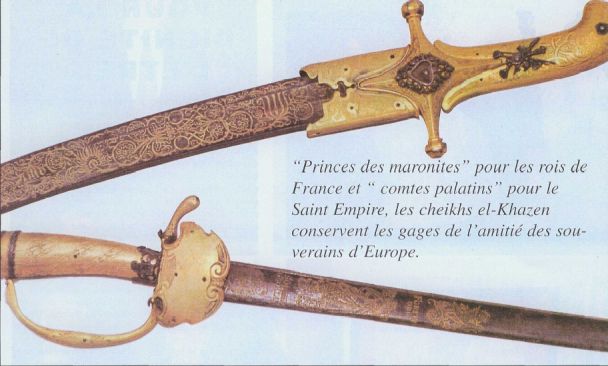
Origins of the "Prince of Maronite" Title
Growing diversity: the Khazin sheiks and the clergy in the first decades of the 18th century
Historical Members:
Barbar Beik El Khazen [English]
Patriach Toubia Kaiss El Khazen(Biography & Life Part1 Part2) (Arabic)
Patriach Youssef Dargham El Khazen (Cont'd)
Cheikh Bishara Jafal El Khazen
Patriarch Youssef Raji El Khazen
The Martyrs Cheikh Philippe & Cheikh Farid El Khazen
Cheikh Nawfal El Khazen (Consul De France)
Cheikh Hossun El Khazen (Consul De France)
Cheikh Abou-Nawfal El Khazen (Consul De France)
Cheikh Francis Abee Nader & his son Yousef
Cheikh Abou-Kanso El Khazen (Consul De France)
Cheikh Abou Nader El Khazen
Cheikh Chafic El Khazen
Cheikh Keserwan El Khazen
Cheikh Serhal El Khazen [English]
Cheikh Rafiq El Khazen [English]
Cheikh Hanna El Khazen
Cheikha Arzi El Khazen
Marie El Khazen