by AFP
A garbage crisis has returned to Lebanon with trash piling up in regions north of Beirut months after the government headed off a political crisis over uncollected waste. The local council in the suburb of Bourj Hammoud, where a temporary dump is located, have for the past week denied access to garbage trucks on the grounds that the authorities had failed to honour a commitment to open a waste-treatment plant. In March, after an eight-month crisis which led to mass street protests, the government approved a "temporary plan" to open two new landfills, one in Bourj Hammoud to the north and another south of the capital.

One in four Lebanese individuals will suffer from mental illness in his/her lifetime. Every 2.5 days, one person commits suicide. This week, 20-year-old business student, dancer and social activist Nourhan Hammoud ended her life, shocking her community in Lebanese, where she had many friends and fans. Her death not only only prompted grief and condolences, but also gave way to judgement and criticism, sparking intense debate among the Lebanese.
And it drew some much needed attention to the country’s deficient mental health syste Discussion about mental illness in Lebanese society is often hushed and ridiculed. They are widely viewed as trivial, temporary or self-healing, taking a backseat to political and economic turmoil that is a mainstay of the country. Things are even worse for migrant domestic workers, who receive minimal protection from Lebanese authorities against widespread abuse. One domestic worker commits suicide in Lebanon each month, according to Think Progress.

By Emmanuel Haddad - Middle East Eye
BEIRUT - Hamza welcomes the Red Cross team in his living room. He smiles and looks at them trying to make their way through the small room, passing his three children to reach washed-out sofas. The Red Cross came to take DNA samples. Hamza’s brother Abbass went missing during the Lebanese Civil War.
Abbass never came back home from a trip he took from Beirut to South Lebanon in 1984, while the country was at war. “He was not really a religious person but he let himself talked into by the leader of a local militia,” says Hamza. Hamza lives in Ghobeiry, on the outskirts of south Beirut. His flat is surrounded by flags of the Shia parties Amal and Hezbollah, which were fighting against Israel and Christian parties in south Lebanon during the civil war in the 1980s.
In this pernicious conflict, with fragile alliances, the Amal party fought also against Palestinians and Hezbollah in Ghobeiry. Today, more than 25 years after the end of the war, militia ex-leaders became ministers or members of parliament, protected by a law of amnesty.

By Pamela Engel
The death of the ISIS leader who oversaw external attacks could have significant implications for the group as it pivots from seizing territory in the Middle East to launching attacks on Western targets.
The terrorist group announced on Tuesday that its spokesman, Abu Muhammad al-Adnani, had been killed near Aleppo, Syria. His apparent loss marks a major blow to a group that's already struggling for long-term survival.
"This really sends the message out that ISIS is truly on the decline because he was such a figurehead," Clint Watts, a fellow at the Foreign Policy Research Institute and former US Army officer and FBI Joint Terrorism Task Force special agent, told Business Insider. "[A]dnani was such a key person for building support, propaganda, and online recruitment. He was a key figure."

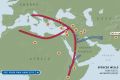

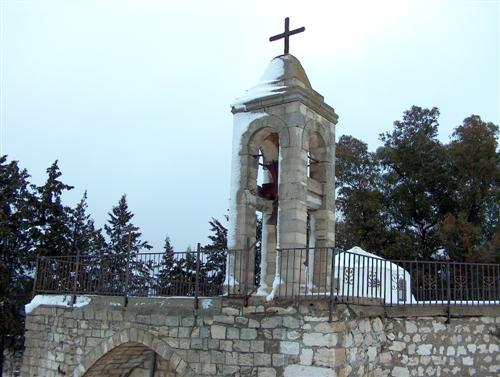
Population Movements to Keserwan - The Khazens and The Maans
ما جاء عن الثورة في المقاطعة الكسروانية
ثورة أهالي كسروان على المشايخ الخوازنة وأسبابها
Origins of the "Prince of Maronite" Title
Growing diversity: the Khazin sheiks and the clergy in the first decades of the 18th century
Historical Members:
Barbar Beik El Khazen [English]
Patriach Toubia Kaiss El Khazen(Biography & Life Part1 Part2) (Arabic)
Patriach Youssef Dargham El Khazen (Cont'd)
Cheikh Bishara Jafal El Khazen
Patriarch Youssef Raji El Khazen
The Martyrs Cheikh Philippe & Cheikh Farid El Khazen
Cheikh Nawfal El Khazen (Consul De France)
Cheikh Hossun El Khazen (Consul De France)
Cheikh Abou-Nawfal El Khazen (Consul De France)
Cheikh Francis Abee Nader & his son Yousef
Cheikh Abou-Kanso El Khazen (Consul De France)
Cheikh Abou Nader El Khazen
Cheikh Chafic El Khazen
Cheikh Keserwan El Khazen
Cheikh Serhal El Khazen [English]
Cheikh Rafiq El Khazen [English]
Cheikh Hanna El Khazen
Cheikha Arzi El Khazen
Marie El Khazen