BRASILIA/SAO PAULO — Brazilian prosecutors on Thursday charged Joseph Safra, the world's richest banker, in connection with an alleged scheme to pay bribes to government officials in return for waiving tax debts.In a statement, prosecutors said Safra had knowledge of a 2014 plan by executives at his Banco Safra SA to pay 15.3 million reais ($4.2 million) in bribes to federal tax auditors. The accusation is based on tapped phone calls between Banco Safra executive João Inácio Puga and tax officials, the statement added.
Safra, who alongside his family owns Banco Safra SA and a number of private-banking institutions including Switzerland's J Safra Sarasin, was not directly involved in the negotiations on the bribery plan, the statement noted. Still, the conversations showed that Puga reported to Safra on the bribery talks, prosecutors said.
Reuters BEIRUT: Lebanon's armed forces acquired three U.S. helicopters worth US$26 million on Thursday to help in efforts to stop Syria's civil war spilling over its border, along with almost US$29 million of British aid as EU countries also step up their support.
The Lebanese armed forces have now received a total of nine Huey II multi-mission helicopters from the United States as part of US$1.3 billion in security assistance given since 2004, U.S. interim Ambassador Richard H. Jones said.
"We have no plans to slow down or alter that level of support," Jones said at Beirut's military air base.
Country’s political stalemate and a worsening security situation have seriously impacted funding of media houses

AFP, Beirut: Its slogan was “the voice of the voiceless”, but after four decades the prestigious Lebanese daily Al Safir is in danger of falling silent, illustrating the unprecedented crisis rocking the country’s media.
Lebanese newspapers, long seen as a beacon of freedom in a tumultuous region, are suffering because of the country’s political paralysis and a slump in funding from rival regional powers. Al Safir’s main competitor, Al Nahar, is also struggling to survive and its employees have not been paid for months. “Our ink has run dry,” said Talal Salman, founder and editor-in-chief of Al Safir. “The Lebanese press, a pioneer in the Arab world, is undergoing its worst crisis ever.”
“We’ve run out of funds and we’re desperately looking for a partner to finance the paper,” Salman said.
By Mina Al-Oraibi | Contributor

LONDON — Ever since the streets of Tunis and Cairo were occupied with protesters five years ago, the Arab world has been witnessing a turning of tides and overhaul of policies that seems sure to dictate regional dynamics for decades. No country is more emblematic of the pre-2011 status quo than Lebanon.
Since the endorsement of the Taif Agreement of 1989 that ended its brutal civil war, Lebanon has maintained a tricky power-sharing balance between political factions, based largely on religious, sectarian divides and reaffirmed by political dynasties. Importantly, this tricky balance was embedded in a regional power structure. While Iran ramped up its support for the Islamist Shia Hezbollah and its allies, Saudi Arabia became the primary backer of the Sunni political parties, primarily that of the assassinated former Prime Minister Rafik Al Hariri, and allies of various denominations. This balance was rooted in a Syrian hegemony that has been eroded as its own civil war enters its sixth year.
As Hezbollah’s armaments and leverage grew in size over the years, Saudi Arabia saw itself invested in the Lebanese military as the guarantor of the republic. However, this power play is today under great strain, as Saudi-Iranian tensions spill onto the surface. In a dramatic and unexpected move last month, Saudi Arabia announced it would halt its support to the Lebanese military, suspending a $4 billion aid package that included $3 billion to equip the Lebanese army with French weapons and equipment and another $1 extra billion for internal security.
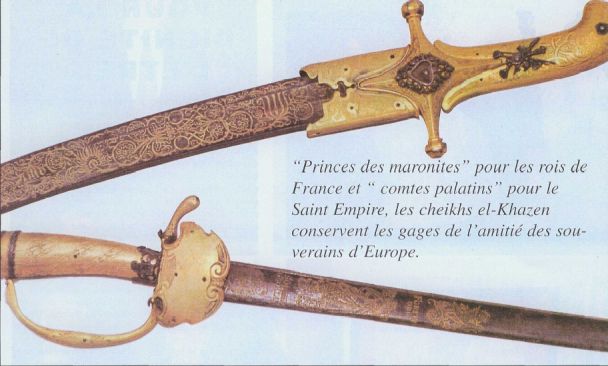
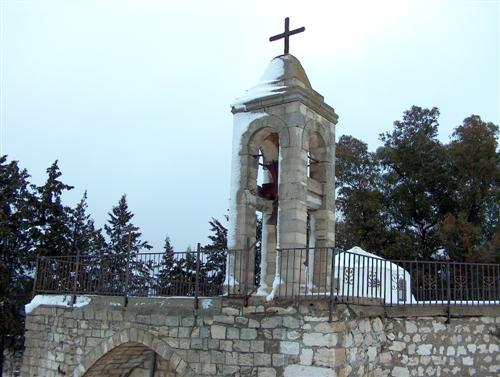
Population Movements to Keserwan - The Khazens and The Maans
ما جاء عن الثورة في المقاطعة الكسروانية
ثورة أهالي كسروان على المشايخ الخوازنة وأسبابها
Origins of the "Prince of Maronite" Title
Growing diversity: the Khazin sheiks and the clergy in the first decades of the 18th century
Historical Members:
Barbar Beik El Khazen [English]
Patriach Toubia Kaiss El Khazen(Biography & Life Part1 Part2) (Arabic)
Patriach Youssef Dargham El Khazen (Cont'd)
Cheikh Bishara Jafal El Khazen
Patriarch Youssef Raji El Khazen
The Martyrs Cheikh Philippe & Cheikh Farid El Khazen
Cheikh Nawfal El Khazen (Consul De France)
Cheikh Hossun El Khazen (Consul De France)
Cheikh Abou-Nawfal El Khazen (Consul De France)
Cheikh Francis Abee Nader & his son Yousef
Cheikh Abou-Kanso El Khazen (Consul De France)
Cheikh Abou Nader El Khazen
Cheikh Chafic El Khazen
Cheikh Keserwan El Khazen
Cheikh Serhal El Khazen [English]
Cheikh Rafiq El Khazen [English]
Cheikh Hanna El Khazen
Cheikha Arzi El Khazen
Marie El Khazen