Catholic Herald
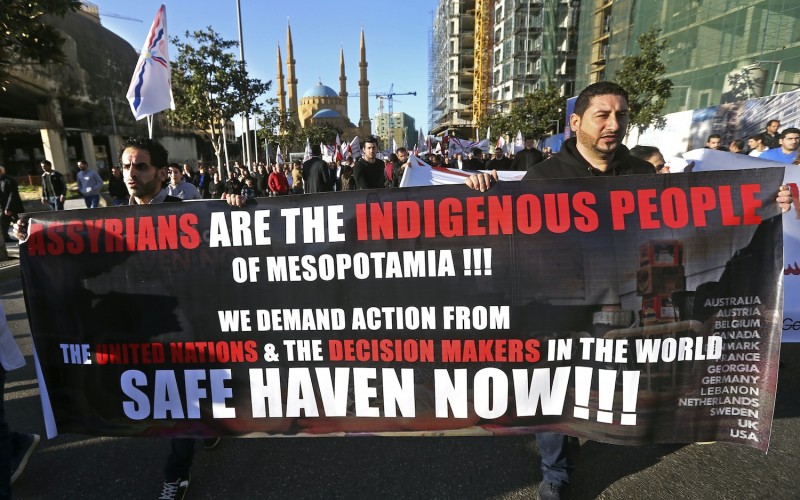
ISIS terrorists released 37 Syrian Christians over the weekend, part of a group of 200 Assyrians they kidnapped in February.
The Assyrian Human Rights Network posted pictures on its Facebook page of the newly freed civilians arriving in the predominantly ethnic Assyrian village of Tal Tamr, in the northeastern Hassakeh province. The photos show a woman kissing the hand of an elderly woman in tears, and a priest greeting the former captives in a church ceremony.
The group said in a statement that negotiations continue for the release of another 124 people who remain in captivity, according to AP news. Edmond Gabriel, chairman of the Assyrian Charitable Association in Hassakeh province, said 27 of the released are women. He said another group of captives was expected to be released today.
By Hasan Lakkis, Daily Star Lebanon
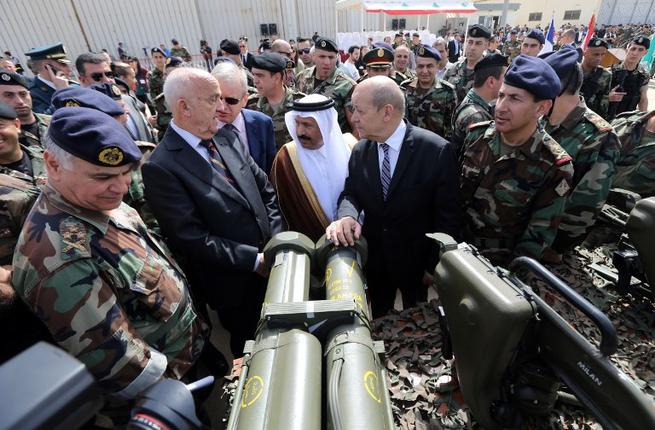
Prime Minister Tammam Salam will fly to Riyadh Tuesday to attend the 4th Summit of South American-Arab Countries, held once every three years and to discuss the latest developments related to a Saudi funded arms deal to equip the Lebanese Army. Defense Minister Samir Moqbel, Finance Minister Ali Hasan Khalil, and Foreign Minister Gebran Bassil will be accompanying Salam.
This summit is aimed at increasing South-South cooperation and implementing policy coordination measures through multilateral forums.
Brazil proposed to establish the conference in 2003, aiming to draw together leaders and civil societies from South American and Arab League member states to focus on diplomatic coordination and common issues of interest.
By Francesca Paci, New York Times News Service
Beirut: An Italian diplomat once said that “the darkest corners of a crisis can be the most illuminating in understanding geopolitical dynamics”. This is where Lebanon finds itself: One of the few Middle Eastern countries that is not at war, yet one suffering in the trenches nonetheless.
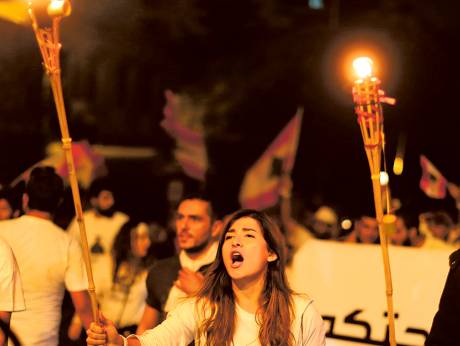
These days Lebanon is far from the glare of the international media, except for minor coverage of the ‘You Stink’ protests against the waste collection crisis in Beirut. But it does find itself squarely in the sights of foreign experts, who see Lebanon’s ever fragile sectarian equilibrium as the key to understanding the future of the region.
In private, one eminent member of the French foreign ministry confides that Lebanon is “the extreme frontier of local stability, where at any moment the entire structure can come falling down like a house of cards”.


Population Movements to Keserwan - The Khazens and The Maans
ما جاء عن الثورة في المقاطعة الكسروانية
ثورة أهالي كسروان على المشايخ الخوازنة وأسبابها
Origins of the "Prince of Maronite" Title
Growing diversity: the Khazin sheiks and the clergy in the first decades of the 18th century
Historical Members:
Barbar Beik El Khazen [English]
Patriach Toubia Kaiss El Khazen(Biography & Life Part1 Part2) (Arabic)
Patriach Youssef Dargham El Khazen (Cont'd)
Cheikh Bishara Jafal El Khazen
Patriarch Youssef Raji El Khazen
The Martyrs Cheikh Philippe & Cheikh Farid El Khazen
Cheikh Nawfal El Khazen (Consul De France)
Cheikh Hossun El Khazen (Consul De France)
Cheikh Abou-Nawfal El Khazen (Consul De France)
Cheikh Francis Abee Nader & his son Yousef
Cheikh Abou-Kanso El Khazen (Consul De France)
Cheikh Abou Nader El Khazen
Cheikh Chafic El Khazen
Cheikh Keserwan El Khazen
Cheikh Serhal El Khazen [English]
Cheikh Rafiq El Khazen [English]
Cheikh Hanna El Khazen
Cheikha Arzi El Khazen
Marie El Khazen