catholicherald.co.uk
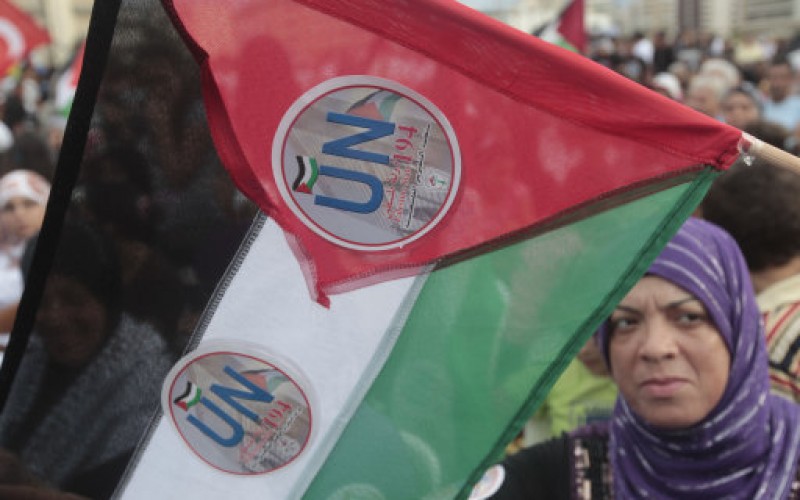
The Holy See has asked to be removed from a draft resolution prepared by the Palestinian United Nations (UN) mission which calls for the flags of Palestine and the Holy See to fly at the UN.
According to a Reuters report, the Palestinian draft resolution calls for the flags of non-member observer states to “be raised at the United Nations Headquarters and Offices following the flags of the member states of the United Nations.”
The Holy See and the State of Palestine are both non-member observer states at the UN. Currently, only member states’ flags fly at the UN’s headquarters.
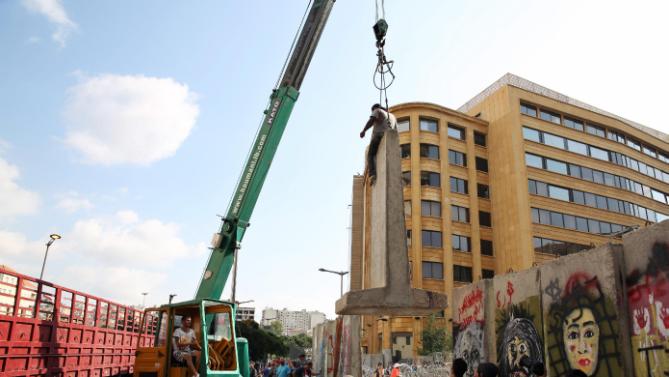
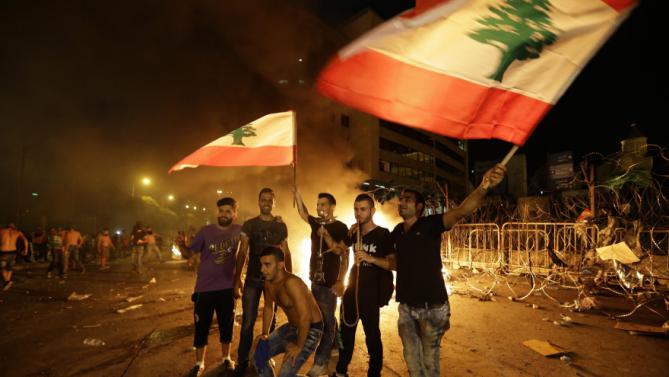
Lebanese protesters pose for a photograph as other set fire to plastic barriers and trash behind the barbed wire separating them from the police, during a protest against the trash crisis and government corruption, in downtown Beirut, Lebanon, Tuesday, Aug. 25, 2015. The powerful Lebanese Shiite group Hezbollah threw its weight behind mass protests calling for the government's resignation Tuesday, deepening a crisis that started over trash collection but is tapping into a much deeper malaise. (AP Photo/Hassan Ammar)
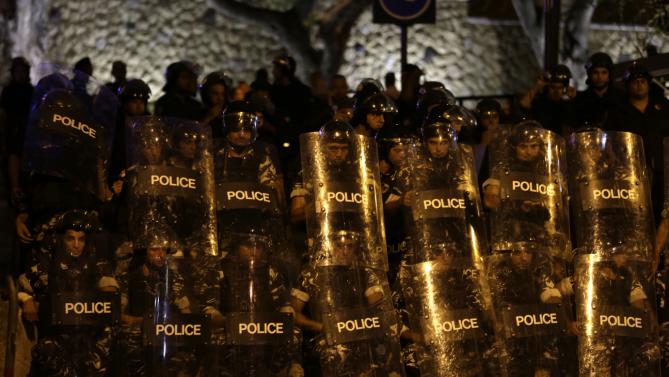
Lebanese riot policemen clash with Lebanese protesters during a protest against the trash crisis and government corruption, in downtown Beirut, Lebanon, Tuesday, Aug. 25, 2015. The powerful Lebanese Shiite group Hezbollah threw its weight behind mass protests calling for the government's resignation Tuesday, deepening a crisis that started over trash collection but is tapping into a much deeper malaise. (AP Photo/Hassan Ammar)
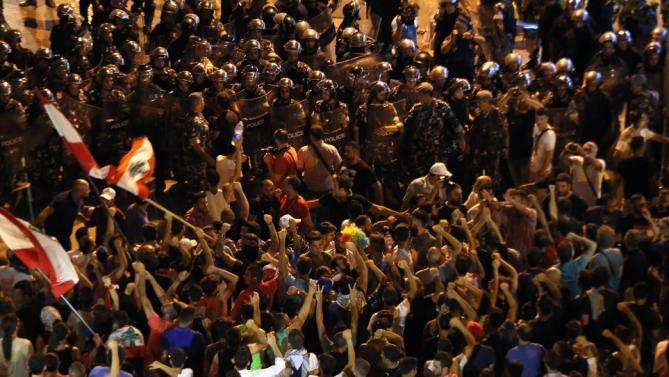
Lebanese activists clash with riot policemen, during a protest against the ongoing trash crisis, in downtown Beirut, Lebanon, Tuesday, Aug. 25, 2015. The powerful Lebanese Shiite group Hezbollah threw its weight behind mass protests calling for the government's resignation Tuesday, deepening a crisis that started over trash collection but is tapping into a much deeper malaise. (AP Photo/Bilal Hussein)
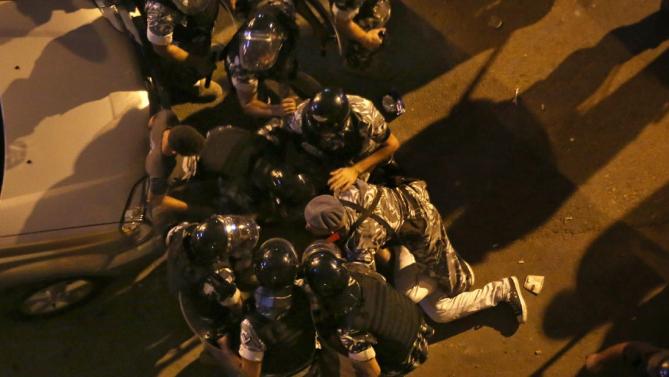
Lebanese policemen stoop over and beat a protester, his leg seen emerging on the right, during a protest against the ongoing trash crisis, in downtown Beirut, Lebanon, Tuesday, Aug. 25, 2015. The powerful Lebanese Shiite group Hezbollah threw its weight behind mass protests calling for the government's resignation Tuesday, deepening a crisis that started over trash collection but is tapping into much deeper malaise. (AP Photo/Bilal Hussein)
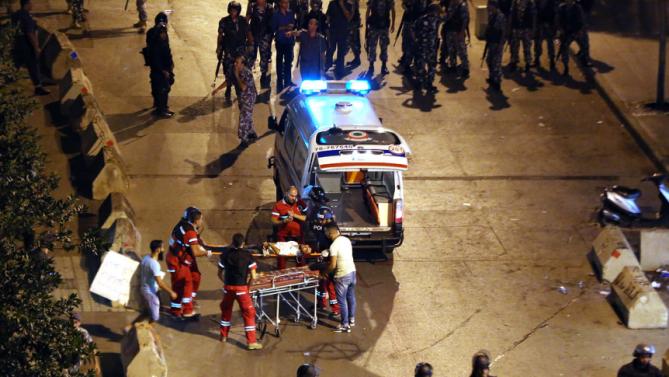
Lebanese paramedics carry away an injured demonstrator, during a protest against the ongoing trash crisis, in downtown Beirut, Lebanon, Tuesday, Aug. 25, 2015. The powerful Lebanese Shiite group Hezbollah threw its weight behind mass protests calling for the government's resignation Tuesday, deepening a crisis that started over trash collection but is tapping into a much deeper malaise. (AP Photo/Bilal Hussein)
Al Jazzera
What ostensibly began as public frustration over the Lebanese government's failure to tackle the country's rubbish crisis has since swelled into massive street protests, with residents from across the political spectrum calling for a change in government.
Al Jazeera examines what is really behind the public outcry and how the situation might evolve from this point.
How did it all start?
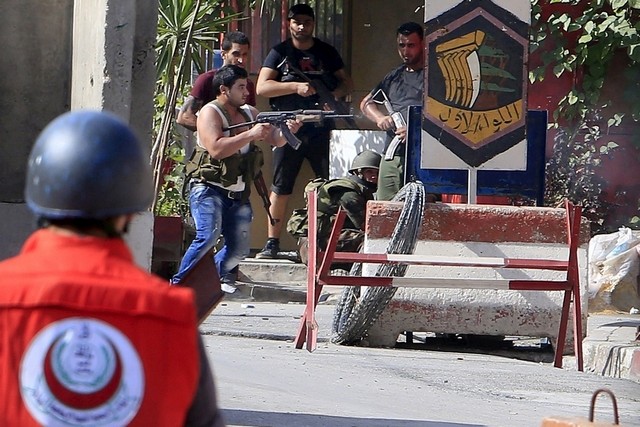
AP, Sidon, Lebanon // Fighting between rival armed groups in Lebanon’s largest Palestinian camp killed three people on Tuesday and forced hundreds of residents to flee.
The fighting in the Ain Al Helweh camp near the southern port city of Sidon began on Saturday following a failed assassination attempt on an official of Palestinian president Mahmoud Abbas’s Fatah movement.
Ashraf Dabbour, the Palestinian ambassador to Lebanon, told Beirut-based Al Mayadeen TV that a ceasefire agreement was reached late on Monday, but clashes erupted again on Tuesday.
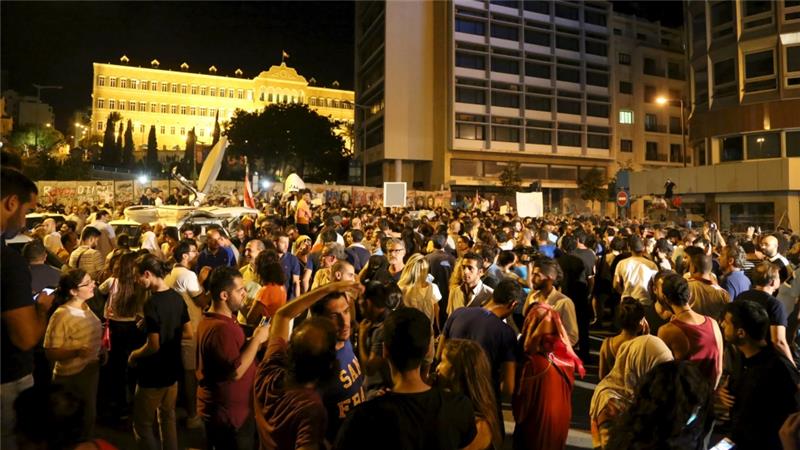
Three Gulf countries have issued warnings over travel to Lebanon after peaceful anti-government demonstrations in Beirut turned violent over the weekend.
Bahrain, Kuwait and Saudi Arabia issued the warnings after protests that began over the country's uncollected rubbish escalated into mass protests over perceived government corruption, and power and water shortages.
by Paul Heroux;
It is hard to say what is going to happen, but there is reason for concern and our domestic media is not addressing this increasingly deteriorating situation.




Population Movements to Keserwan - The Khazens and The Maans
ما جاء عن الثورة في المقاطعة الكسروانية
ثورة أهالي كسروان على المشايخ الخوازنة وأسبابها
Origins of the "Prince of Maronite" Title
Growing diversity: the Khazin sheiks and the clergy in the first decades of the 18th century
Historical Members:
Barbar Beik El Khazen [English]
Patriach Toubia Kaiss El Khazen(Biography & Life Part1 Part2) (Arabic)
Patriach Youssef Dargham El Khazen (Cont'd)
Cheikh Bishara Jafal El Khazen
Patriarch Youssef Raji El Khazen
The Martyrs Cheikh Philippe & Cheikh Farid El Khazen
Cheikh Nawfal El Khazen (Consul De France)
Cheikh Hossun El Khazen (Consul De France)
Cheikh Abou-Nawfal El Khazen (Consul De France)
Cheikh Francis Abee Nader & his son Yousef
Cheikh Abou-Kanso El Khazen (Consul De France)
Cheikh Abou Nader El Khazen
Cheikh Chafic El Khazen
Cheikh Keserwan El Khazen
Cheikh Serhal El Khazen [English]
Cheikh Rafiq El Khazen [English]
Cheikh Hanna El Khazen
Cheikha Arzi El Khazen
Marie El Khazen