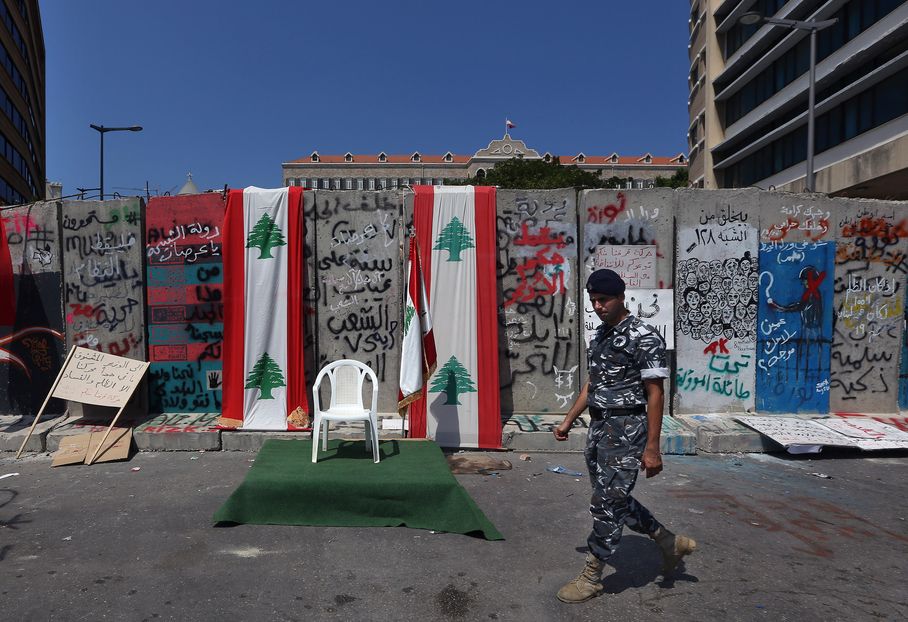
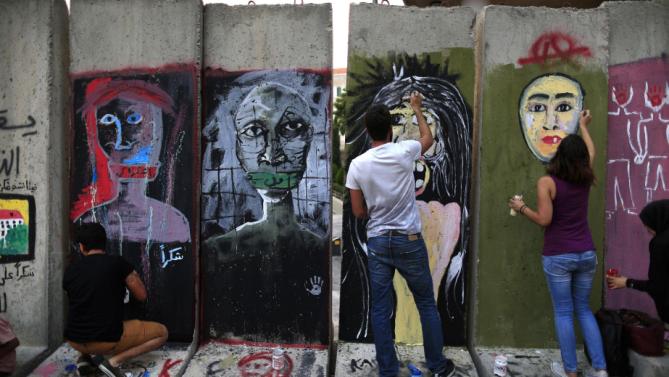
Lebanese activists paint graffiti on the a concrete wall installed by authorities near the main Lebanese government building, a day after violent anti-government protests, in downtown Beirut, Lebanon, Monday, Aug. 24, 2015. Anticipating more protests, authorities installed a concrete wall near the main Lebanese government building, site of the largest protests. Organizers of the "You stink" protests that have captivated the Lebanese capital postponed anti-government demonstrations set for Monday evening after a night of violent clashes with police during which dozens of protesters and police officers were wounded. (AP Photo/Hassan Ammar)
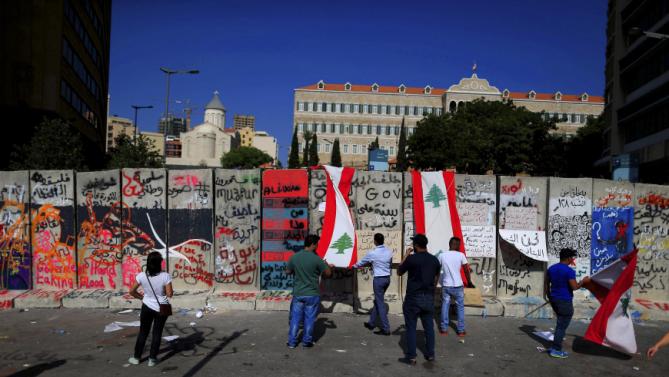
Lebanese activists hang Lebanese national flags on a concrete wall installed by authorities near the main Lebanese government building, in downtown Beirut, Lebanon, Tuesday, Aug. 25, 2015. Anticipating more protests, authorities installed a concrete wall near the main Lebanese government building, site of the largest protests. On Saturday and Sunday nights, police fired tear gas and water cannons at the protesters, battling them in the streets of Beirut in dramatic clashes, wounding dozens. (AP Photo/Hassan Ammar)
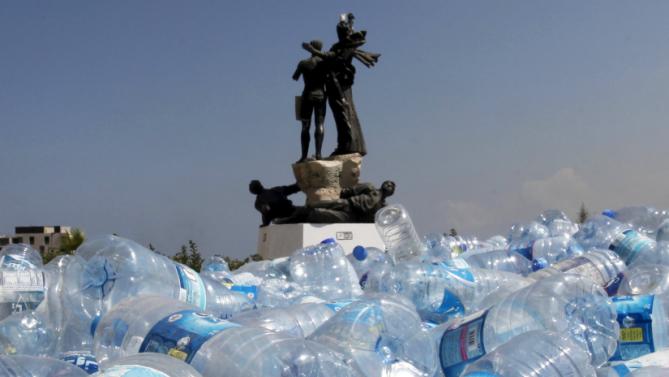
Water bottles are gathered to be recycled near a statue in Martyrs' Square in Beirut, Lebanon August 25, 2015. Lebanon's cabinet held an emergency meeting on Tuesday in its newly fortified headquarters after protests over trash collection spilled over into street violence and calls for the feuding government to resign. REUTERS/Jamal Saidi
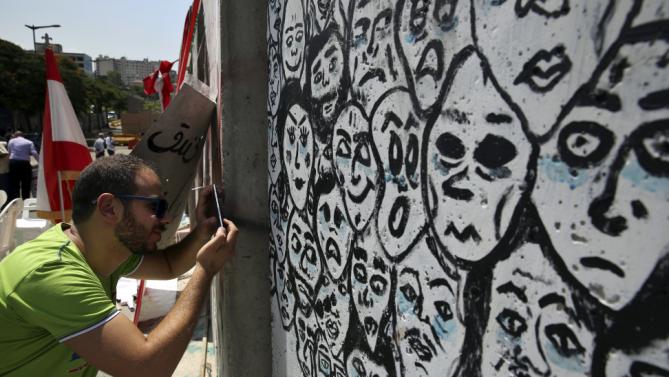
A Lebanese man takes a photograph through a concrete wall installed by authorities near the main Lebanese government building, in downtown Beirut, Lebanon, Tuesday, Aug. 25, 2015. Anticipating more protests, authorities installed a concrete wall near the main Lebanese government building, site of the largest protests. On Saturday and Sunday nights, police fired tear gas and water cannons at the protesters, battling them in the streets of Beirut in dramatic clashes, wounding dozens. (AP Photo/Bilal Hussein)
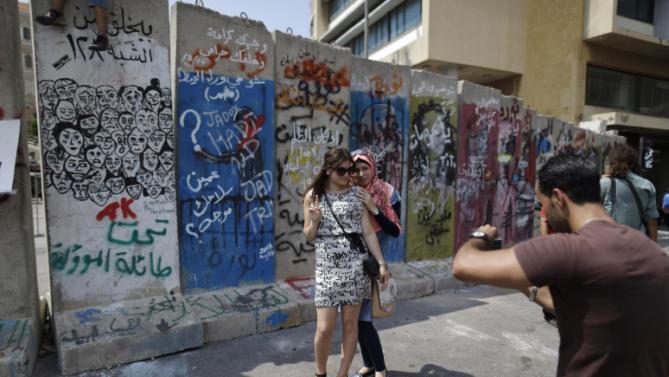
Lebanese women have their picture taken in front a concrete wall installed by authorities near the main Lebanese government building, in downtown Beirut, Lebanon, Tuesday, Aug. 25, 2015. Anticipating more protests, authorities installed a concrete wall near the main Lebanese government building, site of the largest protests. On Saturday and Sunday nights, police fired tear gas and water cannons at the protesters, battling them in the streets of Beirut in dramatic clashes, wounding dozens. (AP Photo/Hassan Ammar)
Al Arabiya:
An emergency Lebanese cabinet meeting on Tuesday has ended in failure in a bid to address the trash crisis amid street violence and calls for the feuding government to resign.
An agreement was reached, however, on cancelling all the tenders from companies to remove the piling garbage that have been previously announced.
Al Arabiya News channel’s correspondent in Beirut confirmed the withdrawal of members from Hezbollah and its allies, the Free Patriotic Movement and the Armenian Tashnag Party in Lebanon from the talks on Tuesday.
Six ministers from the Hezbollah group and its allies withdrew four hours into the meeting. Foreign Minister Gibran Bassil said he was also pulling out because of a "theater" being performed with regards to the trash issue, according to the Associated Press.
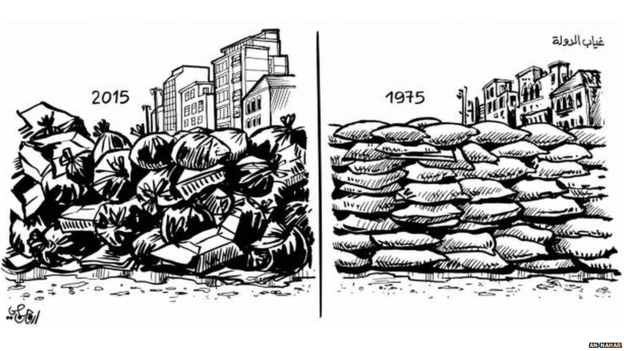
BBC news: Absence of the state' - An-Nahar newspaper: The image on the right shows sandbags in 1975, the year that Lebanon's Civil War broke out. On the left, the same scene, only with rubbish sacks
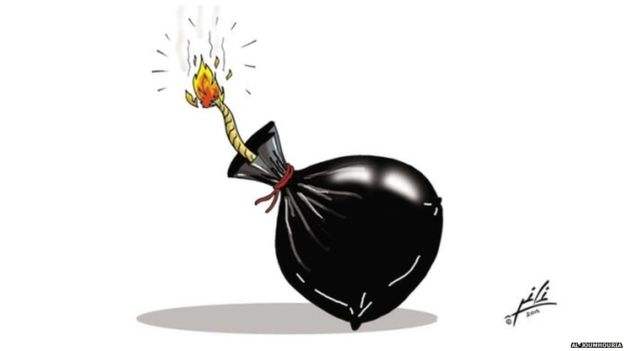
Time-bomb - Al-Joumhouria newspaper
Cartoon depicting a rubbish bag with a lit fuse as a bomb ready to go off.
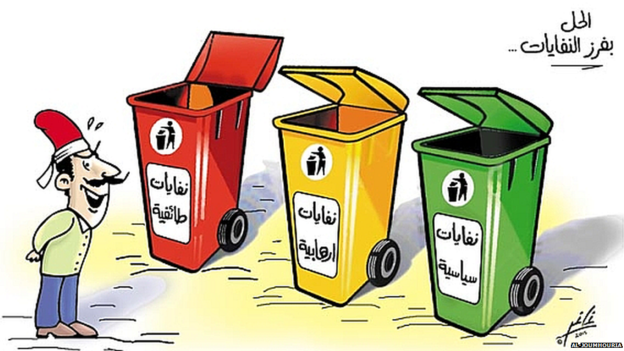
"The solution lies in sorting rubbish" - Al-Joumhouria Green bin: "Political waste"; Yellow: "Terrorist waste"; Red: "Sectarian waste"
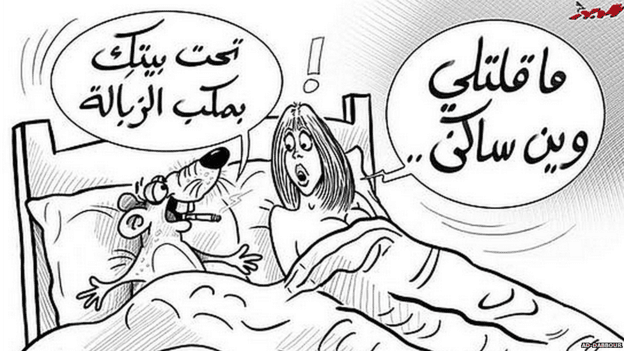
Ad-Dabbour magazine
Woman: "You didn't tell me where you live... "
Man-sized rat: "Under your house, in the trash pile"
Alice Fordham NPR
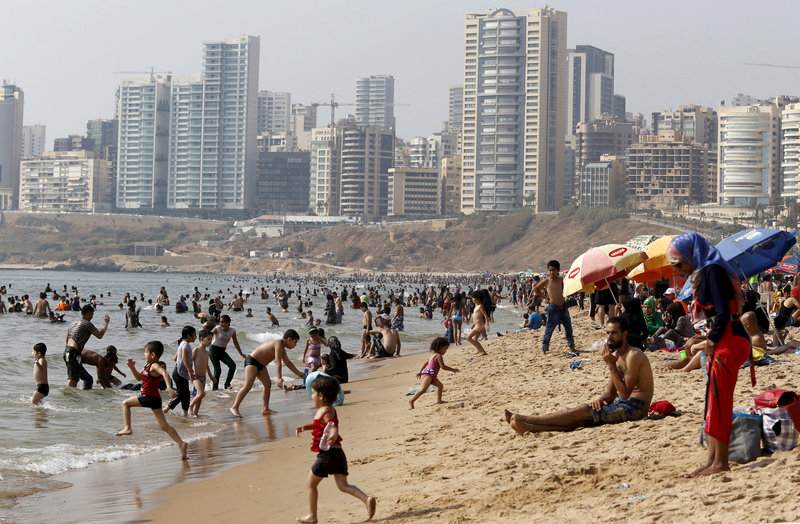
The sun is beating down on the rocky shore of Lebanon's capital, Beirut, and architect Mona Hallak is taking her son and his friends to see their heritage. "Who knows how to swim?" asks Hallak, an advocate for public beaches in Lebanon.
The kids say they can, but they learned in private beach clubs. Hallak tells them of the past, when Beirutis learned to swim in the sea because the shore was all public. She shows them a nearby area that was open and has been fenced off. She fears it too will be built on as many other places have been.
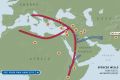
Population Movements to Keserwan - The Khazens and The Maans
ما جاء عن الثورة في المقاطعة الكسروانية
ثورة أهالي كسروان على المشايخ الخوازنة وأسبابها
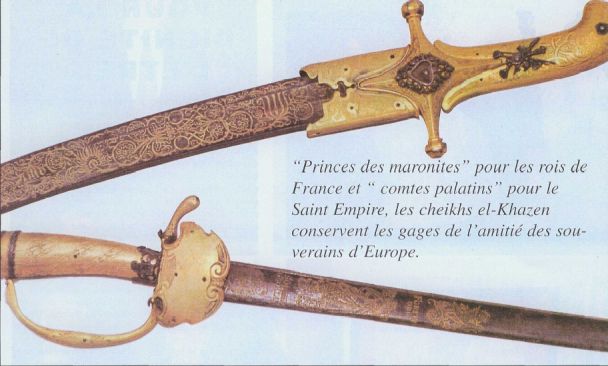
Origins of the "Prince of Maronite" Title
Growing diversity: the Khazin sheiks and the clergy in the first decades of the 18th century
Historical Members:
Barbar Beik El Khazen [English]
Patriach Toubia Kaiss El Khazen(Biography & Life Part1 Part2) (Arabic)
Patriach Youssef Dargham El Khazen (Cont'd)
Cheikh Bishara Jafal El Khazen
Patriarch Youssef Raji El Khazen
The Martyrs Cheikh Philippe & Cheikh Farid El Khazen
Cheikh Nawfal El Khazen (Consul De France)
Cheikh Hossun El Khazen (Consul De France)
Cheikh Abou-Nawfal El Khazen (Consul De France)
Cheikh Francis Abee Nader & his son Yousef
Cheikh Abou-Kanso El Khazen (Consul De France)
Cheikh Abou Nader El Khazen
Cheikh Chafic El Khazen
Cheikh Keserwan El Khazen
Cheikh Serhal El Khazen [English]
Cheikh Rafiq El Khazen [English]
Cheikh Hanna El Khazen
Cheikha Arzi El Khazen
Marie El Khazen