Reuters and Hunter Walker
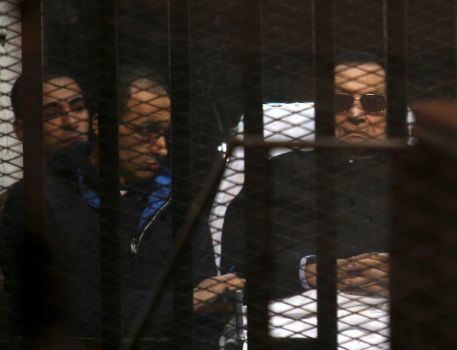
An Egyptian court on Saturday dropped its case against ousted president Hosni Mubarak on charges of ordering the killing of protesters during the 2011 revolt that removed him from power.
About 800 people were estimated to have been killed as Mubarak's security forces fought protesters prior to his resignation in February 2011. However, the charges against Mubarak only relate to the deaths of 239 protesters whose names were listed on court documents.
Mubarak was initially convicted and sentenced to life in prison in 2012 for ordering the deaths of the protesters. That ruling was overturned on appeal and a retrial was ordered.
The murder charges were made against Mubarak, his interior minister Habib el-Adly, and six top police officials who reported to el-Adly. The court also dropped the charges against El-Adly and his six aides.
Mubarak's lawyers argued he was unaware of the full extent of the protests or the violent crackdown against them. Since his initial sentencing, Mubarak has claimed to have suffered a series of health problems and has been wheeled in to many of his court appearances on a hospital bed.
A French Foreign Ministry official is scheduled to arrive in Lebanon in early December to discuss the latest developments linked to …
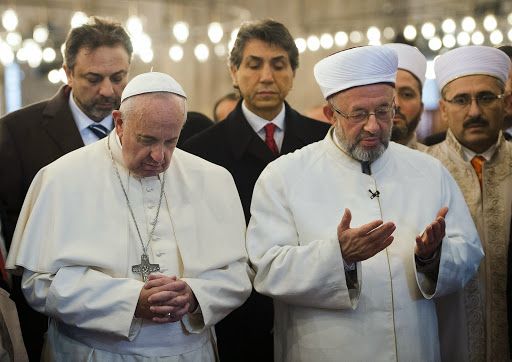
.- During Pope Francis’ visit to Istanbul’s Blue Mosque, he paused for a moment of prayer alongside Ankara’s Grand Mufti – a moment of “interreligious dialogue” which mirrored that of his predecessor. “When they were under the Dome, the Pope insisted: ‘not only must we praise and glorify him, but we must adore him,’” Vatican spokesman Fr. Federico Lombardi S.J. told journalists Nov. 29. “Therefore it is reasonable to qualify this moment of silence a moment of silent adoration.”
“(It was) a beautiful moment of interreligious dialogue, and it the exact same thing happened in 2006 with Pope Benedict, it was exactly the same.” Fr. Lombardi offered his statement to the head of the Holy See Press Office association of journalists by telephone. The message was then relayed to the journalists present in the press center in Istanbul. Pope Francis’ visit to the historic Sultan Ahmet Mosque, known as the “Blue Mosque” due to the blue tiles covering the inside, marks the third time a Pope has ever gone inside, the first being St. John Paul II in 1979.
In his statement, Fr. Lombardi said that upon his arrival, the Roman Pontiff was greeted in the Mosque’s garden by a group of 50-60 people coming from different Christian communities – including Latin, Coptic, Syro and Armenian – as well as their bishops. President of the Turkish Episcopal Conference Bishop Smirme Franceschini offered a welcoming address before the Pope went inside.
BEIRUT: Free Patriotic Movement leader Michel Aoun vowed Friday to keep pushing for the presidential seat, insisting he is the most …
Population Movements to Keserwan - The Khazens and The Maans
ما جاء عن الثورة في المقاطعة الكسروانية
ثورة أهالي كسروان على المشايخ الخوازنة وأسبابها
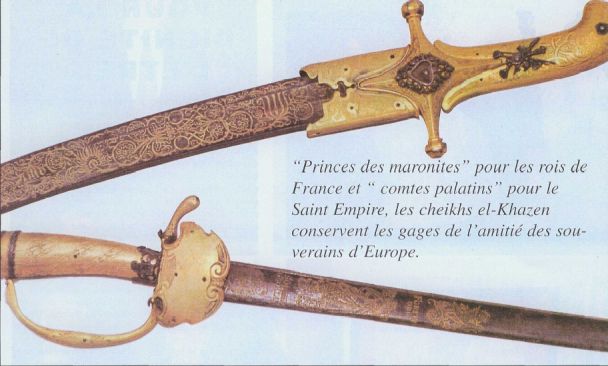
Origins of the "Prince of Maronite" Title
Growing diversity: the Khazin sheiks and the clergy in the first decades of the 18th century
Historical Members:
Barbar Beik El Khazen [English]
Patriach Toubia Kaiss El Khazen(Biography & Life Part1 Part2) (Arabic)
Patriach Youssef Dargham El Khazen (Cont'd)
Cheikh Bishara Jafal El Khazen
Patriarch Youssef Raji El Khazen
The Martyrs Cheikh Philippe & Cheikh Farid El Khazen
Cheikh Nawfal El Khazen (Consul De France)
Cheikh Hossun El Khazen (Consul De France)
Cheikh Abou-Nawfal El Khazen (Consul De France)
Cheikh Francis Abee Nader & his son Yousef
Cheikh Abou-Kanso El Khazen (Consul De France)
Cheikh Abou Nader El Khazen
Cheikh Chafic El Khazen
Cheikh Keserwan El Khazen
Cheikh Serhal El Khazen [English]
Cheikh Rafiq El Khazen [English]
Cheikh Hanna El Khazen
Cheikha Arzi El Khazen
Marie El Khazen