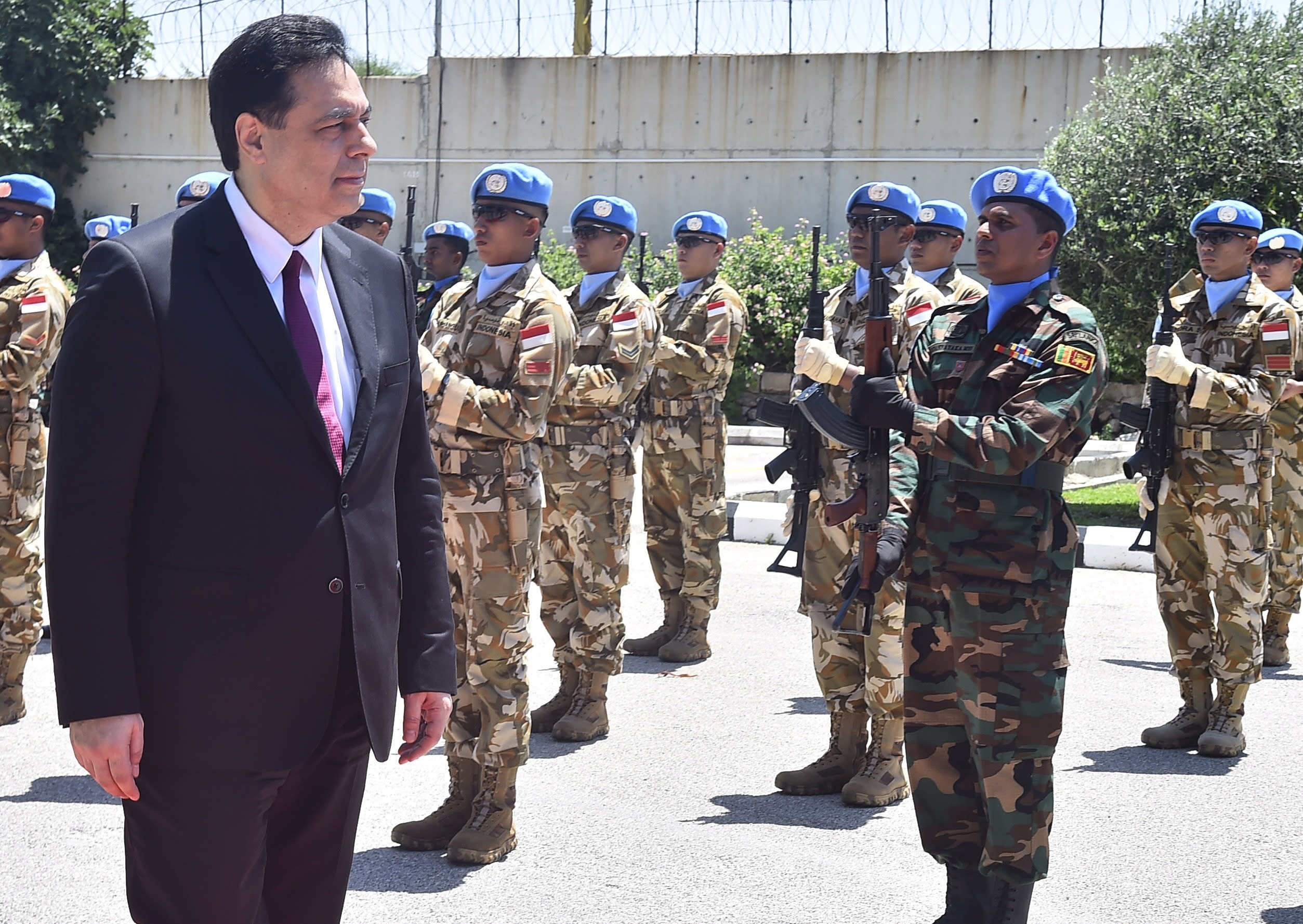
BEIRUT (AP) — Lebanon's prime minister visited United Nations peacekeepers in the country's south near the border with Israel on Wednesday, describing the presence of the force in the volatile area as a necessity. The visit by Prime Minister Hassan Diab comes amid the backdrop of a war of words between Israeli and Lebanese officials, including the powerful Hezbollah group, over the mandate of the U.N. force, known as UNIFIL.
The force has been deployed in southern Lebanon since an Israeli invasion in 1978. Israel is calling for major changes in the way the mission in southern Lebanon operates on the ground, demanding that it have access to all sites and freedom of movement and that it report back to the Security Council if it is being blocked. The head of Lebanon's Hezbollah group, Hassan Nasrallah, said late Tuesday that Lebanon will not accept a change of mandate for UNIFIL to allow it to raid and search areas, calling it a violation of the country's sovereignty. Nasrallah said the U.S. is pressuring Lebanon to accept such a change. “They want to reduce UNIFIL numbers? Go ahead. Increase them? Go ahead,” Nasrallah said, adding if they also want to leave it will be no problem. “But we consider expanding its mandate an infringement on Lebanese sovereignty.” Diab said the presence of the troops was “necessary and urgent” in light of the ongoing "violations by Israel of Lebanon’s sovereignty by land, sea and air.”
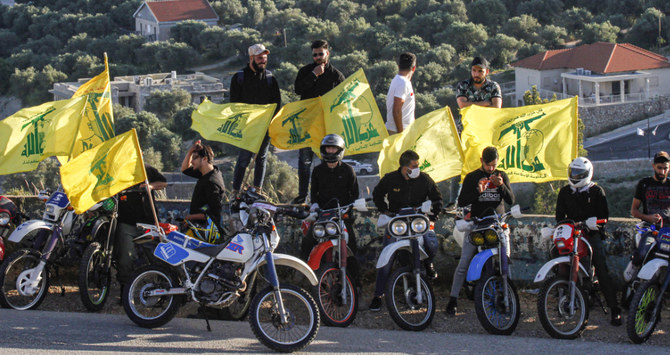
by arabnews.com -- NAJIA HOUSSARI -- BEIRUT: Political forces in Lebanon have renewed pressure on the Iranian-backed Hezbollah to reform or face the US imposition of the Caesar Act, which could prove catastrophic for the country. Lebanese political circles are abuzz with debate over Hezbollah’s involvement in Syria and the likelihood of the imposition of the Caesar Act, which calls for biting sanctions on the Assad regime and its supporters. Mouaz Mustafa, who is a member of the Caesar Act team, recently said that prominent political figures in Lebanon were likely to be targeted alongside Hezbollah because the goal of the sanctions was to reach all people who had any kind of agreements with the Syrian regime. Lebanese politicians are not taking this matter lightly as is evident from their statements calling for an end to smuggling along the Syria-Lebanon border and for Hezbollah to be disarmed.
Gebran Bassil, leader of the Free Patriotic Movement (FPM), recently blamed “de facto forces” for the illegal smuggling along the borders in an apparent dig at the powerful military outfit. It is known that Hezbollah has long been involved in the war in Syria and maintains military bases and training centers inside Syrian territories near the border with Lebanon. Diesel and flour smuggling is carried out through illegal crossings from Lebanon to Syria. In a strongly worded message, FPM MP Ziad Aswad said: “We cannot go on holding weapons while our people are hungry.” Aswad warned Hezbollah that “the price of its weapons is paid by all Lebanese.” The most obvious position on American messages reaching Lebanese parties came through the admission of Aswad that “the Americans’ decision is necessary to disarm the (Hezbollah) party, or else manage yourself, Lebanese.”

by thenational.ae -- Sunniva Rose -- An employee at the Middle East’s leading music streaming service, whose tweet landed the company in the middle of a political dispute, denies she was spreading rumours of the Lebanese president’s ill-health. There were calls for a boycott of Anghami, the Middle East’s answer to Spotify with more than 55 million users, after its editorial lead Christine Habib tweeted in Arabic on Monday: “We will not pay you the last honours. You killed all of us before dying." Ms Habib did not name Lebanese President Michel Aoun, 85, but sparked an angry response from his supporters on social media under the hashtag #boycottAnghami. As anger grew, a movement took to social media to express support for the company and Ms Habib. A former reporter with local television network Al Jadeed, Ms Habib told The National that she had not insulted Mr Aoun. “Maybe the timing was a bit wrong but the tweet could have been about any other leader or even the country," she said. "I have previous tweets saying , ‘Rest in peace, Lebanon’.”
Ms Habib said her tweet was in reference to the country's severe social and economic crisis caused by decades of mismanagement and corruption. Lebanon's currency in is near-freefall, unemployment is rising rapidly and living standards are deteriorating. Mr Aoun’s office has denied claims in local media about the president’s ill health, writing on Twitter that “appropriate legal measures” would be taken against “those who promote malicious rumours". “Today, because of a tweet that's not endorsed by our company from a personal account, I read calls to fire an employee and boycott Anghami," Mr Habib said. "In contrast, others warn of retaliation with counter boycotts if the employee is fired. That's our sad Lebanon life.
“As a country, we've suffered through wars, revolutions, assassinations, economic downturns, famine, ongoing banking crisis, inflation, devaluation and distress. "Moreover, most of us believe that we're heading to worse times. And all that we've learnt is that we should continue to attack each other. “What if instead of attacking each other we can make a chain to lift each other? We're all drowning together. "Wake up, everyone. Lebanon needs all of us." Anghami is widely regarded as one of Lebanon’s most successful start-ups and while the company says it is registered in the Cayman Islands, it is headquarters are in Beirut and offices in Dubai, Cairo and Riyadh. Bloomberg reported in January that it was considering a sale that could value it at $400 million (Dh1.46 billion).
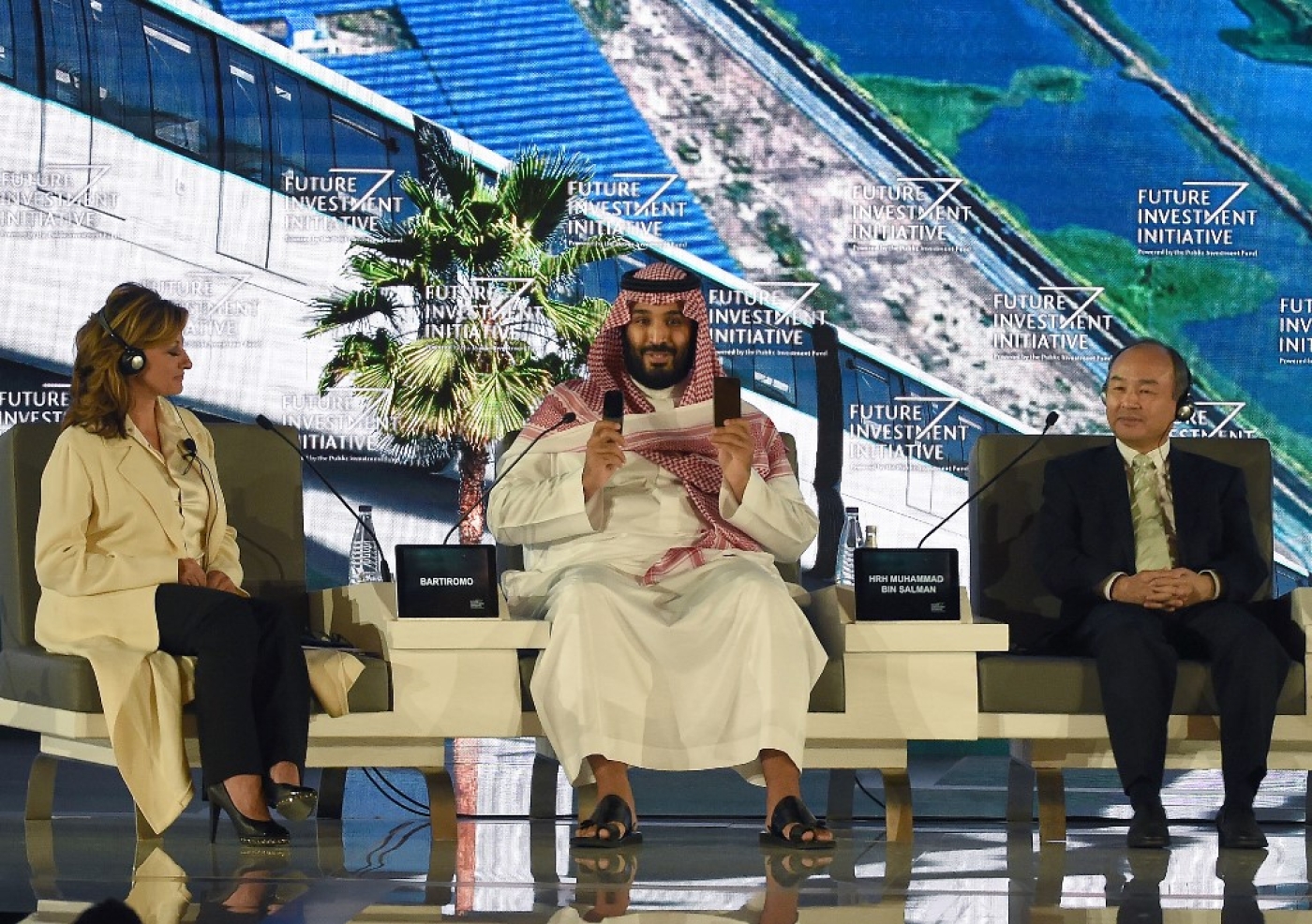
by middleeasteye.net -- By Paul Cochrane -- When Saudi Arabia’s Public Investment Fund was brought under the direct control of Crown Prince Mohammed bin Salman in 2015, and the fund’s programme was announced in 2017, it was under a mandate to invest at home and abroad to be a financial enabler of the kingdom's economic diversification efforts. One of its earliest and biggest splashes was in Tokyo-based SoftBank’s $100bn Vision Fund, which invested in high-profile technology companies and, in keeping with its name, aimed to bankroll futuristic developments in artificial intelligence, robotics and gene-sequencing. Saudi Arabia, along with Abu Dhabi’s sovereign wealth fund, Mubadala, contributed almost two-thirds of the fund’s capital, with PIF investing some $35bn.
The investment with the Japanese conglomerate seemed a perfect match for the kingdom’s Vision 2030, outlined in 2016, with SoftBank making a commitment to enable diversification efforts through involvement in technology, renewable energy and in MBS’s $500bn Neom mega-city project on the Red Sea coast. SoftBank’s links to Saudi and MBS, by then the kingdom’s crown prince, came under scrutiny in October 2018 following the murder of journalist Jamal Khashoggi, but it largely managed to ride out the negative publicity. Just a year ago, the media gushed about SoftBank being a major disruptor on the start-up and venture capital tech scene, while a second Vision Fund was announced. Riyadh was initially keen on getting involved but backed away last year as problems emerged with the first fund, according to Rory Fyfe, managing director of Mena Advisors, a regional research and consultancy company in London.
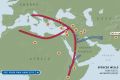
Population Movements to Keserwan - The Khazens and The Maans
ما جاء عن الثورة في المقاطعة الكسروانية
ثورة أهالي كسروان على المشايخ الخوازنة وأسبابها
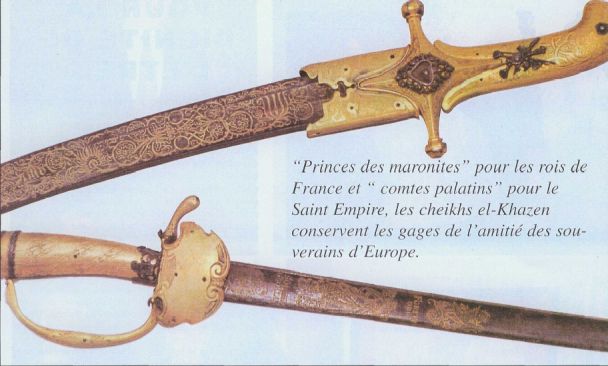
Origins of the "Prince of Maronite" Title
Growing diversity: the Khazin sheiks and the clergy in the first decades of the 18th century
Historical Members:
Barbar Beik El Khazen [English]
Patriach Toubia Kaiss El Khazen(Biography & Life Part1 Part2) (Arabic)
Patriach Youssef Dargham El Khazen (Cont'd)
Cheikh Bishara Jafal El Khazen
Patriarch Youssef Raji El Khazen
The Martyrs Cheikh Philippe & Cheikh Farid El Khazen
Cheikh Nawfal El Khazen (Consul De France)
Cheikh Hossun El Khazen (Consul De France)
Cheikh Abou-Nawfal El Khazen (Consul De France)
Cheikh Francis Abee Nader & his son Yousef
Cheikh Abou-Kanso El Khazen (Consul De France)
Cheikh Abou Nader El Khazen
Cheikh Chafic El Khazen
Cheikh Keserwan El Khazen
Cheikh Serhal El Khazen [English]
Cheikh Rafiq El Khazen [English]
Cheikh Hanna El Khazen
Cheikha Arzi El Khazen
Marie El Khazen