This article represents opinion of the author
by Joana Aziz - middleeasteye.net/
Women’s rights in Lebanon are currently a major topic of interest and concern on the national stage - and rightfully so. Women in Lebanon are not a minority. They constitute almost half of the population, but they have been systematically marginalised. Last month, Lebanese government officials decided once again to exclude the quota system which urges equal representation of women in parliament. The quota system would have guaranteed a minimum of 30 percent of the seats in parliament for women so they could play an active role in political decision-making.
Currently, women in Lebanon account for 3.1 percent of the deputies in parliament - four out of 128 seats - and 3 percent of the ministers in the Council of Ministers. That's compared to a global average of 22 percent of parliamentarians who are women. Failure to implement the quota signifies a recurring theme in Lebanon where women's rights are often marginalised. So why has the system failed once again to implement the legislation and examine other legal areas - rape, citizenship and the welfare of women for starters - where women have yet to gain equals rights? Only once we define the problems can we find viable and sustainable answers.
khazen.org and all of the el Khazen family strongly supports the Lebanese Army. The Lebanese army is the institution that makes us …
by Veronika Bondarenko – On Friday, France celebrated Bastille Day with fireworks, a parade, and Donald Trump. As part of their 24-hour …
by Joseph A. Kechichian, Gulf news Beirut: Hisham Jaroudi, a real-estate magnate had promised to save a 100-year building in Beirut, popularly …
Population Movements to Keserwan - The Khazens and The Maans
ما جاء عن الثورة في المقاطعة الكسروانية
ثورة أهالي كسروان على المشايخ الخوازنة وأسبابها
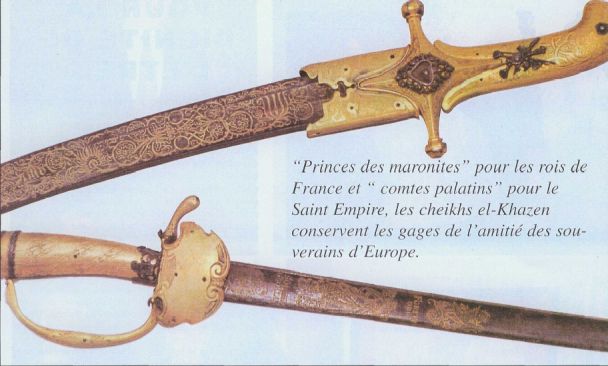
Origins of the "Prince of Maronite" Title
Growing diversity: the Khazin sheiks and the clergy in the first decades of the 18th century
Historical Members:
Barbar Beik El Khazen [English]
Patriach Toubia Kaiss El Khazen(Biography & Life Part1 Part2) (Arabic)
Patriach Youssef Dargham El Khazen (Cont'd)
Cheikh Bishara Jafal El Khazen
Patriarch Youssef Raji El Khazen
The Martyrs Cheikh Philippe & Cheikh Farid El Khazen
Cheikh Nawfal El Khazen (Consul De France)
Cheikh Hossun El Khazen (Consul De France)
Cheikh Abou-Nawfal El Khazen (Consul De France)
Cheikh Francis Abee Nader & his son Yousef
Cheikh Abou-Kanso El Khazen (Consul De France)
Cheikh Abou Nader El Khazen
Cheikh Chafic El Khazen
Cheikh Keserwan El Khazen
Cheikh Serhal El Khazen [English]
Cheikh Rafiq El Khazen [English]
Cheikh Hanna El Khazen
Cheikha Arzi El Khazen
Marie El Khazen