by Saudi Gazette — What looked like characters from a medieval tale or the Game of Thrones saga with a wintry theme, …

by Vogue - Living Brigitte Bardot put St.-Tropez on the map. Beirut, on the other hand, was at the height of its Golden Age when the starlet set foot on its cosmopolitan shores—another celebrity endorsement was superfluous. The vibrant city was a jet-setter’s playground, with a social scene that rivaled its European counterparts. It’s what attracted Bardot in the first place. A 15-year civil war ravaged more than just the country’s reputation, but two decades of reconstruction have polished away the grit to reveal its golden sheen. Set between snowcapped mountains and the Mediterranean Sea, Beirut is an enchanting place to retrace Bardot’s steps.
Where to stay
Lebanon’s most glamorous guests settled in at the Phoenicia hotel, the nightlife capital of Beirut in its prime. Bardot was a poolside fixture, her lounge chair previously reserved for guests like Jean-Paul Belmondo and Jean Seberg. The five-star hotel has been restored to its decadent, mid-century glory in recent years, and the mosaic pool retains much of its original character, including views of the sapphire sea. Thanks to a raucous cabaret club and hard-partying Hollywood occupants—Marlon Brando among them—the hotel’s pre-war debauchery has become the stuff of legend. But with maturity comes a more elegant, if more reserved, Phoenicia. The Phoenicia faced stiff competition in Bardot’s day, and today’s voyageur has plenty of five-star hotel options. The quietly extravagant Le Gray Beirut, a Gordon Campbell Gray property, is favored for its prime downtown position and a rooftop infinity pool that dissolves into the skyline.
by david choi – Brigitte Macron (L), wife of French President Emmanuel Macron (R), President Donald Trump, and First lady Melania Trump pose …

by Zaid M. Belbagi -Arab news - Having been almost stationary for an hour in a Beirut traffic jam, I asked the driver about the difficulties of working with Uber. Much to my surprise, he defended the transportation and delivery service, claiming it has done away with sectarian tensions and prejudices that are prevalent in the local taxi market. Across the Arab world, the use of new technology in service delivery is balancing market imperfections, creating opportunity and equality. Taxi drivers in Beirut have always faced inconveniences due to the myriad religious, ethnic and regional differences that make up Lebanon’s political situation. Drivers working for companies can expect jobs to be divided along sectarian lines, passengers will at times decline to use companies associated with a specific sect, and often companies will restrict their operations to neighborhoods familiar to them.
The advent of transportation apps has transformed this situation; drivers are allocated work based on their appetite and availability for it, and have only the faceless master of free-market economics to report to. Technology has increased opportunities for sections of society that have hitherto been marginalized or restricted from operating in an economic context. According to the World Bank, different rules for men and women exist across the Middle East and North Africa, and only 17.4 percent of companies in the region employ women in high-level management. Women face difficulties starting businesses, registering properties and enforcing contracts. Gender gaps in women’s entrepreneurship and labor-force participation account for an estimated loss of 27 percent in total income across the region.
But social media has provided a new and burgeoning platform for both formal and informal economic activity to take place. In Saudi Arabia, where 57 percent of university graduates are female, Instagram businesses have created a competitive market among women; stay-at-home mothers are setting up profitable online businesses alongside foreign graduates and experienced businesswomen. The boom has been so great that the Labor Ministry has yet to understand the contribution of these informal businesses on the national economy. In providing a channel for women to successfully impact the world of business, online companies have not only contributed to the economy but are also forcing an increased element of service-oriented delivery and sophistication in the market. In such a geographically dispersed and politically and economically fragmented region, technology has allowed businesses to compete transnationally. Local businesses are able to market their items to regional customers inexpensively, offering international delivery on items that were previously stuck behind borders and suffered from over-regulation.

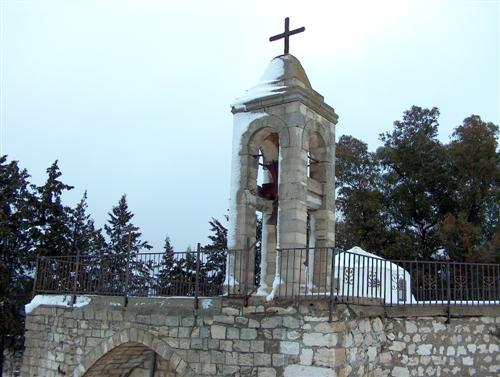
Population Movements to Keserwan - The Khazens and The Maans
ما جاء عن الثورة في المقاطعة الكسروانية
ثورة أهالي كسروان على المشايخ الخوازنة وأسبابها
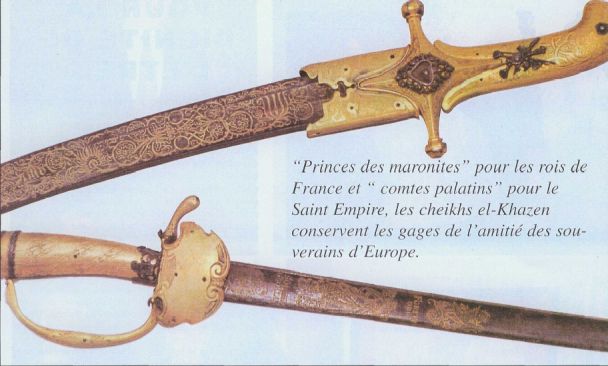
Origins of the "Prince of Maronite" Title
Growing diversity: the Khazin sheiks and the clergy in the first decades of the 18th century
Historical Members:
Barbar Beik El Khazen [English]
Patriach Toubia Kaiss El Khazen(Biography & Life Part1 Part2) (Arabic)
Patriach Youssef Dargham El Khazen (Cont'd)
Cheikh Bishara Jafal El Khazen
Patriarch Youssef Raji El Khazen
The Martyrs Cheikh Philippe & Cheikh Farid El Khazen
Cheikh Nawfal El Khazen (Consul De France)
Cheikh Hossun El Khazen (Consul De France)
Cheikh Abou-Nawfal El Khazen (Consul De France)
Cheikh Francis Abee Nader & his son Yousef
Cheikh Abou-Kanso El Khazen (Consul De France)
Cheikh Abou Nader El Khazen
Cheikh Chafic El Khazen
Cheikh Keserwan El Khazen
Cheikh Serhal El Khazen [English]
Cheikh Rafiq El Khazen [English]
Cheikh Hanna El Khazen
Cheikha Arzi El Khazen
Marie El Khazen