Joseph A. Kechichian, Senior Writer
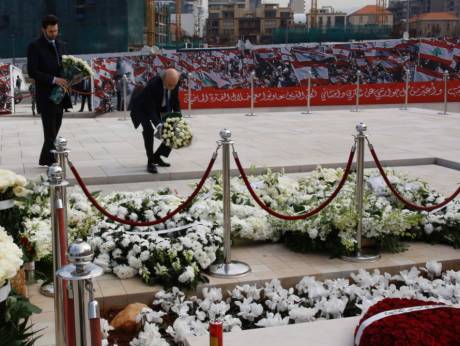
Beirut: For the 11th year running, thousands gathered to commemorate the assassination of Rafik Hariri, on Valentine’s Day in 2005. Hundreds of thousands watched on television screens though only MTV, Al-Jadeed, Future Television and LBC carried the commemoration live. OTV, TeleLiban, NBN and Al-Manar broadcast regularly scheduled programmes.
Speaking at the Biel Conference Centre, the fallen martyr’s son, former prime minister Sa’ad Hariri reiterated his commitment to his father’s memory. He repeated that no one stood above the state.
Reuters
2005
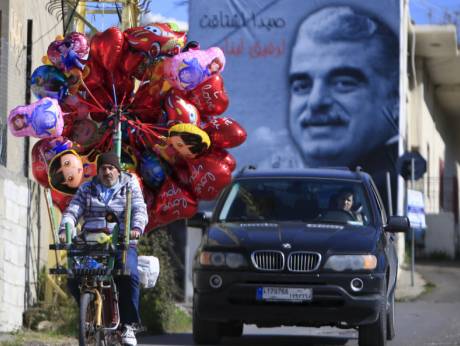
February 14: Former Prime Minister Rafik Hariri is killed, along with 22 others, by a huge truck bomb in Beirut, triggering international pressure on neighboring Syria to end a 29-year military presence in Lebanon.
April 26: Last Syrian soldiers leave Lebanon.
June 16: An international investigation into Hariri’s killing begins.
June 19: Lebanese parliamentary elections end in victory for anti-Syrian alliance led by Hariri’s son Sa’ad Hariri.
October 20: In a report to the UN Security Council, the preliminary findings of the international investigation implicate high-ranking Syrian and Lebanese officials in the Hariri killing. Syria denies any role.
I recall time stopped at noon on the 14th of February 2005. I was driving down to Hamra when I saw two friends, one of whom incidentally worked for Solidere, the company founded by Rafik Hariri to rebuild downtown Beirut. Due to Lebanon's lax traffic rules, we stopped at the side of the highway and agreed to have lunch in Bliss Street.
Marwan went to his office in Biel while I drove towards the American University of Beirut, along the same road Rafik Hariri took as he left Parliament Square and drove towards his mansion in Qraytem. I was less than 100 meters ahead of his convoy when the blast rocked Lebanon's coast.
The hours following the attack remain vivid in my mind. I remember the initial fear that Marwan and Joseph were caught up in the blast. They had the same fear for my safety. We all barely escaped. Thoughts then turned to all my friends and family members who took the Saint George coastal road to work or to university.

Peter Feely, Special to Guides
Beirut was chosen to be among the New 7 Wonders of Cities on 2014
Beirut’s often in the headlines for the wrong reasons. From refuge collection to refugee crises, the former Paris of the Middle East is usually portrayed as politically divided and chaotic. Art and culture however remain integral to life in the fervid Lebanese capital. Multi-million dollar redevelopments have seen galleries popping up across the city and last October’s re-opening of the iconic Sursock Museum indicate that the artistic heart and soul of Beirut refuses to be curtailed by political infighting and adversity. Here are five reasons why Beirut hasn’t relinquished its cultural mojo.




Population Movements to Keserwan - The Khazens and The Maans
ما جاء عن الثورة في المقاطعة الكسروانية
ثورة أهالي كسروان على المشايخ الخوازنة وأسبابها
Origins of the "Prince of Maronite" Title
Growing diversity: the Khazin sheiks and the clergy in the first decades of the 18th century
Historical Members:
Barbar Beik El Khazen [English]
Patriach Toubia Kaiss El Khazen(Biography & Life Part1 Part2) (Arabic)
Patriach Youssef Dargham El Khazen (Cont'd)
Cheikh Bishara Jafal El Khazen
Patriarch Youssef Raji El Khazen
The Martyrs Cheikh Philippe & Cheikh Farid El Khazen
Cheikh Nawfal El Khazen (Consul De France)
Cheikh Hossun El Khazen (Consul De France)
Cheikh Abou-Nawfal El Khazen (Consul De France)
Cheikh Francis Abee Nader & his son Yousef
Cheikh Abou-Kanso El Khazen (Consul De France)
Cheikh Abou Nader El Khazen
Cheikh Chafic El Khazen
Cheikh Keserwan El Khazen
Cheikh Serhal El Khazen [English]
Cheikh Rafiq El Khazen [English]
Cheikh Hanna El Khazen
Cheikha Arzi El Khazen
Marie El Khazen